RII30920 – Certificate III in Civil Construction (Civil Construction General)
Course Overview
Learning Outcomes
Course Outcomes
Is This Course Right For You?
Entry Recommendations
Career Pathways
Licensing
Units taught in this course
Location
Your Rights & Obligations
Build the practical skills you need to get your start in the dynamic civil construction industry. Get an all-rounder’s introduction, become a qualified civil construction worker and help to shape the future of Australia’s infrastructure.
This qualification reflects the role of a skilled operator working in civil construction. It covers common skills for the construction industry, as well as specialised skills for different areas of work. Some job titles in this career include:
Civil Construction Pipe Layer
Civil Road Construction
Maintenance worker.
The qualification is made up of 7 core units, plus 18 elective units. It takes 25 units to complete the qualification. Construction Industry Training has customised their electives for this qualification in order to provide two specialist learning pathways: (1) Pipe Laying and (2) Road Construction and Maintenance.
To work on a construction site, you need to have the right training. The National Code of Practice for Induction Training for Construction Work (ASCC 2007) requires that you complete the “CPCCWHS1001 – Prepare to Work Safely in the Construction Industry” unit or its equivalent. By doing so, you will receive a nationally recognised qualification for preparing for work in the construction industry.
Through a mixture of theory and practical course work, learn to:
Plan and organise civil construction tasks
Read and interpret plans
Use hand and power tools
Operate a small plant and equipment
Follow work health and safety (WHS) procedures
Perform measurements and calculations
Gain practical experience and develop specialist skills that give you an advantage in the job market.
Experience liaising with real clients and stakeholders
Skills in working to project deadlines
Experience working on a real work site with colleagues and supervisors
The ability to use a variety of hand tools, power tools, and civil construction equipment
A strong pathway to continue your study and enhance your career opportunities
Entry requirements
This course requires evidence of previous experience or study before you can enrol.
That you hold a valid general construction induction card (commonly known as a white card), as evidenced by a copy of your card
All students must pass a language, literacy & numeracy assessment (LLN)
This course may also be offered as a non-apprenticeship. Enquire today to discuss your eligibility
We currently have a Smart and Skilled contract with Training Services NSW. This means that if you meet the eligibility criteria, we can give you subsidised training.To find out more download ourstudent information handbook.. or contact one of our team members.
To be prepared for this course, we recommend that you have:
Have good hand-eye coordination and the ability to use hand tools
Are comfortable working at heights and in confined spaces
Have an intermediate level of fitness to manage physical tasks like shovelling, moving surveying equipment, and walking long distances
The ability to work well as part of a team
A commitment to safety
Our graduates go onto roles like:
EARTHMOVING PLANT OPERATOR (GENERAL) Earthmoving Plant Operators (General) operate a range of earthmoving plants to assist with building roads, rail, water supplies, dams, treatment plants and agricultural earthworks. Other jobs include:
Civil construction worker,
Civil construction road surfacing worker,
Civil construction site maintenance worker,
Civil construction road maintenance worker,
Civil construction bridge maintenance worker,
Civil construction pipe laying worker and
Civil construction mobile plant worker
Licensing, legislative, regulatory and certification requirements that apply to this qualification can vary between states, territories, and industry sectors. These also may vary depending on your specialty units and employment options. Your teacher will advise you if there are any applicable to your study. Visit NSW Fair Tradingfor more information on licensing requirements and guidelines.
Courses are made up of a combination of both core and specialty units. In the Certificate III in Civil Construction (Civil Construction General) qualification, you’ll need to successfully complete 25 units of competency, including 7 core and 18 speciality units.
Core Units
Plan and organise work – RIIBEF201E
Carry out measurements and calculations – RIICCM201E
Read and interpret plans and job specifications – RIICCM203E
Use hand and power tools – RIISAM203E
Operate small plant and equipment – RIISAM204E
Work safely and follow WHS policies and procedures – RIIWHS201E
Communicate in the workplace – RIICOM201E
Apply risk management processes – RIIRIS301E
Electives (examples)
Deliver and monitor a service to customers – BSBOPS304
Enter and work in confined spaces – RIIWHS202E
Work safely at heights – RIIWHS204E
Participate in sustainable work practices – BSBSUS21
Conduct underground development shotfiring – RIIBLA303E
RII30820 – Cert III in Civil Construction Plant Operations
About the Course
Learning Outcomes
Course Outcomes
Units Taught In This Course
Entry Requirements
Entry Recommendations
Location
Resources Provided
Your Rights & Obligations
This qualification reflects the role of individuals working as skilled operators with civil construction plant, who apply a broad range of skills in varied work contexts, using some discretion and judgement and relevant theoretical knowledge. These individuals may provide theoretical advice and support a team.
Licensing, legislative, regulatory or certification considerations
Licensing, legislative and certification requirements that apply to this qualification can vary between states, territories, and industry sectors. Users must check requirements with relevant body before applying the qualification.
Through a mixture of theory and practical course work, learn to:
Operate a small plant and equipment including excavators, loaders, dozers, graders, and rollers
Handle resources and infrastructure materials
Safely dispose of non-toxic materials
Identify, locate, and protect underground services
Gain practical experience and develop specialist skills that give you an advantage in the job market.
Experience reviewing real construction plans, specifications and drawings
Industry networks with peers, colleagues and plant operations professionals
A strong pathway to continue your study and enhance your career opportunities
Accreditation to work as a trade qualified plant operator
Courses are made up of a combination of both core and specialty units. In the Certificate III in Civil Construction Plant Operations qualification, you’ll need to successfully complete 20 units of competency, including 15 core and 5 speciality units.
Core units are central to the job outcomes of a particular industry or occupation. These are the units industry has agreed are essential to be capable and qualified at a particular study level.
Core Units
Support plant operations – RIICCM206E
Carry out basic levelling – RIICCM208E
Carry out measurements and calculations – RIICCM201E
Plan and organise work – RIIBEF201E
Spread and compact materials manually – RIICCM207E
Handle resources and infrastructure materials and safely dispose of nontoxic materials – RIISAM201E
Carry out manual excavation – RIICCM205F
Drain and dewater civil construction sites – RIIWMG203E
Read and interpret plans and job specifications – RIICCM203E
Identify, locate and protect underground services – RIICCM202E
Use hand and power tools – RIISAM203E
Apply risk management processes – RIIRIS301E
Operate small plant and equipment – RIISAM204E
Work safely and follow WHS policies and procedures – RIIWHS201E
Communicate in the workplace – RIICOM201E
This course requires evidence of previous experience or study before you can enrol;
That you hold a valid general construction induction card (commonly known as a white card)
All students must pass a language, literacy & numeracy assessment (LLN)
To be prepared for this course, we recommend that you have:
An interest in working outdoors and be involved with big machinery
Relevant employment or access to appropriate workplace environments to prove your skills
Intermediate level fitness to manage the physical demands of the role
Good organisational skills and the ability to multitask and respond well to rapid change
Experience in handling tools and equipment
Training/assessment can be conducted at AOTA Training Facility – 275a Princess Highway, Unanderra NSW
All equipment All courseware and handouts
Please refer to the AOTA Student Handbook through the Student Info Menu , as well as:
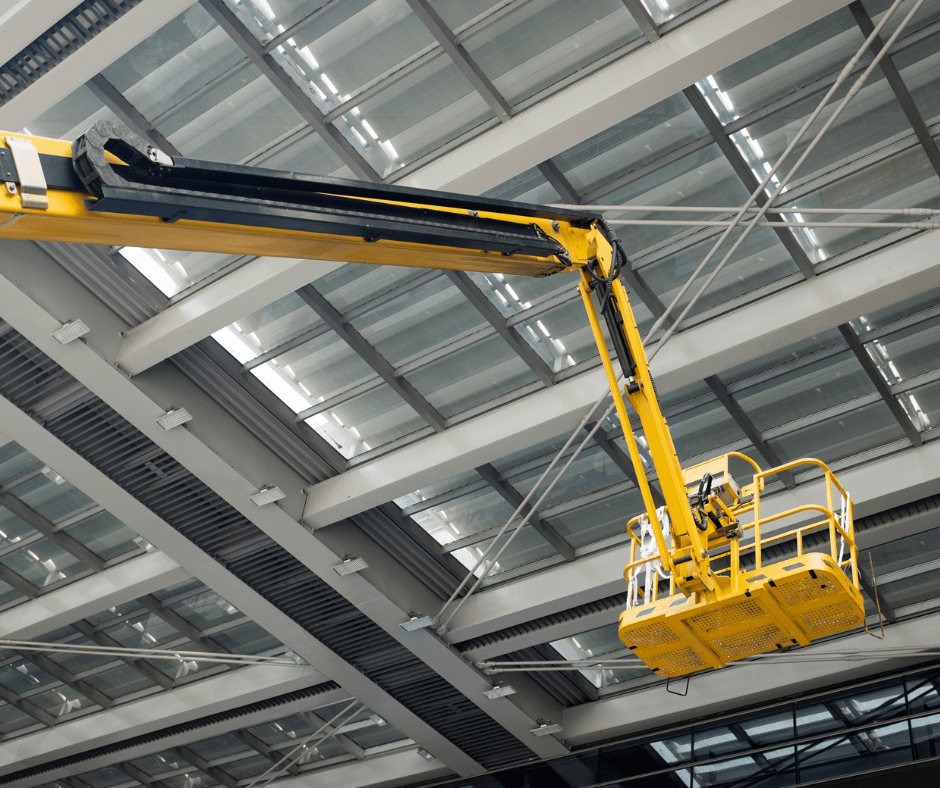
This unit describes the skills and knowledge required to operate an elevating work platform at any height.
This unit applies to those working in operational roles.
The work required in this unit relates to the National Standard for High Risk Work but this unit does not provide the licence. Licensing, legislative, regulatory or certification requirements that may apply to this unit can vary between states, territories and industry sectors, and must be sourced prior to applying this unit.
This unit alone does not provide sufficient skill to independently load and unload equipment. To perform this activity safely, personnel must either complete or be assisted by someone who has completedRIIHAN308FLoad and Unload Plant or equivalent.
Workplace Health & Safety Legislation & Operating Procedures
Hazard Identification, Assess Risks & Control Measures
Plan Work
Overhead Hazards
Pre-start Operational Checks
Damage and Defect Reporting
Communication Methods
Data Plate Specifications
Operate EWP using all controls from ground level
Operate EWP using all basket controls
Mobile EWP using best practice
Unplanned and or Unsafe 3 Situations
Use of Emergency Procedures
Use of Emergency Decent Device explained
Post-Operational Checks
Shutdown and Secure EWP
2 days including SafeWork NSW assessment Note: If proof of recent operation of an EWP can be supplied (past EWP ticket, previous experience, 3rd party reports etc) a one day course can be offered.
$750.00
Prior to enrolling in this course you will need to obtain a Unique Student Identifier (USI) please visit www.usi.gov.auand ensure you have at least one form of identification
You Must be a minimum of 18 years of age
You will be required to conduct mathematical calculations throughout this course
All students must pass a language, literacy & numeracy assessment (LLN)
Identification must be the originals and not laminated, also add a link to Safework NSW EOI: SW08446-0718-423971.pdf
PPE is required including safety boots and a hi-vis shirt.
Tea and Coffee are provided (if conducted at our facilities), local shops are nearby
A passport photo is required when you lodge your HRW Licence application with Australia Post
Please arrive 10 minutes prior to the commencement of training.
Three (3) assessments will be conducted over the duration of the course – (formative assessment) Knowledge, Calculations and Practical Assessments. On the last day of the course a summative assessment will be conducted by an approved State regulatory body assessor (e.g. Safe Work NSW) All critical components must be demonstrated and answered correctly.
Applicants deemed not yet competent will be provided the opportunity to undergo further training. Applicants cannot be reassessed for a minimum of 48 hours from the date of the original assessment. Note: There may be an extra cost for reassessment
This is a Nationally Recognised Training course and applicants deemed competent at the conclusion of the course will be provided with a Statement of Attainment for TLILIC0005 Licence to operate a elevating work platform (boom length more than 11 metres) and the relevant state’s WHS organisation paperwork, in nsw this includes the Notice of Satisfactory Completion and application for a High Risk Work Licence.
This application is to be lodged at Australia Post which incurs and additional cost payable to Australia Post.
You will need to go to aparticipating Australia Postin person to apply. You need to do thiswithin 60 days of receiving your Notice of Satisfactory Assessmentfrom your SafeWork NSW assessor.
You will need to take:
your Notice of Satisfactory Assessment form
a completed Application for a National Licence to Perform High Risk Work – New Application form (N5 form provided by your SafeWork NSW assessor). Do not sign this form, you need to sign it at Australia Post
payment method (view the cost in the fee schedule).
In the event of cancellation or withdrawal:
Students who give notice to cancel their enrolment more than 10 days prior to the commencement of a program will be entitled to a full refund of fees paid.
Students who give notice to cancel their enrolment less than 10 days prior to the commencement of a program will be entitled to a 75% refund of fees paid. The amount retained (25%) by All Onsite Training and Assessment is required to cover the costs of administration and resources which will have already been committed based on the students initial intention to undertake the training.
Students who cancel their enrolment within 1 full business day prior program commencement OR after a training program has commenced will not be entitled to a refund of fees.
If All Onsite Training and Assessment cancels the training course, and is not rescheduling then a full refund will be returned to the payer.
Training/assessment can be conducted at AOTA Training Facility – 275a Princess Highway, Unanderra NSW
All equipment All courseware and handouts
Please refer to the AOTA Student Handbook through the Student Info Menu , as well as:
TLILIC0005 Licence to operate a boom-type elevating work platform (boom length 11 metres or more)
Course Description
Topics Covered
Duration and Cost
What You Need To Know
What to Bring
Assessment
Re-Assessment
Licenses and Certification
HRWL - Application
Cancellations and Withdrawals
Location
Resources Provided
Your Rights & Obligations
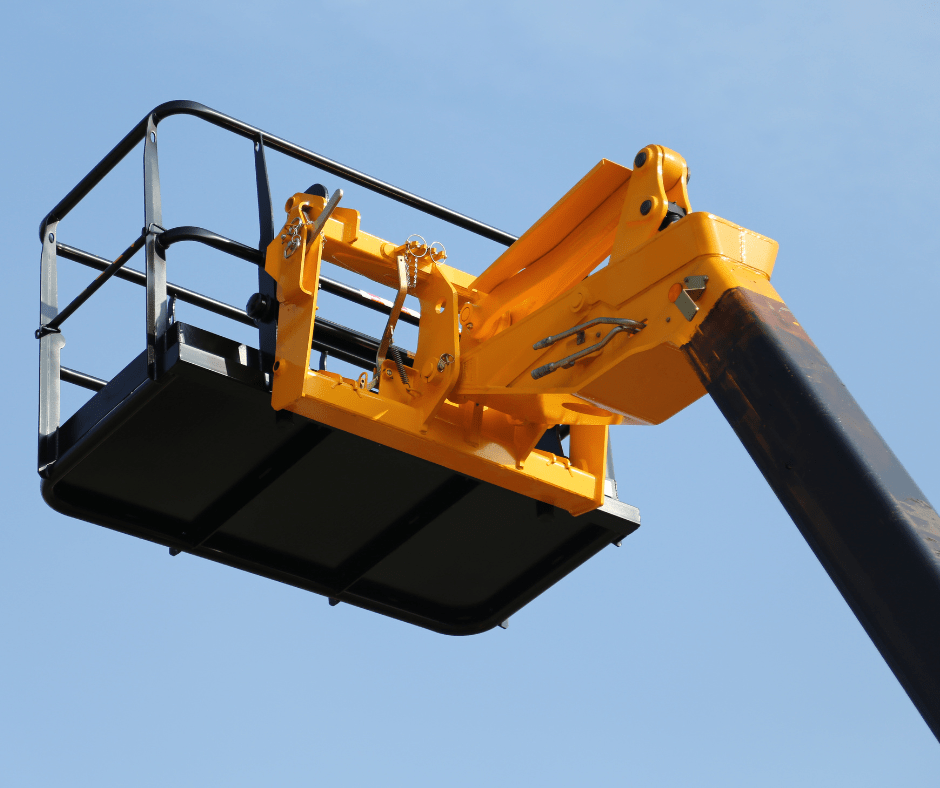
This unit specifies the skills and knowledge required to safely operate a boom-type Elevating Work Platform (EWP) where the length of the boom is 11 metres or more in accordance with all relevant legislative requirements. Competence in this unit, does not in itself result in a Risk Work Licence (HRWL) to operate this plant.
Boom-type elevating work platform means a telescoping device, hinged device, or articulated device, or any combination of these, used to support a platform on which personnel, equipment and materials may be elevated.
A person performing this work is required to hold a boom-type elevating work platform HRWL.
This unit requires a person operating an EWP to:
plan for the work/task
prepare for the work/task
perform work/task
pack up.
Workplace Health & Safety Legislation & Operating Procedures
Hazard Identification, Assess Risks & Control Measures
Plan Work
Overhead Hazards
Pre-start Operational Checks
Damage and Defect Reporting
Communication Methods
Data Plate Specifications
Operate EWP using all controls from ground level
Operate EWP using all basket controls
Mobile EWP using best practice
Unplanned and or Unsafe 3 Situations
Use of Emergency Procedures
Use of Emergency Decent Device explained
Post-Operational Checks
Shutdown and Secure EWP
2 days including SafeWork NSW assessment Note: If proof of recent operation of an EWP can be supplied (past EWP ticket, previous experience, 3rd party reports etc) a one day course can be offered.
$750.00
Prior to enrolling in this course you will need to obtain a Unique Student Identifier (USI) please visit www.usi.gov.auand ensure you have at least one form of identification
You Must be a minimum of 18 years of age
All students must pass a language, literacy & numeracy assessment (LLN)
Identification must be the originals and not laminated, also add a link to Safework NSW EOI: SW08446-0718-423971.pdf
PPE is required including safety boots and a hi-vis shirt.
Tea and Coffee are provided (if conducted at our facilities), local shops are nearby
A passport photo is required when you lodge your HRW Licence application with Australia Post
Please arrive 10 minutes prior to the commencement of training.
Three (3) assessments will be conducted over the duration of the course – (formative assessment) Knowledge, Calculations and Practical Assessments. On the last day of the course a summative assessment will be conducted by an approved State regulatory body assessor (e.g. Safe Work NSW) All critical components must be demonstrated and answered correctly.
Applicants deemed not yet competent will be provided the opportunity to undergo further training. Applicants cannot be reassessed for a minimum of 48 hours from the date of the original assessment. Note: There may be an extra cost for reassessment
This is a Nationally Recognised Training course and applicants deemed competent at the conclusion of the course will be provided with a Statement of Attainment for TLILIC0005 Licence to operate a elevating work platform (boom length more than 11 metres) and the relevant state’s WHS organisation paperwork, in nsw this includes the Notice of Satisfactory Completion and application for a High Risk Work Licence.
This application is to be lodged at Australia Post which incurs and additional cost payable to Australia Post.
You will need to go to aparticipating Australia Postin person to apply. You need to do thiswithin 60 days of receiving your Notice of Satisfactory Assessmentfrom your SafeWork NSW assessor.
You will need to take:
your Notice of Satisfactory Assessment form
a completed Application for a National Licence to Perform High Risk Work – New Application form (N5 form provided by your SafeWork NSW assessor). Do not sign this form, you need to sign it at Australia Post
payment method (view the cost in the fee schedule).
In the event of cancellation or withdrawal:
Students who give notice to cancel their enrolment more than 10 days prior to the commencement of a program will be entitled to a full refund of fees paid.
Students who give notice to cancel their enrolment less than 10 days prior to the commencement of a program will be entitled to a 75% refund of fees paid. The amount retained (25%) by All Onsite Training and Assessment is required to cover the costs of administration and resources which will have already been committed based on the students initial intention to undertake the training.
Students who cancel their enrolment within 1 full business day prior program commencement OR after a training program has commenced will not be entitled to a refund of fees.
If All Onsite Training and Assessment cancels the training course, and is not rescheduling then a full refund will be returned to the payer.
Training/assessment can be conducted at AOTA Training Facility – 275a Princess Highway, Unanderra NSW
All equipment All courseware and handouts
Please refer to the AOTA Student Handbook through the Student Info Menu , as well as:
For all classes of licence training undertaken with All Onsite Training & Assessment, you will be required to follow the steps, outlined below, to obtain your heavy vehicle licences:
Study for the class of licence you wish to obtain.
Pass the knowledge test at Transport NSW.
For your LR, MR, HR and HC licence you should obtain the competency based assessment books from Transport NSW.
Contact us here at All Onsite Training and Assessment to make a booking.
Once you have been deemed competent, return to Transport NSW to have your photo licence processed.
Training/assessment can be conducted at AOTA Training Facility – 275a Princess Highway, Unanderra NSW
All equipment All courseware and handouts
Please refer to the AOTA Student Handbook through the Student Info Menu , as well as:
Auto – $1500 – Available Mon-Sun (1 day – 7.00am to 4.00pm)
Road Ranger Constant Mesh – $2000 – Available Mon-Fri (2 days – 7.00am to 3.00pm)
Minimum requirements:
Applicants must hold a green provisional licence.
Applicants must have held an Australian car licence for at least 2 years.
This does not include a learner driver licence.
All students must pass a language, literacy & numeracy assessment (LLN)
For all classes of licence training undertaken with All Onsite Training & Assessment, you will be required to follow the steps, outlined below, to obtain your heavy vehicle licences:
Study for the class of licence you wish to obtain.
If your heavy vehicle licence has a condition “B” restriction, you’re limited to driving vehicles with automatic or synchromesh gearboxes. This means you can’t drive vehicles equipped with a non-synchromesh gearbox (often called a crash box). To remove this condition, you’ll need training to learn how to operate a non-synchromesh gearbox. Learn More