


Call Us

02 42068378
Office Hours: 9am-5pm

Training Portal

Bookings, Enquiries, RPL

logo 1
18 and Jobless? Why an LF Forklift Ticket is Your Fast-Track to Cash

18 and Jobless? Why an LF Forklift Ticket is Your Fast-Track to Cash

The Young Guns | Why a Forklift Ticket is Your Ultimate “Resume Bypass”

The Introduction: The “Experience Required” Nightmare

Let’s paint a picture that is probably a little too familiar right now. You’re 19 years old, sitting at your laptop in Fairy Meadow, scrolling through Seek or Indeed. You find a decent-paying entry-level job. You spend 45 minutes tweaking your resume, you hit apply, and you wait.

Three days later, you get the automated email: “While your application was strong, we have decided to progress with candidates who have more experience.”

It’s the most frustrating catch-22 in the world: You can’t get a job because you don’t have experience, but you can’t get experience because no one will give you a job. Meanwhile, the pressure is mounting from your parents, your school career advisor, or society in general, telling you that you must go to university to succeed.

But what if there was a way to completely bypass the resume filter? What if you could spend just three days learning a hard, undeniable skill that forces local employers to take you seriously? Welcome to the power of the forklift ticket Wollongong.

Don't have time to read the full guide?

Check out our live training calendar at Unanderra to secure a spot in our next 2-day course.

The “Experience Required” Trap and the HECS Threat

Before we talk about driving machines, let’s talk about money. Right now in Australia, the youth unemployment rate traditionally hovers around 8-9%—often double or triple the rate of older adults. It’s tough out there for young people.

To escape this, many young adults fall into the university trap, signing up for degrees they don’t even want just to defer entering the workforce.

The Cost of Traditional Education

Here is a terrifying stat: According to 2024 ATO figures, the average HECS-HELP debt in Australia is now sitting at $27,640, and thanks to indexation, it’s growing faster than ever. That is nearly thirty grand of debt before you’ve even earned a real paycheck.

The industrial and logistics hubs of Port Kembla, Shellharbour, and Unanderra offer an entirely different path. These industries provide high paying jobs without degree Australia. They don’t care about your ATAR score. They care about one thing: Can you legally and safely move their freight?

💰 Skip the Debt, Start Earning Next Week

Why spend years in a classroom accumulating debt when you can gain a high-demand, WorkSafe-approved skill in just 2 days? Get your LF ticket with the Illawarra’s local experts.

The Resume Bypass: Why an LF Ticket Changes Everything

When you hold a WorkSafe LF forklift licence, you hold an undeniable asset. It is a government-backed guarantee that you know what you are doing.

When you walk into an interview or drop your resume off at a local Wollongong warehouse with that ticket in your hand, you instantly separate yourself from 95% of the other applicants. You are no longer just a “young kid looking for work.” You are a licensed operator. You can legally start moving pallets on Monday morning, saving the employer the time and money of having to train you from scratch. It is quite literally a bypass code for the “experience required” barrier.

Surviving the Industrial Culture Shock

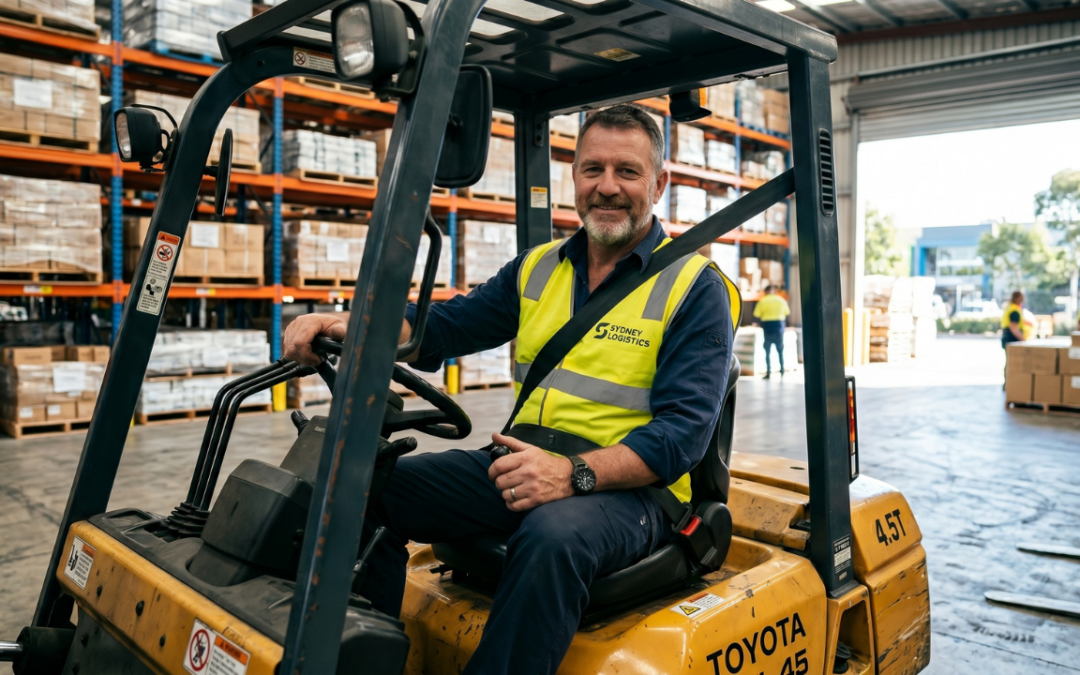
Most blogs will tell you how to pass the test, but they won’t tell you how to survive your first week on the job. Industrial environments can be incredibly intimidating. Warehouses are loud, fast-paced, and full of older blokes who have been doing this work since before you were born.

The fear of jumping on a 3-ton machine and looking like a rookie in front of everyone is real.

You’re Not Expected to Be Perfect

Here is the secret: The grumpy warehouse manager doesn’t expect you to be a speed demon on your first day. They just expect you to be safe.

This is why getting your forklift training for beginners at a high-quality local RTO like AOTA is so critical. A great trainer doesn’t just teach you how to pass the written WorkSafe test; they teach you the unwritten rules of the warehouse. They teach you how to communicate, how to check your blind spots, and how to handle the machine with confidence so you don’t freeze up when the pressure is on.

🚧 Worried about your first day? We’ve got your back

Our Unanderra facility runs small class sizes, giving you maximum hands-on driving time to build real muscle memory before your test. Secure your spot in a low-stress training environment.

Choosing the Right Forklift Training in Wollongong

If you are spending your hard-earned cash on a course, you need to make sure you avoid the common traps that catch young people out.

Maximize Your Seat Time

Avoid “hybrid” or heavy-online courses. You cannot learn to drive a forklift by clicking a mouse in your bedroom. You need muscle memory. You need to feel the balance of the machine when it lifts a heavy load. When choosing an RTO, ensure they have a large facility (like AOTA in Unanderra) and a strict cap on class sizes so you get the maximum amount of physical “seat time.”

The Gold Standard | Why the LF Forklift Licence is Your Ticket to Work

When you’re looking at logistics and warehouse job ads in Wollongong, one acronym pops up more than anything else: LF.

An LF Licence is your standard, legal qualification to operate a traditional forklift (counterbalance and reach trucks). In the Illawarra supply chain network, this is the absolute gold standard starting point. If a local business needs a truck unloaded in Unanderra, pallets stacked in Port Kembla, or freight shifted in Shellharbour, they need someone with an LF ticket.

Instead of getting distracted by hyper-specific machinery courses that limit your options, locking down your LF licence first gives you maximum flexibility. It is the single most highly requested, high-demand industrial ticket in the region, meaning it’s the quickest way to jump from a blank resume straight into a high-paying warehouse job.

Your Fast Track to Better Pay

In exactly two days, you can go from having zero industrial experience to holding a high-demand WorkSafe licence. It is your fast track to a solid hourly rate, massive weekend penalty rates, and a foot in the door of the booming Australian logistics industry.

You don’t need to take on thirty grand of debt to start building a life in Wollongong. You just need two days, a bit of focus, and the right local trainer to help you get your forklift ticket fast. Stop waiting for someone to give you a chance, and go get the ticket that forces them to hire you.

Ready to Own Your Next Job Interview?

Stop sending out resumes that get ignored because you “lack experience.” Lock in your WorkSafe LF forklift licence at our Unanderra facility and become the qualified candidate local employers are actively looking for.

Classes fill up fast. Lock in your spot today to start earning sooner.

👇 Take control of your path below: BOOK YOUR 2-DAY FORKLIFT COURSE NOW Or call our local Wollongong team on (02) 42068378 if you have any questions!

Dedicated to your success

Nigel

The Ultimate Career Pivot | Getting a Forklift Ticket in the Illawarra After 45

The Ultimate Career Pivot | Getting a Forklift Ticket in the Illawarra After 45

The Second Wind | Why a Forklift Ticket is the Ultimate Career Pivot at 45+

Meet Gary (And Your Aching Knees)

Let’s set the scene. You’re sitting on the edge of the bed on a chilly Tuesday morning in Wollongong, staring at your steel-capped boots. You’ve spent the last twenty-something years in retail, local manufacturing, or grinding away in a hard manual labor trade.

You’ve made a good living, but lately, your body is keeping the score. Your lower back sings a familiar tune when you bend over, your knees click when you walk down the stairs, and the thought of doing heavy lifting for another fifteen years until retirement feels less like a career plan and more like a punishment.

You need a pivot. But let’s be totally honest—you aren’t about to go back to university for three years, and you definitely can’t afford to take a massive pay cut to start an apprenticeship from scratch.

This is exactly where getting your forklift ticket in the Illawarra becomes the ultimate “Second Wind.” It’s the smartest, fastest career pivot you can make, and here is exactly why the local industry is practically begging for people just like you.

Why the Illawarra Needs You More Than You Think

If you think you’re “too old” to start driving machinery, you need to look at the reality of the Australian transport and logistics sector. The industry is currently experiencing a massive boom, but it’s facing a unique problem: a desperate need for reliability.

When warehouse managers in Port Kembla, Unanderra, or Shellharbour are hiring, they aren’t looking for a hotshot 19-year-old who wants to drift a 3-ton machine around a loading dock like it’s a go-kart. They are terrified of workplace accidents. What they are desperately looking for is life experience.

They want someone who shows up exactly at 6:00 AM. Someone who respects the sheer weight and danger of the equipment. Someone who understands that safety isn’t just a corporate buzzword—it’s how everyone gets home to their families in one piece. Your age, your patience, and your decades in the workforce? That’s not a liability. On a forklift, it’s your absolute biggest asset.

The Logistics Boom Statistics

According to recent Australian supply chain data, the transport and logistics sector is heavily reliant on older, mature workers, with a massive chunk of the workforce sitting in the 45-60 age bracket. You aren’t crashing a young person’s game; you are stepping into an industry built for mature-minded operators.

The Physical Pivot | Saving Your Back (and Knees)

Let’s talk about the physical reality of a career pivot over 45. Operating a forklift isn’t about brute strength or youthful energy. It’s about spatial awareness, precision, and smooth operation.

Most blogs gloss over what the day-to-day actually feels like, so let’s get real. When you hold an LF ticket, your day changes entirely. Instead of carrying 20kg bags of cement or standing on a hard retail floor for eight hours, you are sitting in a comfortable, often air-conditioned cab. The machine does the heavy lifting. Your job is to use your brain, maneuver the levers smoothly, and keep the site flowing. It pays incredibly well, offers massive weekend penalty rates, and most importantly—it saves your body for the weekend when you actually want to play with the grandkids or go fishing.

Beating “Classroom Anxiety” at 45+

Now, let’s address the elephant in the room. If there is one thing that holds older workers back from booking a forklift course near me, it’s the sheer terror of the classroom.

If you haven’t sat down to take a written test since the late 1980s or 90s, the idea of a WorkSafe forklift assessment can feel downright paralyzing. What if I don’t understand the jargon? What if I look stupid in front of a bunch of kids?

Not sure if it’s the right fit? Let’s have a chat.

If you’re worried about the written assessment or whether your body can handle the machine, don’t guess. Give our Unanderra team a call at (02) 42068378 for a confidential, no-pressure chat. We’ll walk you through exactly what to expect.

The LLN Test (Language, Literacy, and Numeracy)

First, let’s demystify the process. Before you start, reputable trainers will run a quick LLN check. This isn’t a university entrance exam. It’s a basic check to make sure you can read a safety sign and do basic counting (like making sure a load isn’t too heavy). It is designed to help you, not fail you.

The Written WorkSafe Assessment

This is why choosing the right Unanderra RTO matters. Forget the massive, overcrowded “budget” training centers that treat you like a number and force you to memorize boring PowerPoints. The best trainers in the Illawarra know that mature adults are practical learners.

Good trainers ditch the confusing bureaucratic jargon and use plain English. They know you learn by doing, which is why they get you out of the classroom and onto the machine as quickly as possible. By the time the actual WorkSafe assessor arrives on day 2, you won’t feel like you’re taking a high school exam. You’ll just feel like you are having a conversation about a job you already know how to do.

Traps to Avoid When Booking Your Course

Not all training centres are created equal. When you are looking to get your local RTO Wollongong sorted, watch out for these two massive traps that older workers fall into.

Trap 1: The “Cheap Sydney Run”

You might see an ad for a training center in Western Sydney offering a course for $50 less than the local guys. Don’t do it. By the time you pay for fuel, the M5 tolls, and sit in two hours of traffic, you’ve lost money. Worse, these mega-centres often pack 20 people into a room with one machine. Keep it local in the Illawarra where class sizes are smaller.

Trap 2: The “Waiting Game”

This is the dirty little secret of budget RTOs. You finish your two days of training, and then they casually mention, “Great job mate, we’ll call you in 4 to 5 weeks when we have an assessor available.” If you need a job now, this is a disaster. Always ask your RTO if their assessments are done in the same week as the training.

Your Fast Track to Better Pay

Getting your forklift licence Wollongong takes two days. That’s a weekend. But the return on that tiny investment is massive.

It’s the ability to walk onto an industrial site in Unanderra on a Monday morning, sit down, and earn a solid living without destroying your back. It’s not starting over. It’s just working smarter. If you’re ready for your second wind, it’s time to book that local course and get back in the driver’s seat.

Ready for your Second Wind?

Stop letting your back and knees do the heavy lifting. In just two days, you can be WorkSafe certified and ready for a smarter, better-paying career in the Illawarra.

Ready to unlock your full potential? Explore our other course further to discover the perfect training path for you. Or, if you have any questions or need personalised guidance, don’t hesitate to contact us. Our friendly team is here to support you every step of the way.

Remember, your mature career is within reach. With AOTA by your side, you can build the skills, confidence, and qualifications you need to succeed. So, take the first step today and start building your future!

Dedicated to your success

Nigel

To make a booking or enquiry, check your RPL, hit the link 

Rigging vs. Dogging | The 2026 Career Roadmap to Earning Top Dollar

Rigging vs. Dogging | The 2026 Career Roadmap to Earning Top Dollar

If you have spent a few months on a construction site in the Illawarra, you have probably noticed a hierarchy. There are the laborers, there are the trades, and then there are the Riggers.

Rigging is often viewed as the “Dark Art” of the construction world. While the Dogman directs the crane, the Rigger is the one calculating the impossible, erecting the steel skeleton of the building, and moving plant equipment that weighs more than a house.

As we head into 2026, with major industrial projects like the BlueScope transformation and the Shoalhaven Hospital redevelopment ramping up, the demand for dual-ticketed (Dogging + Rigging) operators is skyrocketing.

But for those just starting out, the terminology can be confusing. What is the difference between Dogging and Rigging? Do you need one to get the other? And most importantly, which one pays more?

In this guide, we map out the complete pathway from “Green” to “Advanced Rigger,” with specific dates for our January 2026 intakes at Unanderra.

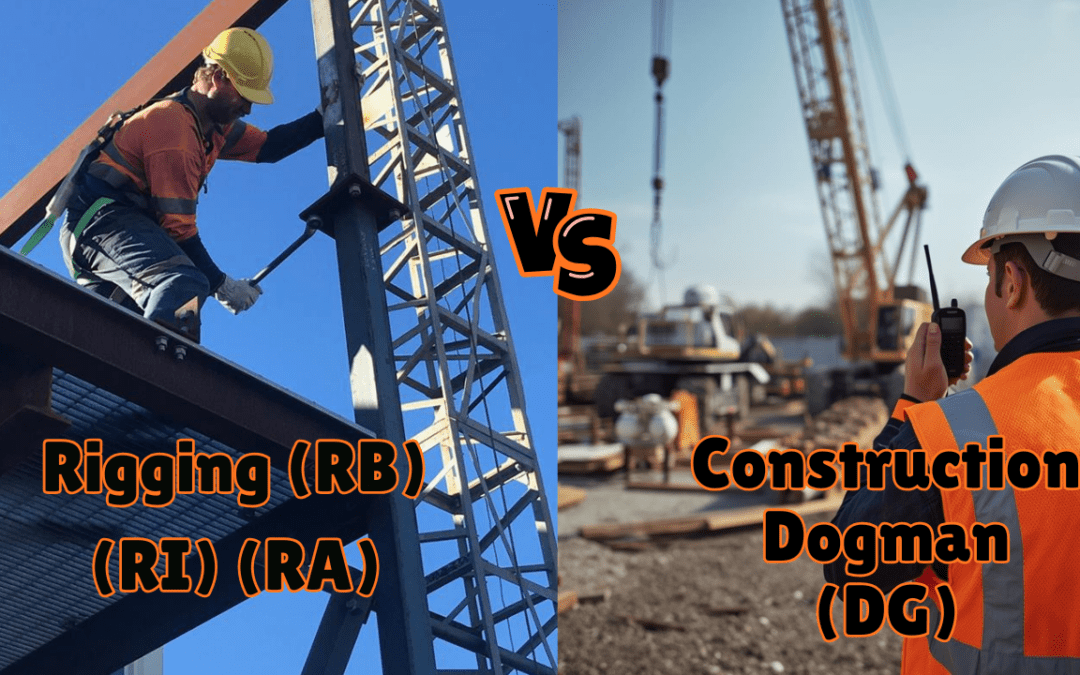
The Foundation: It All Starts with Dogging (DG)

You cannot build a house without a slab, and you cannot become a Rigger without first being a Dogman.

The Licence to Perform Dogging (CPCCLDG3001) is the prerequisite for all Rigging courses.

  • The Rule: You must hold a current DG ticket (or be enrolled in the course) before you can sit the Basic Rigging course.

  • The Logic: Rigging involves complex lifting. If you don’t know how to select a sling or direct a crane (which you learn in Dogging), you aren’t safe to start erecting steel.

Pro Tip: If you are completely new, we recommend booking our Dogging course first, then immediately following it up with Rigging.

Level 1: Basic Rigging (RB) – The Steel Erector

Once you have your Dogging ticket, the next step is Basic Rigging (CPCCLRG3001). This is the “bread and butter” ticket for general construction.

What You Learn: While Dogging is about moving loads, Basic Rigging is about securing and assembling them.

  1. Steel Erection: You will learn how to bolt together structural steel columns and beams. This is the core skill for working on high-rise buildings and industrial sheds.
  2. Cantilevered Crane Loading Platforms (CCLP): Those platforms you see sticking out of skyscrapers to land materials? You learn to install them.
  3. Winches & Gin Poles: Old school skills that are still vital when a crane can’t reach the area.

The Job Market: With an RB ticket, you stop being just a “hook hand” and become a steel erector. This instantly makes you more valuable to structural steel companies and general builders in the Illawarra.

Level 2: Intermediate Rigging (RI) – The Heavy Lifter

This is where the boys are separated from the men. Intermediate Rigging (CPCCLRG3002) takes you away from simple steel erection and into complex, heavy lifts.

The Core Skills:

  • Dual Crane Lifts: Lifting a load with two cranes simultaneously. This requires precise calculation and coordination.

  • Tilt-Up Panels: This is huge in commercial warehousing (like the new logistics hubs in Kembla Grange). You learn to safely rotate and stand up massive concrete wall panels.

  • Demolition Rigging: Safely dismantling structures.

Why Get It? If you want to work on major industrial shutdowns or mine sites, RI is often the minimum standard. It shows you can handle “non-standard” lifts.

Level 3: Advanced Rigging (RA) – The Specialist

The Advanced Rigging (CPCCLRG4001) ticket is the PhD of the lifting world. It covers specialised equipment that terrifies most normal people.

The Core Skills:

  • Hung Scaffolds & Suspended Stages: rigging platforms that hang from the building rather than standing on the ground.

  • Gin Poles & Shear Legs: Complex leverage systems used when cranes are not an option.

This ticket is essential for anyone wanting to work in specialised maintenance, bridge building, or high-rise facade installation.

The “Combo” Strategy: How to Fast-Track Your Income

In 2026, the smartest operators aren’t just doing one course at a time with six months in between. They are doing “Block Training.”

By completing your Dogging  and Basic Rigging  back-to-back at AOTA, you enter the workforce  as a “Dual Ticketed” operator.

Why Employers Love This:

  • You can sling the load (Dogging).

  • You can bolt it up (Rigging).

  • You are useful 100% of the time, not just when the hook is down.

Bonus: The C6 Crane Ticket

For those who want to get off the ground and into the seat, the Slewing Mobile Crane (up to 60 tonnes) – TLILIC0023 is the logical next step.

Being a Rigger who can also jump in the crane seat when needed makes you “unfireable” on many crews.

Train with the Best in the Illawarra

At AOTA, our Unanderra facility is set up for high-risk work. We don’t just read from a textbook.

  • Real Cranes: We train on real slewing mobile cranes, not simulators.

  • Real Steel: You will erect actual steel structures during your RB assessment.

  • Real Experience: Our trainers have worked on the biggest shutdowns and construction projects in Australia.

Don’t spend 2026 wondering “what if.” Get the ticket, get the skills, and get the pay rate you deserve

Ready to unlock your full potential? Explore our available courses further to discover the perfect training path for you. Or, if you have any questions or need personalised guidance, don’t hesitate to contact us. Our friendly team is here to support you every step of the way.

Remember, your dream career is within reach. With AOTA by your side, you can build the skills, confidence, and qualifications you need to succeed. So, take the first step today and start building your future!

Dedicated to your success

Nigel

Know the Risk | Interactive Hazard Finder

From high-risk zones to hidden hazards, this interactive tool helps you identify worksite dangers and shows you the safety training to tackle them confidently.

Forklift Licence | Your 2026 Guide to Getting Hired in the Illawarra

Forklift Licence | Your 2026 Guide to Getting Hired in the Illawarra

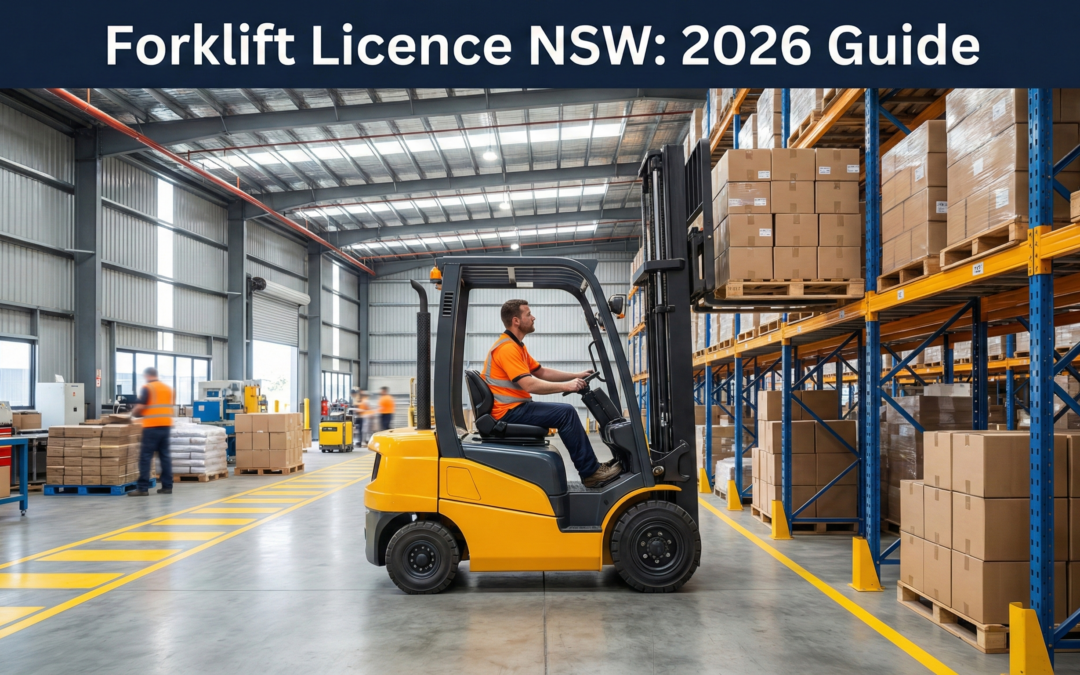
If you walk into any warehouse, distribution centre, or construction yard in the Illawarra, and Greater Sydney Regions you will see them. They are the heartbeat of the supply chain, moving tonnes of material every hour, keeping the economy flowing. We are talking, of course, about Forklift Operators.

As we head deeper into 2026, the demand for qualified logistics staff in NSW is hitting new highs. With the explosion of e-commerce and the expansion of industrial hubs in the Unanderra, Kembla Grange, Southern and Western Sydney corridor, the “Forklift Ticket” has become one of the most valuable pieces of plastic you can have in your wallet.

But here is the reality check: operating a forklift isn’t like driving a go-kart. It is classified as High Risk Work for a reason. A fully loaded counterbalance forklift weighs as much as three family cars and steers from the rear. If you get it wrong, you don’t just dent a bumper; you can bring down racking or crush a co-worker.

In this guide, we are going to break down exactly how to get your Forklift Licence (LF) in NSW, the difference between the tickets, and why quality training is the difference between getting hired and getting walked off-site.

The “LF” Ticket: What Actually Is It?

First, let’s clear up the jargon. In Australia, a forklift licence is officially known as a National High Risk Work Licence (HRWL), Class LF.

  • L stands for Load-shifting.

  • F stands for Forklift.

This licence permits you to operate a forklift truck equipped with a mast and an elevating load carriage. This covers almost every standard forklift you will see on a construction site or in a warehouse, including:

  • Counterbalance forklifts (gas, diesel, or electric).

  • Reach trucks (common in high-density warehousing).

  • Rough terrain forklifts (often used on building sites).

Important Note: This does not cover an “Order Picker” (LO). That is a completely different licence for machines where the operator rises into the air with the load. If you want to work in a high-tech distribution centre, you might eventually need both, but the LF is the industry standard starting point.

Why Do You Need a Licence? (Can’t I Just Learn on the Job?)

In the “old days,” you might have learned by hopping on a machine in the back paddock. Those days are gone.

Under SafeWork NSW legislation, you must hold a current High Risk Work Licence (HRWL) to operate a forklift in any workplace. Operating without one carries massive fines for both you and your employer. More importantly, if an accident occurs and the operator is unlicensed, insurance companies will walk away, leaving the business (and potentially the operator) liable for millions in damages.

This is why employers in 2026 are so strict. They won’t even look at your resume unless they see “Current HRWL – Class LF” listed at the top.

The 2-Day Course: What to Expect at AOTA

At All Onsite Training and Assessment (AOTA), we run a streamlined but rigorous 2-day Forklift Course. We designed this timeline to balance the need for thorough safety training with the reality that our students want to get qualified and get back to work quickly.

Here is the breakdown of the two days:

Day 1: Theory & Calculations (The Classroom)

Before you touch the key, you need to understand the machine. Forklifts are unique vehicles with a “stability triangle.”

  • The Physics: You will learn why forklifts tip over (it’s usually cornering too fast or turning with a raised load).

  • The Maths: Yes, there is a little bit of maths. You need to look at a data plate (load chart) and calculate if the forklift can safely lift a specific weight at a specific height and load centre distance.
    The Maths aspect mentioned in the article (Load Charts).

  • Video Analysis: We review real-world incidents to show you exactly what happens when safety protocols are ignored.

Practical Training (The Seat Time)

This is where you develop your “muscle memory.” You will spend the day in our dedicated training facility in Unanderra, operating real machines.

  • Pre-Start Checks: Every shift starts with a check. You’ll learn to inspect tyres, hydraulics, fluids, and safety guards.

  • Maneuvering: You will practice navigating tight chicane courses (forward and reverse) without touching the cones.

  • The Lifts: You will practice lifting loads from different heights, stacking pallets, and placing loads into racking systems.

  • High & Low: We train you on different sized loads so you get a feel for how the machine’s balance changes.

Day 2: The Assessment

This is the day that counts. A SafeWork NSW accredited assessor will put you through the paces.

  1. Knowledge Test: A written assessment covering the theory from Day 1.
  2. Calculations Test: Proving you can read a load chart accurately.
  3. Performance Assessment: You will be given a specific task to complete in the forklift (e.g., “Move those three pallets from the racking to the truck loading zone”). You must complete this safely, following all procedures, to pass.

The “Cowboy” Factor: Why Cheap Courses Are a Trap

You might see ads online for “1-Day Forklift Tickets.” Be very careful.

Unless you have significant prior experience and just need to re-sit a licence, it is almost impossible for a beginner to learn the skills required to be safe in one day.

These “Tick and Flick” courses might get you the piece of paper, but they won’t get you the job. Why? Because the first thing a warehouse manager will do is give you a VOC (Verification of Competency). They will watch you drive for 5 minutes.

  • If you turn with your tynes too high…

  • If you forget to look over your shoulders before reversing…

  • If you scrape the racking…

You will be asked to leave immediately. The cheap course ends up costing you a career. At AOTA, we pride ourselves on producing operators who are “site-ready,” not just “test-ready.”

The Career Outlook in the Illawarra, Southern and Western Sydney

These areas are transforming. We are seeing a shift from pure heavy manufacturing to a diverse mix of logistics, construction, and green energy. All of these sectors need forklifts.

  • Warehousing: The rise of online shopping means more distribution centres in the greater Sydney and Illawarra regions

  • Retail: Every Bunnings, Woolworths, and major retailer needs ticketed staff.

  • Construction: With the housing and infrastructure boom, telehandlers and rough-terrain forklifts are working overtime.

Pay Rates: Entry-level forklift roles often start above the minimum award, but experienced operators who can handle high-reach machines or work in specialised environments (like cold storage or hazardous goods) can command significantly higher wages.

Ready to Get Started?

You don’t need a degree to earn a good living, but you do need the right ticket. A Forklift Licence is the most versatile qualification in the Australian industrial sector. It is the “Swiss Army Knife” of resumes—it’s always useful.

Prerequisites to Enrol:

  • Must be 18 years or older.

  • Must have 100 points of ID.

  • Must have basic English language skills (verbal and written).

Next Course Dates: We run Forklift courses every week at our Unanderra facility. Because the classes are capped to ensure everyone gets enough driving time, they book out quickly.

[Click Here to Check the Training Schedule and Book Your Spot]

Don’t wait for the job ad to appear before you get the licence. By then, it’s too late. Get qualified now, so when the opportunity knocks, you are ready to answer.

Ready to unlock your full potential? Explore our courses further to discover the perfect training path for you. Or, if you have any questions or need personalised guidance, don’t hesitate to contact us. Our friendly team is here to support you every step of the way.

Remember, your dream career is within reach. With AOTA by your side, you can build the skills, confidence, and qualifications you need to succeed. So, take the first step today and start building your future!

Dedicated to your success

Nigel

Know the Risk | Interactive Hazard Finder

From high-risk zones to hidden hazards, this interactive tool helps you identify worksite dangers and shows you the safety training to tackle them confidently.

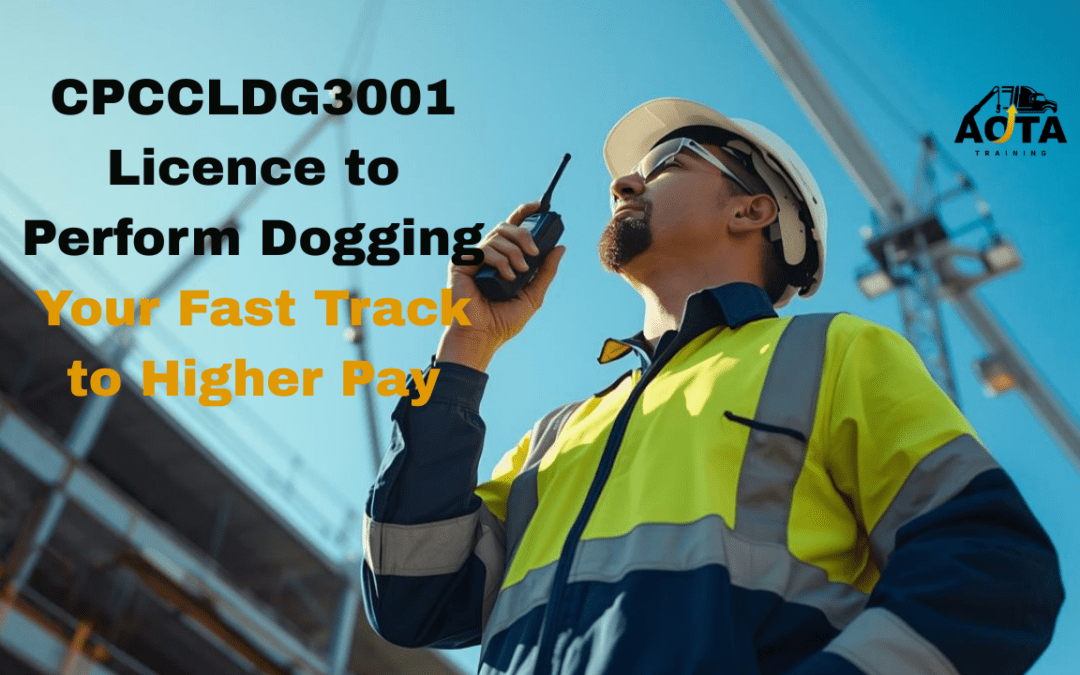
How to Get Your CPCCLDG3001: Licence to Perform Dogging in NSW in 2026

How to Get Your CPCCLDG3001: Licence to Perform Dogging in NSW in 2026

The Ultimate Guide to Getting Your Dogman Ticket in NSW (2026 Edition)

If you have spent any time on a construction site in the Illawarra lately, you know the story. The crane is swinging, the site is buzzing, and the person with the whistle and the radio is calling the shots. That person is the Dogman. And right now, in 2026, they are one of the most in-demand professionals in NSW.

With massive infrastructure projects kicking off—from the BlueScope land transformation to the Renewable Energy Zone (REZ)—recruiters are scrambling for qualified operators. But they aren’t just looking for bodies; they are looking for ticketed professionals who know what they are doing.

If you are currently laboring for $30 an hour and looking at the guys in the high-vis vests earning $50+ an hour, this guide is for you. We are going to break down exactly how to get your Dogman Ticket (officially known as the CPCCLDG3001 Licence to Perform Dogging), what the course involves, and how to make sure you don’t just pass the test, but actually get the job.

“Ticket” vs. “Licence”: What’s the Difference?

Before we dive into the training, let’s clear up the confusion that floods our inbox every week.

  • “I need my Dogman ticket.”

  • “Do you do the Dogging licence?”

  • “Is the High Risk Work card the same thing?”

The short answer: Yes, they are all the same thing.

In the industry, everyone calls it a “Ticket.” On the paperwork and SafeWork NSW legislation, it’s called a “High Risk Work Licence (HRWL).”

When you complete your training with a Registered Training Organisation (RTO) like AOTA, you aren’t just getting a piece of paper; you are applying for a nationally recognised licence issued by SafeWork NSW. This licence is valid for 5 years and allows you to work on any site in Australia.

Why the “Dogman” is the Most Critical Job on Site

A lot of people think the crane operator is the boss of the lift. They’re wrong. The crane operator is often working blind, relying 100% on the eyes, ears, and judgment of the Dogman.

The technical side (slinging)

If the Dogman miscalculates the weight of a steel beam, picks the wrong sling, or gives a confusing radio signal, people die. It is that simple. That is why this is classified as “High Risk Work.”

However, with that responsibility comes the reward. Because the safety of the site rests on your shoulders, the pay rates reflect it. In the Illawarra region, entry-level Dogmen can expect significantly higher wages than general laborers, with experienced operators commanding premium rates, especially on union sites or night shifts.

The Prerequisites: Can Anyone Do It?

You don’t need a university degree or a background in engineering to be a great Dogman. In fact, some of the best operators we’ve trained were former chefs, truck drivers, or general laborers.

To enrol in the course, you only need three things:

  1. Age: You must be 18 years or older.
  2. Language: You must have a basic command of the English language (SafeWork NSW requires you to complete the assessment in English).
  3. ID: You need 100 points of ID (e.g., Passport, Driver’s Licence, Medicare Card).

Note: You do NOT need your White Card to do the course, but you WILL need it to step onto a construction site to work.

The 5-Day Course Breakdown: What Actually Happens?

At AOTA, we don’t believe in “Tick and Flick” courses. We run a comprehensive 5-day program at our Unanderra facility designed to take you from “green” to “site-ready.”

Here is what your week will look like:

Days 1-2: The Theory & The Maths (Don’t Panic!)

The first two days are classroom-based. This is where we cover the “Plan Work” component.

  • The Maths: This is the part that scares most people. You will learn to calculate the Working Load Limit (WLL) of flexible steel wire rope, chains, and synthetic slings.

  • The Myths: You don’t need to be a math genius. If you can use a calculator (which we provide) and follow a formula, you will be fine. Our trainers are experts at breaking this down simply.

  • Safety: Understanding the hierarchy of control, hazard identification, and how to read a load chart.

Days 3-4: The Practical (Getting Hands-On)

This is where the fun starts. You get out of the classroom and into the yard.

  • Slinging Loads: You will get hands-on with chains, tags, shackles, and snatch blocks. You’ll learn how to inspect gear for defects—a skill that will save your life one day.

  • Directing the Crane: We put you on the radio. You will practice guiding a slewing mobile crane operator to move loads through obstacles, landing them precisely on targets. You’ll learn the standard whistle signals and hand signals that are the universal language of Australian construction sites.

  • The “Simulation”: Unlike other schools that might use a dummy load in a warehouse, we simulate real site conditions. You’ll deal with wind, obstacles, and the pressure of efficient communication.

Day 5: The Assessment

The final day is assessment day. SafeWork NSW requires you to pass three components:

  1. Knowledge Assessment: A written or verbal test covering the theory.
  2. Calculations Assessment: Proving you can do the maths to lift safely.
  3. Performance Assessment: A practical test where you sling a load and guide a crane through a complex task while an assessor watches.

The “Experience Catch-22” (And How to Beat It)

We hear it all the time: “I’ve got my ticket, but no one will give me a start because I don’t have experience.”

This is the biggest hurdle in the industry. Employers are terrified of hiring “green” operators who might damage a $500,000 load or injure a worker.

This is the AOTA difference. Because our training is known for being rigorous and realistic, employers in the Illawarra trust the AOTA brand. When you finish our course, you haven’t just sat in a room; you’ve sweated in the yard.

Pro Tip for Getting Hired: Don’t just email your resume. Walk onto site or into the labour hire office. Show them your shiny new HRWL card and say: “I trained at AOTA. I know my load charts, I know my knots, and I’m ready to do a VOC (Verification of Competency) right now.” Confidence sells.

Beyond the Dogman Ticket: The Career Pathway

Getting your Dogging ticket is just the first step. It is the “Gateway Ticket” that opens the door to the rest of the High Risk Work industry.

Once you have your Dogman (DG) ticket, you can progress to:

Ready to Upgrade Your Paycheck?

2026 is moving fast. The projects are approved, the cranes are going up, and the recruiters are hiring. Don’t sit on the sidelines watching the action.

Next Course Dates: We run Dogging courses regularly at our Unanderra facility. Spaces fill up fast (usually 2-3 weeks in advance).

[Click here to view the Training Schedule and Secure Your Spot]

Don’t wait for the “perfect time.” The best time to get ticketed was yesterday. The second best time is today.

Ready to unlock your full potential? Explore our course library further to discover the perfect training path for you. Or, if you have any questions or need personalised guidance, don’t hesitate to contact us. Our friendly team is here to support you every step of the way.

Remember, your dream career is within reach. With AOTA by your side, you can build the skills, confidence, and qualifications you need to succeed. So, take the first step today and start building your future!

Dedicated to your success

Nigel

Know the Risk | Interactive Hazard Finder

From high-risk zones to hidden hazards, this interactive tool helps you identify worksite dangers and shows you the safety training to tackle them confidently.

How to Pass Your High Risk Work Licence (Even If You Hate Books)

How to Pass Your High Risk Work Licence (Even If You Hate Books)

“I’m Not Good With Books” | How to Get Your Ticket Without Feeling Like You’re Back at School

Let’s be honest: for a lot of us, the idea of sitting in a classroom for five days staring at a whiteboard is a genuine nightmare.

You’re good with your hands. You can read a site plan, you can fix an engine, and you can work a 12-hour shift in the sun without complaining. But put a test paper in front of you, and your palms start sweating. Your mind goes blank.

We hear it all the time at AOTA: I haven’t studied since Year 10.” “I’m just a labourer, I’m not good at the math stuff.” “I’m worried I’ll look stupid if I ask a question.”

This fear is the single biggest thing holding capable Illawarra workers back. It stops them from upgrading their skills. It keeps them on the shovel, earning $30/hr, while watching the guys in the cranes earn double.

Here is the good news for 2026: A High Risk Work course isn’t university. It’s a trade. And if you can survive a job site, you can pass this course—if you choose the right trainer.

The “Tick and Flick” Trap (And Why It Makes Anxiety Worse)

When you are scared of the test, it’s tempting to look for the “easy” way out. You find a provider that promises to rush you through, give you the answers, and get you out the door.

This doesn’t fix the fear; it just delays it.

Sure, you might get the plastic card. But the first time you are on a real site—say, at the upcoming BlueScope Blast Furnace Reline—and a supervisor asks you to calculate a Working Load Limit (WLL) for a 10-tonne lift, you will freeze.

You won’t know the math. You won’t know the charts. And that is how people get hurt, and how careers end before they start.

We Speak “Trade,” Not “Textbook”

At AOTA (AllOnsite Training and Assessment) in Unanderra, we teach differently. We know that our best students aren’t academics—they are workers.

We have stripped away the “school” vibe and replaced it with “site” reality.

1. We Teach in the Dirt, Not Just the Classroom Some people can’t learn by reading a slide. They need to see it.

  • Struggling with a load angle formula? We don’t just write it on a board. We go out to the yard, hook up a chain, and show you how the angle changes the tension.

  • When you see the crane boom move, the math suddenly makes sense.

2. Trainers Who Have “Done the Time” Our instructors aren’t school teachers who have never worn high-vis. They are industry veterans. They speak your language. They know that “math” on a site isn’t about algebra; it’s about staying alive. They explain things simply, practically, and without the jargon.

3. No One Get Left Behind If you are struggling, we don’t move on without you. We sit down, grab a coffee, and draw it out until it clicks. We have helped guys who haven’t read a book in 30 years pass their Dogging and Rigging tickets with flying colours.

Why “Hands-On” Learners Will Win in 2026

The massive projects coming to the Illawarra in 2026—the Port Kembla Land Transformation, the Renewable Energy Zone logistics, the Highway Upgrades—don’t need people who are good at writing essays.

They need people who have “Site Sense.” They need operators who can look at a load and instinctively know if it’s unstable. They need Riggers who can work with their hands and communicate clearly over a radio.

You already have the hard part—the work ethic and the hands-on skill. The “book work” is just a hoop you have to jump through to prove you are safe.

Conquer the Fear. Get the Payday.

Don’t let a written test stand between you and a $120,000 year.

The 2026 boom is going to reward the qualified. The guys who are “too scared to study” will be left behind on the lower rates. The guys who face the fear and get the ticket will be running the show.

We get you through it. Come to AOTA. Tell us you’re worried about the theory. We’ll show you why hands-on learners actually make the best operators.

Check our upcoming course dates in Unanderra and see the AOTA difference.

Ready to unlock your full potential? Explore our Course Library further to discover the perfect training path for you. Or, if you have any questions or need personalised guidance, don’t hesitate to contact us. Our friendly team is here to support you every step of the way.

Remember, your dream career is within reach. With AOTA by your side, you can build the skills, confidence, and qualifications you need to succeed. So, take the first step today and start building your future!

Dedicated to your success

Nigel

Know the Risk | Interactive Hazard Finder

From high-risk zones to hidden hazards, this interactive tool helps you identify worksite dangers and shows you the safety training to tackle them confidently.