



Call Us

02 42068378
Office Hours: 9am-5pm

logo 1
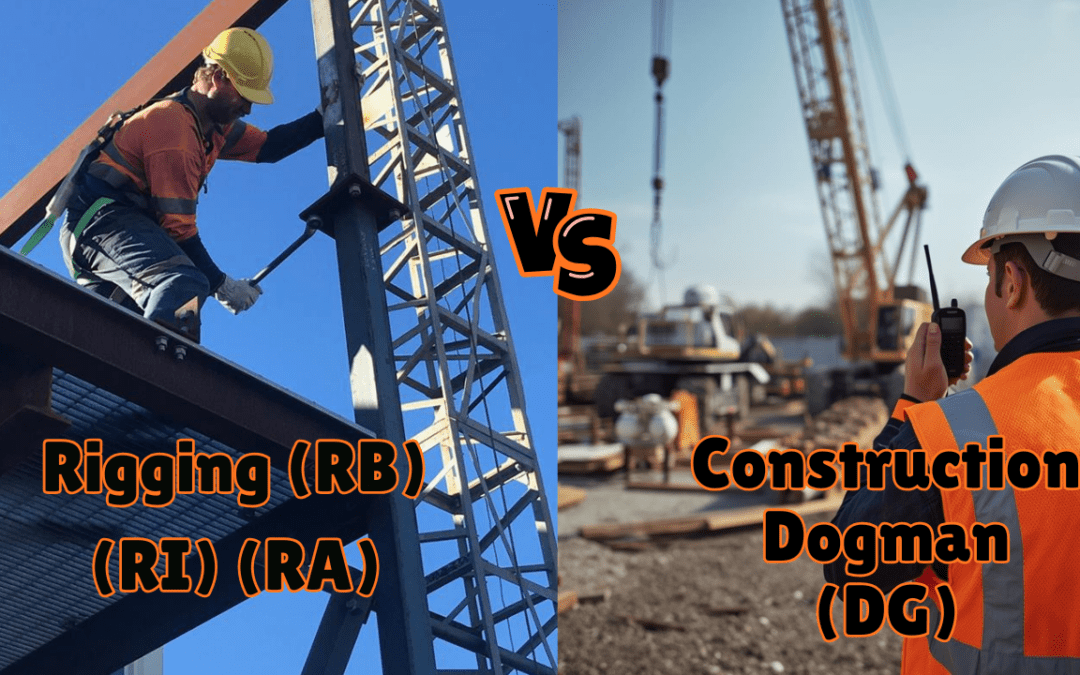
Rigging vs. Dogging | The 2026 Career Roadmap to Earning Top Dollar

Rigging vs. Dogging | The 2026 Career Roadmap to Earning Top Dollar

If you have spent a few months on a construction site in the Illawarra, you have probably noticed a hierarchy. There are the laborers, there are the trades, and then there are the Riggers.

Rigging is often viewed as the “Dark Art” of the construction world. While the Dogman directs the crane, the Rigger is the one calculating the impossible, erecting the steel skeleton of the building, and moving plant equipment that weighs more than a house.

As we head into 2026, with major industrial projects like the BlueScope transformation and the Shoalhaven Hospital redevelopment ramping up, the demand for dual-ticketed (Dogging + Rigging) operators is skyrocketing.

But for those just starting out, the terminology can be confusing. What is the difference between Dogging and Rigging? Do you need one to get the other? And most importantly, which one pays more?

In this guide, we map out the complete pathway from “Green” to “Advanced Rigger,” with specific dates for our January 2026 intakes at Unanderra.

The Foundation: It All Starts with Dogging (DG)

You cannot build a house without a slab, and you cannot become a Rigger without first being a Dogman.

The Licence to Perform Dogging (CPCCLDG3001) is the prerequisite for all Rigging courses.

  • The Rule: You must hold a current DG ticket (or be enrolled in the course) before you can sit the Basic Rigging course.

  • The Logic: Rigging involves complex lifting. If you don’t know how to select a sling or direct a crane (which you learn in Dogging), you aren’t safe to start erecting steel.

Pro Tip: If you are completely new, we recommend booking our Dogging course first, then immediately following it up with Rigging.

Level 1: Basic Rigging (RB) – The Steel Erector

Once you have your Dogging ticket, the next step is Basic Rigging (CPCCLRG3001). This is the “bread and butter” ticket for general construction.

What You Learn: While Dogging is about moving loads, Basic Rigging is about securing and assembling them.

  1. Steel Erection: You will learn how to bolt together structural steel columns and beams. This is the core skill for working on high-rise buildings and industrial sheds.
  2. Cantilevered Crane Loading Platforms (CCLP): Those platforms you see sticking out of skyscrapers to land materials? You learn to install them.
  3. Winches & Gin Poles: Old school skills that are still vital when a crane can’t reach the area.

The Job Market: With an RB ticket, you stop being just a “hook hand” and become a steel erector. This instantly makes you more valuable to structural steel companies and general builders in the Illawarra.

Level 2: Intermediate Rigging (RI) – The Heavy Lifter

This is where the boys are separated from the men. Intermediate Rigging (CPCCLRG3002) takes you away from simple steel erection and into complex, heavy lifts.

The Core Skills:

  • Dual Crane Lifts: Lifting a load with two cranes simultaneously. This requires precise calculation and coordination.

  • Tilt-Up Panels: This is huge in commercial warehousing (like the new logistics hubs in Kembla Grange). You learn to safely rotate and stand up massive concrete wall panels.

  • Demolition Rigging: Safely dismantling structures.

Why Get It? If you want to work on major industrial shutdowns or mine sites, RI is often the minimum standard. It shows you can handle “non-standard” lifts.

Level 3: Advanced Rigging (RA) – The Specialist

The Advanced Rigging (CPCCLRG4001) ticket is the PhD of the lifting world. It covers specialised equipment that terrifies most normal people.

The Core Skills:

  • Hung Scaffolds & Suspended Stages: rigging platforms that hang from the building rather than standing on the ground.

  • Gin Poles & Shear Legs: Complex leverage systems used when cranes are not an option.

This ticket is essential for anyone wanting to work in specialised maintenance, bridge building, or high-rise facade installation.

The “Combo” Strategy: How to Fast-Track Your Income

In 2026, the smartest operators aren’t just doing one course at a time with six months in between. They are doing “Block Training.”

By completing your Dogging  and Basic Rigging  back-to-back at AOTA, you enter the workforce  as a “Dual Ticketed” operator.

Why Employers Love This:

  • You can sling the load (Dogging).

  • You can bolt it up (Rigging).

  • You are useful 100% of the time, not just when the hook is down.

Bonus: The C6 Crane Ticket

For those who want to get off the ground and into the seat, the Slewing Mobile Crane (up to 60 tonnes) – TLILIC0023 is the logical next step.

Being a Rigger who can also jump in the crane seat when needed makes you “unfireable” on many crews.

Train with the Best in the Illawarra

At AOTA, our Unanderra facility is set up for high-risk work. We don’t just read from a textbook.

  • Real Cranes: We train on real slewing mobile cranes, not simulators.

  • Real Steel: You will erect actual steel structures during your RB assessment.

  • Real Experience: Our trainers have worked on the biggest shutdowns and construction projects in Australia.

Don’t spend 2026 wondering “what if.” Get the ticket, get the skills, and get the pay rate you deserve

Ready to unlock your full potential? Explore our available courses further to discover the perfect training path for you. Or, if you have any questions or need personalised guidance, don’t hesitate to contact us. Our friendly team is here to support you every step of the way.

Remember, your dream career is within reach. With AOTA by your side, you can build the skills, confidence, and qualifications you need to succeed. So, take the first step today and start building your future!

Dedicated to your success

Nigel

Know the Risk | Interactive Hazard Finder

From high-risk zones to hidden hazards, this interactive tool helps you identify worksite dangers and shows you the safety training to tackle them confidently.
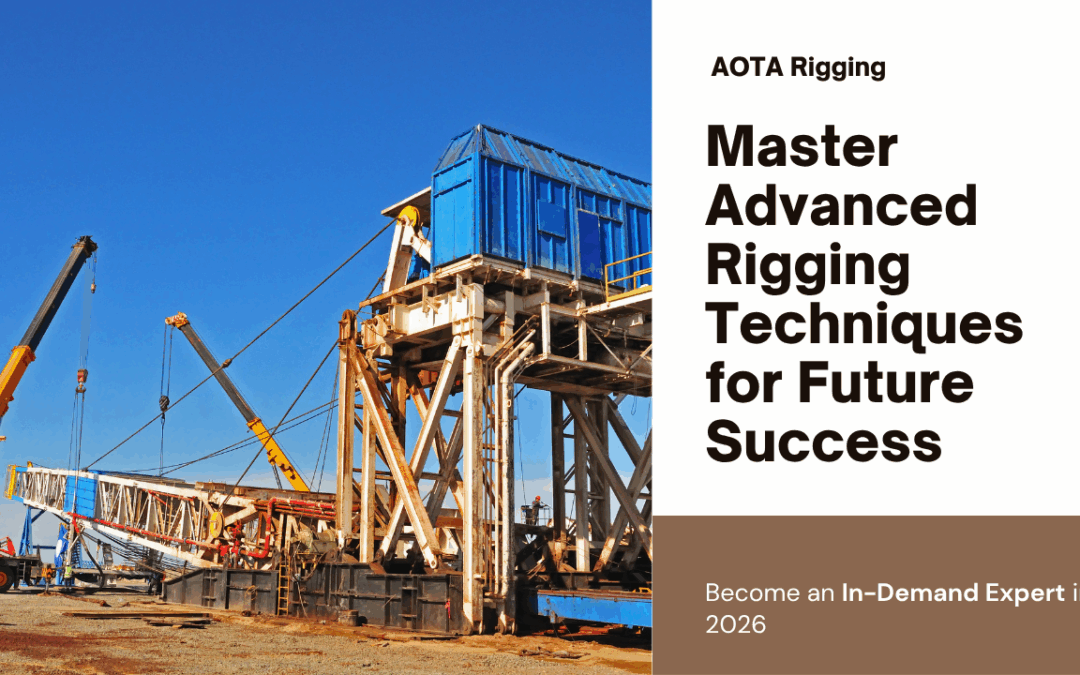
Advanced Rigging Course Illawarra, Become an In-Demand Expert in 2026

Advanced Rigging Course Illawarra, Become an In-Demand Expert in 2026

Advanced Rigging Course – Elevate Your Skills and Career in the Illawarra’s Thriving Industries

The Suspense of the Steel, Witnessing Advanced Rigging Mastery

Picture this, a massive steel beam, longer than a bus, suspended high above the ground. Below, a team of riggers works with orchestrated precision, guiding the beam into place with a complex network of ropes, pulleys, and winches. It’s a high-stakes ballet of engineering and skill, and at the heart of it all is the advanced rigger, the maestro of this intricate operation. It takes years of experience to master this type of work, as well as a great deal of skill.

That’s the power and precision of advanced rigging – a specialized field that goes far beyond the basics. In the Illawarra, with its booming construction, mining, and heavy industries, the demand for advanced riggers is skyrocketing. These are the professionals who handle the most complex and challenging lifting operations, ensuring safety and efficiency in high-pressure environments. According to the Australian Government Job Outlook, the demand for riggers is projected to grow by 9.2% in the next five years. This presents a unique opportunity for those who have mastered the skills of advanced rigging.

Beyond the Basics – What You’ll Learn in an Advanced Rigging Course

You’ve mastered the fundamentals of rigging. You can tie your knots, sling your loads, and work safely with cranes. But the Advanced Rigging Course (CPCCLRG4001A – Licence to perform rigging advanced level) takes you to a whole new level of expertise. This is where you become a true master of your craft, capable of handling the most demanding rigging challenges.

Advanced Lifting Techniques – Mastering the Art of Complexity

The Advanced Rigging Course delves deep into specialized lifting techniques that go far beyond routine operations. You’ll learn to:

  • Orchestrate multi-crane lifts; Coordinate the movements of multiple cranes to lift and position incredibly heavy or awkwardly shaped loads. This requires precise communication, meticulous planning, and a deep understanding of load distribution and crane dynamics. This is a very complex task, and should only be attempted by those with extensive experience.
  • Tilt and turn loads with finesse; Utilize specialized equipment like tilt tables, turntables, and hydraulic jacks to manipulate loads in multiple planes. Imagine rotating a massive piece of machinery to fit through a narrow opening or tilting a pre-fabricated structure into its final position. Many large factories, such as Bluescope Steel, will have dedicated teams for this type of work.
  • Install guyed derricks and structures; Learn how to assemble and operate guyed derricks, temporary lifting structures used for heavy lifting in locations where conventional cranes are impractical. This is a skill that is highly sought after in the construction and mining industries, and is a very specialised field.
  • Erect flying foxes and cableways; Master the techniques for setting up temporary cableway systems used to transport materials and personnel across challenging terrain, such as valleys or construction sites. This is also a very specialised skill, and takes many years to master.
  • Construct hung and cantilevered crane loading platforms; Learn to build specialized platforms that extend from buildings or structures, providing a safe and efficient way to load and unload materials using cranes.

Advanced Load Calculation and Planning – The Science Behind the Lift

Advanced rigging isn’t just about brute force; it’s about meticulous planning and precise calculations. You’ll learn to:

  • Determine safe working loads in complex scenarios: Go beyond basic load charts and learn to calculate the forces acting on rigging gear in multi-point lifts, angled lifts, and other non-standard situations. This requires a strong understanding of physics, trigonometry, and engineering principles. This is a crucial step in the planning process, and is essential to ensure that the lift can be completed safely.
  • Develop comprehensive lift plans; Create detailed plans that account for every aspect of a complex lift, from load characteristics and rigging gear selection to potential hazards and contingency measures. The ability to create lift plans is one of the most important skills an advanced rigger can have.
  • Understand and apply advanced rigging principles; Delve deeper into the science of rigging, exploring concepts like load moment, center of gravity, and the effects of friction and wind loading.

Advanced Safety Practices – Minimizing Risk in High-Stakes Environments

Safety is paramount in any rigging operation, but in advanced rigging, the stakes are even higher. The course reinforces the importance of:

  • Rigorous risk assessment; Learn to identify and evaluate potential hazards associated with complex lifts, and develop strategies to mitigate those risks.
  • Comprehensive hazard control; Implement a hierarchy of controls to eliminate or minimize hazards, from engineering controls to administrative controls and personal protective equipment (PPE).
  • Emergency procedures; Develop and practice procedures for responding to unexpected events or emergencies during lifting operations.

Equipment Expertise – Mastering the Tools of the Trade

The Advanced Rigging Course introduces you to a range of specialized equipment used in complex lifting operations, including:

  • Gin poles and shear legs; Learn how to use these traditional lifting devices for heavy lifting in situations where cranes are not feasible.
  • Specialized winches; Gain proficiency in operating various types of winches, including multi-drum winches and capstan winches. These are often used for lifting and moving heavy loads, and can also be used to tension cables.
  • Load cells and monitoring devices; Understand how to use load cells and other monitoring devices to accurately measure and manage the forces acting on rigging gear during complex lifts.

Why Advanced Rigging Skills Are in High Demand in the Illawarra

The Illawarra’s industrial landscape is a hotbed of activity, and that means a constant need for highly skilled advanced riggers. Here’s why:

Complex Construction Projects: Building Bigger and Bolder

From towering apartment buildings in Wollongong to major infrastructure projects like the Albion Park Rail bypass, the Illawarra is seeing a surge in complex construction. These projects often involve:

  • Heavy pre-fabricated components: Lifting and placing massive concrete panels, steel beams, and other pre-fabricated elements requires the expertise of advanced riggers.
  • Challenging site conditions: Tight spaces, uneven terrain, and working at heights all demand advanced rigging skills to ensure safety and efficiency.
  • Specialized lifting operations: Erecting bridges, installing large-scale public art, and constructing unique architectural features often require non-standard rigging techniques.

Specialized Mining Operations – Keeping the Mines Running Smoothly

The South32 mines near Appin and Dendrobium rely on advanced riggers for a variety of critical tasks, including:

  • Equipment installation and maintenance: Installing and maintaining heavy machinery, such as longwall shearers and continuous miners, often involves complex rigging operations in confined spaces.
  • Shaft and tunnel maintenance; Advanced riggers play a vital role in maintaining and repairing mine shafts and tunnels, often working in challenging and potentially hazardous environments.
  • Emergency response; In the event of an equipment failure or other emergency, advanced riggers may be called upon to perform complex rescue or recovery operations.

Heavy Industry Demands – Maintaining the Region’s Industrial Backbone

Facilities like BlueScope Steel in Port Kembla require advanced riggers for:

  • Plant maintenance and shutdowns; Regular maintenance and periodic shutdowns of industrial plants often involve complex lifting operations to remove, repair, and reinstall heavy machinery.
  • Equipment upgrades and modifications; As technology evolves, advanced riggers are needed to install new equipment and modify existing systems, often working within tight deadlines.
  • Specialized lifting tasks; Moving and positioning large and awkwardly shaped components within the plant requires the expertise of advanced riggers.

Port Operations: Handling the Heaviest Loads

Port Kembla‘s bustling operations rely on advanced riggers to;

  • Load and unload unconventional cargo; Beyond standard containers, the port handles oversized and heavy cargo, such as wind turbine blades, mining equipment, and large industrial components. These require specialist advanced rigging techniques.
  • Maintain and repair port infrastructure; Advanced riggers are involved in maintaining and repairing cranes, gantries, and other vital port infrastructure.
  • Respond to emergencies; In the event of a cargo spill or other incident, advanced riggers may be needed to assist with cleanup and recovery operations.

The Benefits of Completing an Advanced Rigging Course – Elevate Your Career

Investing in an Advanced Rigging Course is an investment in your future. Here’s how it can benefit you;

Become a Highly Sought-After Specialist

Advanced riggers are a rare breed, possessing a unique skillset that’s in high demand. Completing this course sets you apart from the crowd and makes you a highly valuable asset to employers in the Illawarra and beyond. The skills you learn will be transferrable to almost any industry, meaning you will have many different career options available.

Command Higher Wages

Your specialized skills and expertise as an advanced rigger will translate into significantly higher earning potential. Employers are willing to pay a premium for individuals who can safely and efficiently handle complex lifting.

Take Your Rigging Career to the Next Level – Enrol Today

The Illawarra needs skilled advanced riggers, and the Advanced Rigging Course is your pathway to becoming one of them.

Choosing the Right Training Provider: Experience Matters

When selecting an RTO for your Advanced Rigging Course, look for a provider that:

  • Employs highly experienced trainers; Your trainers should have extensive real-world experience in advanced rigging, not just theoretical knowledge. They should be able to share practical insights and anecdotes that bring the training to life.
  • Offers hands-on training with industry-standard equipment; You need to train on the same type of equipment you’ll be using in the field. This ensures that your skills are directly transferable to the workplace.
  • Has a proven track record of success; Look for an RTO with high completion rates and positive feedback from graduates.
  • Provides ongoing support; The best RTOs offer support to their students even after they complete the course, helping them with job placement and career advice.

Prerequisites – Are You Ready for the Challenge?

Before you can enrol in the Advanced Rigging Course, you’ll typically need:

  • A current Intermediate Rigging (RI) HRWL; This demonstrates that you have a solid foundation in rigging principles and practices. RI Course Link
  • Relevant industry experience; RTOs may require a certain amount of documented experience working as an intermediate rigger. This ensures that you have the practical experience needed to succeed in the advanced course.
  • A strong commitment to safety; Advanced rigging demands a meticulous approach to safety. You need to be dedicated to following procedures and minimizing risks.

Course Duration and Assessment:

The Advanced Rigging Course typically takes 5 days to complete, although this can vary depending on the RTO and the specific course structure. Assessment usually involves;

  • Written exams; Testing your theoretical knowledge of advanced rigging principles, safety procedures, and relevant regulations.
  • Practical assessments; Demonstrating your ability to plan and execute complex lifting operations safely and efficiently, using a variety of equipment and techniques.

Invest in Your Future – Become an Advanced Rigger

The Advanced Rigging Course is a challenging but rewarding investment in your career. By completing this course, you’ll gain the skills, knowledge, and confidence to tackle the most complex rigging challenges, opening doors to exciting opportunities in the Illawarra’s thriving industries. You’ll be a leader in your field, a highly sought-after specialist, and a master of your craft. You will also be able to pass your knowledge onto others, ensuring that the industry continues to grow and improve.

Take the next step;

  1. Research RTOs in the Illawarra: Identify reputable training providers that offer the Advanced Rigging Course.
  2. Contact your chosen RTO; Discuss your training needs, course availability, prerequisites, and any other questions you may have.
  3. Enrol in the course; Make the commitment to elevate your skills and advance your career.
  4. Immerse yourself in the training; Work hard, learn from the experts, and practice your new skills.
  5. Pass your assessments and become a certified Advanced Rigger!

The Illawarra’s industries are calling for skilled advanced riggers. Don’t wait – take the leap and become a leader in this dynamic and rewarding field. Your future as a respected and highly compensated Advanced Rigger starts now! The path to a more challenging, more lucrative, and more fulfilling career is within your reach. Embrace the challenge, master the skills, and become an Advanced Rigger – the Illawarra is waiting for you.

Ready to unlock your full potential? Explore our website further to discover the perfect training path for you. Or, if you have any questions or need personalised guidance, don’t hesitate to contact us. Our friendly team is here to support you every step of the way.

Remember, your dream career is within reach. With AOTA by your side, you can build the skills, confidence, and qualifications you need to succeed. So, take the first step today and start building your future!

Dedicated to your success

Nigel

Understanding RB RI and RA Type Rigging Courses

Understanding RB RI and RA Type Rigging Courses

Imagine standing at the foot of a towering construction site. Cranes are lifting massive steel beams into place, workers are strategically positioned across the structure, and in the middle of it all is the rigging team, ensuring that every lift is safe and precise. Behind every successful lift is a rigger with the right qualifications and training.

In Australia’s booming construction industry, riggers are critical to the safe and efficient movement of loads. But not all riggers are trained equally—there are various levels of rigging certifications that determine what kind of work you’re qualified to handle. These levels are known as Basic Rigging (RB), Intermediate Rigging (RI), and Advanced Rigging (RA). Understanding the differences between these certifications is key to navigating your career path in this exciting field.

With infrastructure spending projected to exceed $290 billion by 2025, there’s never been a better time to pursue a rigging certification and expand your career opportunities. In this article, we’ll break down the three levels of rigging courses and explain how each can help you advance in the construction and heavy industries.


What Are RB, RI, and RA Rigging Certifications?

The Three Tiers of Rigging Certifications

In Australia, rigging certifications are divided into three levels based on the complexity of the tasks and the equipment involved. Here’s a look at each level:

1. Basic Rigging (RB)
The Basic Rigging (RB) certification is the entry-level qualification for those looking to become a rigger. With an RB licence, you’ll be able to perform basic rigging tasks, such as:

  • Erecting structural steel.
  • Setting up hoists, static lines, and safety nets.
  • Installing pre-cast concrete panels.

This qualification allows you to work on a range of construction sites, but it’s primarily focused on lower-risk rigging tasks. Basic rigging is ideal for those starting in the industry or looking to build foundational skills.

2. Intermediate Rigging (RI)
The Intermediate Rigging (RI) certification is the next step up and builds on the skills learned in basic rigging. With an RI licence, you’ll be qualified to perform more complex rigging tasks, including:

  • Rigging cranes and other lifting devices.
  • Erecting tilt-up panels.
  • Performing rigging tasks involving the use of powered hoists.

Intermediate rigging opens the door to more challenging roles in construction and heavy industries, where more precise and technical rigging skills are required.

3. Advanced Rigging (RA)
The Advanced Rigging (RA) certification is the highest level of rigging qualification in Australia. With an RA licence, you’ll be able to handle the most complex rigging jobs, such as:

  • Erecting tower cranes.
  • Rigging for large-scale demolition projects.
  • Performing dual-lift operations.

Advanced rigging jobs are often found in large infrastructure projects and heavy industries like mining and offshore oil rigs. This certification qualifies you to take on supervisory roles, as well as high-risk projects that require advanced technical knowledge.


Prerequisites for Each Certification

What You Need Before You Enrol

Each level of rigging certification has specific prerequisites to ensure that you have the necessary skills and experience before progressing.

Basic Rigging (RB) Prerequisites
To enroll in a Basic Rigging course, you need to:

  • Hold a valid Dogging (DG) licence. The dogging licence covers essential skills in directing crane movements and securing loads, which are foundational for rigging work.
  • Be at least 18 years old.

This is an entry-level certification, so no prior rigging experience is necessary beyond the dogging qualification.

Intermediate Rigging (RI) Prerequisites
To take the Intermediate Rigging course, you must:

  • Have completed the Basic Rigging (RB) certification.
  • Hold a valid Dogging (DG) licence.

This ensures that you’ve already gained some rigging experience and are ready to take on more complex tasks.

Advanced Rigging (RA) Prerequisites
For Advanced Rigging, you need to:

  • Hold both the Basic (RB) and Intermediate (RI) Rigging licences.
  • Have experience working as an intermediate rigger.

Advanced rigging requires a thorough understanding of complex lifting and rigging operations, so the course builds on the skills learned in the previous two levels.


Career Pathways Based on Rigging Certification

How Each Rigging Certification Impacts Your Career

The level of rigging certification you hold determines the types of projects you can work on and the level of responsibility you’ll take on in the workplace. Here’s how each certification can shape your career:

Basic Rigging (RB) Career Opportunities
With a Basic Rigging licence, you’ll primarily work on smaller-scale construction projects. You’ll be responsible for setting up scaffolding, hoists, and other equipment to support construction activities. Common roles for basic riggers include:

  • Construction Site Rigger: Setting up rigging systems for general construction tasks.
  • Precast Concrete Installer: Installing pre-cast panels and ensuring their safe placement.

While basic rigging is essential work, career advancement typically requires moving on to higher-level certifications.

Intermediate Rigging (RI) Career Opportunities
An Intermediate Rigging licence opens the door to more technical and higher-paying roles. With this certification, you can work on larger construction projects, often involving more specialized rigging equipment like cranes and hoists. Career paths for intermediate riggers include:

  • Crane Rigger: Setting up and operating cranes for large-scale construction or demolition.
  • Tower Erector: Rigging for the construction of communication towers or high-rise buildings.

Intermediate rigging offers a significant step up in both responsibility and earning potential, with many projects requiring the precision that comes with more advanced training.

Advanced Rigging (RA) Career Opportunities
With an Advanced Rigging licence, you’re qualified for the most challenging and high-risk rigging roles. You’ll often work on major infrastructure projects, where safety and precision are paramount. Career opportunities at this level include:

  • Rigger Supervisor: Overseeing rigging operations and managing teams of riggers on large construction or mining projects.
  • Demolition Rigger: Handling complex rigging tasks during the controlled demolition of structures.
  • Offshore Rigger: Working on oil rigs, where heavy and complex equipment must be moved safely and efficiently.

Advanced riggers are in high demand, particularly for projects like major urban developments and mining operations in Australia’s resource-rich regions.


Choosing the Right Rigging Course for Your Career

How to Decide Which Certification Is Right for You

If you’re just starting out in the rigging industry, the Basic Rigging (RB) course is the perfect entry point. It provides a solid foundation of skills that will open up a range of opportunities on construction sites. Once you’ve gained some experience, progressing to Intermediate Rigging (RI) can help you take on more specialized roles, such as crane operation.

For those who are committed to a long-term career in rigging and want to pursue leadership positions or work on the most technically demanding projects, the Advanced Rigging (RA) certification is the ultimate goal. It offers the most diverse range of career opportunities and the potential for higher salaries.


Elevate Your Career with the Right Rigging Certification

Rigging is a highly specialized and essential role in Australia’s construction and heavy industries. Whether you’re just starting out with a Basic Rigging licence or aiming to advance your career with Intermediate or Advanced certifications, each level provides valuable skills and opens up new job opportunities.

With Australia’s infrastructure projects on the rise, now is the perfect time to invest in your rigging qualifications. By choosing the right certification for your career goals, you’ll position yourself as a valuable asset in a growing industry.

Ready to get started? Explore rigging courses today and take the first step towards mastering the art of rigging.


References:

  1. Infrastructure Australia, “National Infrastructure Plan 2025,” 2024.
  2. Safe Work Australia, “High-Risk Work Licences,” 2023.
  3. National Heavy Vehicle Regulator (NHVR), “Rigging and Lifting Guidelines,” 2024.


Ready to unlock your full potential? Explore our website further to discover the perfect training path for you. Or, if you have any questions or need personalised guidance, don’t hesitate to contact us. Our friendly team is here to support you every step of the way.

Remember, your dream career is within reach. With AOTA by your side, you can build the skills, confidence, and qualifications you need to succeed. So, take the first step today and start building your future!

Dedicated to your success

Nigel

Illawarra Project | Interactive Skillset Finder

Major projects are shaping our region, this interactive tool helps you identify project skillsets required and the courses available to tackle them confidently.

Beyond the Warehouse | Essential Tickets for Port and Logistics Jobs in the Illawarra

Beyond the Warehouse | Essential Tickets for Port and Logistics Jobs in the Illawarra

The Supply Chain Champions: Your Guide to a Career in Illawarra’s Logistics & Ports

Every single day, thousands of tonnes of goods flow through the Illawarra. From the massive ships at Port Kembla to the bustling warehouses and transport depots that dot our region, this is the engine room of our local economy. The Illawarra Shoalhaven Regional Plan 2041 identifies the growth of Port Kembla as an international trade hub as a top priority, with the potential to create up to 30,000 new jobs in linked industries.  This is a world of constant movement, where efficiency and safety are everything. A career in logistics and port operations is a career in a sector that never sleeps. But to be a part of it, you need the right qualifications. This isn’t just about driving a truck or a forklift; it’s about being a trusted professional in a high-stakes environment.

This guide will break down the key operational areas within the Illawarra’s logistics sector and show you the specific licences that will open doors.

The Heart of the Operation | The Warehouse and Yard

The modern warehouse is a high-tech, fast-paced environment. It’s the central hub where goods are received, sorted, stored, and dispatched.

King of the Aisles, The Forklift Licence (LF)

The forklift is the undisputed workhorse of any warehouse or yard. If you want a job in this environment, a Forklift Operations licence is the single most important qualification you can have.

  • What you don’t know: This isn’t just a simple competency; it’s a High-Risk Work Licence (HRWL). That means it’s nationally recognised and requires you to be formally assessed as competent to operate safely.
  • The environment: You’ll be working in tight spaces, loading and unloading trucks against the clock, and navigating around pedestrians and other machinery. Formal training teaches you about load stability, reading data plates, and maintaining situational awareness—skills that prevent accidents and make you an efficient, valuable operator.

The Heavy Hitters | Port Operations & Bulk Loading

When you move from a standard warehouse to a major facility like Port Kembla, the scale changes dramatically. Here, you’re dealing with shipping containers, heavy machinery, and bulk materials that weigh many tonnes. This is where advanced high-risk skills are essential.

The Art of the Heavy Lift: Dogging, Rigging & Cranes

Lifting a 20-tonne container off a ship is a world away from moving a pallet. This is where the lifting professionals come in.

  • Dogging (DG): Just like on a construction site, the dogger is essential for any crane lift. They are responsible for inspecting lifting gear, applying the correct slinging methods, and directing the crane operator to move the load safely from ship to shore, or from truck to storage.
  • Rigging (RB, RI, RA): Riggers are needed for more complex tasks, such as assembling and dismantling temporary structures, working with specialised lifting equipment, and managing unconventional or unbalanced loads.
  • Slewing Mobile Cranes (C6): These versatile cranes are the backbone of many port operations, able to move around the site and perform a huge variety of lifts. Operating a crane with a capacity of up to 60 tonnes requires a C6 High-Risk Work Licence and is a highly sought-after skill.

Connecting the Dots | Transport and Haulage

The final link in the supply chain is the transport network that moves goods from the port or warehouse to their final destination. This requires skilled, professional drivers who hold the correct class of licence.

On the Road, Heavy Vehicle Licences

  • HR (Heavy Rigid): This allows you to drive trucks with three or more axles. It’s a common licence for local delivery and transport roles.
  • HC (Heavy Combination): This is for semi-trailers, the most common type of truck for long-distance and B2B freight.
  • MC (Multi Combination): This is the highest class of licence, for operating B-doubles and road trains.

Holding a Heavy Vehicle Licence opens up a huge range of career opportunities, from local delivery runs to interstate haulage.

The Human Factor | Safety in a 24/7 World

The logistics industry operates under constant pressure, which makes a focus on human safety absolutely critical.

  • Provide First Aid: In a fast-paced environment with heavy machinery, being able to provide an immediate response to an injury is vital. A Provide First Aid qualification is a huge asset.
  • Mental Wellbeing: The life of a transport worker or logistics operator can be demanding. Factors like social isolation, tight deadlines, and shift work can take a significant toll on mental health. A Mental Health First Aid course provides the skills to recognise when a colleague is struggling and the confidence to offer support, fostering a safer and more positive workplace culture for everyone.  From the warehouse floor to the driver’s seat of a B-double, the Illawarra’s logistics sector offers a diverse range of career paths, each one starting with the right nationally recognised qualification.

References:

  • Illawarra Shoalhaven Regional Plan 2041.  
  • Property Council of Australia, ‘Backing the Illawarra Shoalhaven: Invest to Support Growth’ Media Release.   
  • Monash University, ‘Why investing in truck drivers’ health is crucial’ Research.
  • icare NSW, ‘Mental health injuries in the truck driving industry’. 
  • All Onsite Training and Assessment, Mental Health First Aid Course Information.

Ready to unlock your full potential? Explore our website further to discover the perfect training path for you. Or, if you have any questions or need personalised guidance, don’t hesitate to contact us. Our friendly team is here to support you every step of the way.

Remember, your dream career is within reach. With AOTA by your side, you can build the skills, confidence, and qualifications you need to succeed. So, take the first step today and start building your future!

Dedicated to your success

Nigel

Know the Risk | Interactive Hazard Finder

From high-risk zones to hidden hazards, this interactive tool helps you identify worksite dangers and shows you the safety training to tackle them confidently.

CPCCLRG4001 Licence to perform rigging advanced level

CPCCLRG4001 – Licence to Perform Rigging Advanced Level (RA)

Course Description
Duration & Cost
Mode of Assessment
Re-Assessment
What You Need To Know
Certification
Qualification
HRWL – Application
Location
What to Bring
Resources Provided
Your Rights & Obligations

Participants must hold a current statement of attainment/qualification for the following prior to attending this course:

  • CPCCLDG3001: LICENCE TO PERFORM DOGGING (DG)

  • CPCCLRG3001: LICENCE TO PERFORM RIGGING (Basic/RB)
  • CPCCLRG3002: LICENCE TO PERFORM RIGGING (Intermediate/RI)

This unit specifies the skills and knowledge required to safely perform advanced rigging work.

Riggers use mechanical load shifting equipment and associated gear to move, place or secure loads, including plant, equipment or members of a building or structure. Riggers ensure the stability of those members and set up and dismantle cranes and hoists.

 This unit applies to rigging work involving:

  • gin poles and shear legs
  • flying foxes and cable ways
  • guyed derricks and structures
  • suspended scaffolds and fabricated hung scaffolds.
  • 4 days training inclusive of assessment – AOTA Training
  • 1-day High Risk Licence assessment – SafeWork NSW
  • $1,950.00 – Note:  this does not cover the application fee to process your High-Risk Work Licence at the Post Office

    Assessments both theory and practical will be explained to students at the commencement of the course and conducted throughout the course duration.  Some examples of assessment will be group participation, theory questions, work type activities and practical demonstrations and observations.

    This unit also requires the student to be assessed by SafeWork NSW.

    Rigging work is undertaken in construction and other industries where load shifting equipment is used to move, place or secure loads.

    Completion of the general construction induction training program, specified in the Safe Work Australia model Code of Practice: Construction Work, is required by anyone carrying out construction work. Achievement of CPCCWHS1001 Prepare to work safely in the construction industry meets this requirement.

     This unit has a pre-requisite requirement. This requirement may be met by either the successful completion of the unit CPCCLRG3002 Licence to perform rigging intermediate level or holding a valid licence for intermediate rigging.

      • Applicants deemed not yet competent will be provided the opportunity to undergo further training.
      • Applicants cannot be reassessed for a minimum of 48 hours from the date of the original assessment.
        Note: there may be an extra cost for re-assessment
      • Minimum 18 years
      • Identification must be the originals and not laminated, also add a link to Safework NSW EOI: SW08446-0718-423971.pdf
      • Basic command of English language
      • Reading and writing – a learner must be able to read, comprehend and write a range of texts
      • Oral communication – a learner must be able to use and respond to spoken language
      • Basic ability in mathematics for formulas and load chart calculations

      Must have necessary health and fitness to carry out duties safely

      On successful completion of this course, participants will be issued with a Notice of Satisfactory Assessment for – CPCCLDG4001 Licence to perform rigging advanced level by a SafeWork NSW Accredited Assessor.

      National High Risk Licence (RA) issued by SafeWork NSW

      You will need to go to a participating Australia Post in person to apply. You need to do this within 60 days of receiving your Notice of Satisfactory Assessment from your SafeWork NSW assessor.

      You will need to take:

      • your Notice of Satisfactory Assessment form
      • a completed Application for a National Licence to Perform High Risk Work – New Application form (N5 form provided by your SafeWork NSW assessor). Do not sign this form, you need to sign it at Australia Post
      • passport-quality photograph
      • proof of identity. See evidence of identity information sheet (PDF, 109.92 KB)
      • any current high risk work licences
      • payment method (view the cost in the fee schedule).

      Training/assessment can be conducted at AOTA Training Facility – 275a Princess Highway, Unanderra NSW 

      All equipment
      All courseware and handouts

      Please refer to the AOTA Student Handbook through the Student Info Menu , as well as: