




Call Us

02 42068378
Office Hours: 9am-5pm

logo 1
Rigging vs. Dogging | The 2026 Career Roadmap to Earning Top Dollar

Rigging vs. Dogging | The 2026 Career Roadmap to Earning Top Dollar

If you have spent a few months on a construction site in the Illawarra, you have probably noticed a hierarchy. There are the laborers, there are the trades, and then there are the Riggers.

Rigging is often viewed as the “Dark Art” of the construction world. While the Dogman directs the crane, the Rigger is the one calculating the impossible, erecting the steel skeleton of the building, and moving plant equipment that weighs more than a house.

As we head into 2026, with major industrial projects like the BlueScope transformation and the Shoalhaven Hospital redevelopment ramping up, the demand for dual-ticketed (Dogging + Rigging) operators is skyrocketing.

But for those just starting out, the terminology can be confusing. What is the difference between Dogging and Rigging? Do you need one to get the other? And most importantly, which one pays more?

In this guide, we map out the complete pathway from “Green” to “Advanced Rigger,” with specific dates for our January 2026 intakes at Unanderra.

The Foundation: It All Starts with Dogging (DG)

You cannot build a house without a slab, and you cannot become a Rigger without first being a Dogman.

The Licence to Perform Dogging (CPCCLDG3001) is the prerequisite for all Rigging courses.

  • The Rule: You must hold a current DG ticket (or be enrolled in the course) before you can sit the Basic Rigging course.

  • The Logic: Rigging involves complex lifting. If you don’t know how to select a sling or direct a crane (which you learn in Dogging), you aren’t safe to start erecting steel.

Pro Tip: If you are completely new, we recommend booking our Dogging course first, then immediately following it up with Rigging.

Level 1: Basic Rigging (RB) – The Steel Erector

Once you have your Dogging ticket, the next step is Basic Rigging (CPCCLRG3001). This is the “bread and butter” ticket for general construction.

What You Learn: While Dogging is about moving loads, Basic Rigging is about securing and assembling them.

  1. Steel Erection: You will learn how to bolt together structural steel columns and beams. This is the core skill for working on high-rise buildings and industrial sheds.
  2. Cantilevered Crane Loading Platforms (CCLP): Those platforms you see sticking out of skyscrapers to land materials? You learn to install them.
  3. Winches & Gin Poles: Old school skills that are still vital when a crane can’t reach the area.

The Job Market: With an RB ticket, you stop being just a “hook hand” and become a steel erector. This instantly makes you more valuable to structural steel companies and general builders in the Illawarra.

Level 2: Intermediate Rigging (RI) – The Heavy Lifter

This is where the boys are separated from the men. Intermediate Rigging (CPCCLRG3002) takes you away from simple steel erection and into complex, heavy lifts.

The Core Skills:

  • Dual Crane Lifts: Lifting a load with two cranes simultaneously. This requires precise calculation and coordination.

  • Tilt-Up Panels: This is huge in commercial warehousing (like the new logistics hubs in Kembla Grange). You learn to safely rotate and stand up massive concrete wall panels.

  • Demolition Rigging: Safely dismantling structures.

Why Get It? If you want to work on major industrial shutdowns or mine sites, RI is often the minimum standard. It shows you can handle “non-standard” lifts.

Level 3: Advanced Rigging (RA) – The Specialist

The Advanced Rigging (CPCCLRG4001) ticket is the PhD of the lifting world. It covers specialised equipment that terrifies most normal people.

The Core Skills:

  • Hung Scaffolds & Suspended Stages: rigging platforms that hang from the building rather than standing on the ground.

  • Gin Poles & Shear Legs: Complex leverage systems used when cranes are not an option.

This ticket is essential for anyone wanting to work in specialised maintenance, bridge building, or high-rise facade installation.

The “Combo” Strategy: How to Fast-Track Your Income

In 2026, the smartest operators aren’t just doing one course at a time with six months in between. They are doing “Block Training.”

By completing your Dogging  and Basic Rigging  back-to-back at AOTA, you enter the workforce  as a “Dual Ticketed” operator.

Why Employers Love This:

  • You can sling the load (Dogging).

  • You can bolt it up (Rigging).

  • You are useful 100% of the time, not just when the hook is down.

Bonus: The C6 Crane Ticket

For those who want to get off the ground and into the seat, the Slewing Mobile Crane (up to 60 tonnes) – TLILIC0023 is the logical next step.

Being a Rigger who can also jump in the crane seat when needed makes you “unfireable” on many crews.

Train with the Best in the Illawarra

At AOTA, our Unanderra facility is set up for high-risk work. We don’t just read from a textbook.

  • Real Cranes: We train on real slewing mobile cranes, not simulators.

  • Real Steel: You will erect actual steel structures during your RB assessment.

  • Real Experience: Our trainers have worked on the biggest shutdowns and construction projects in Australia.

Don’t spend 2026 wondering “what if.” Get the ticket, get the skills, and get the pay rate you deserve

Ready to unlock your full potential? Explore our available courses further to discover the perfect training path for you. Or, if you have any questions or need personalised guidance, don’t hesitate to contact us. Our friendly team is here to support you every step of the way.

Remember, your dream career is within reach. With AOTA by your side, you can build the skills, confidence, and qualifications you need to succeed. So, take the first step today and start building your future!

Dedicated to your success

Nigel

Know the Risk | Interactive Hazard Finder

From high-risk zones to hidden hazards, this interactive tool helps you identify worksite dangers and shows you the safety training to tackle them confidently.

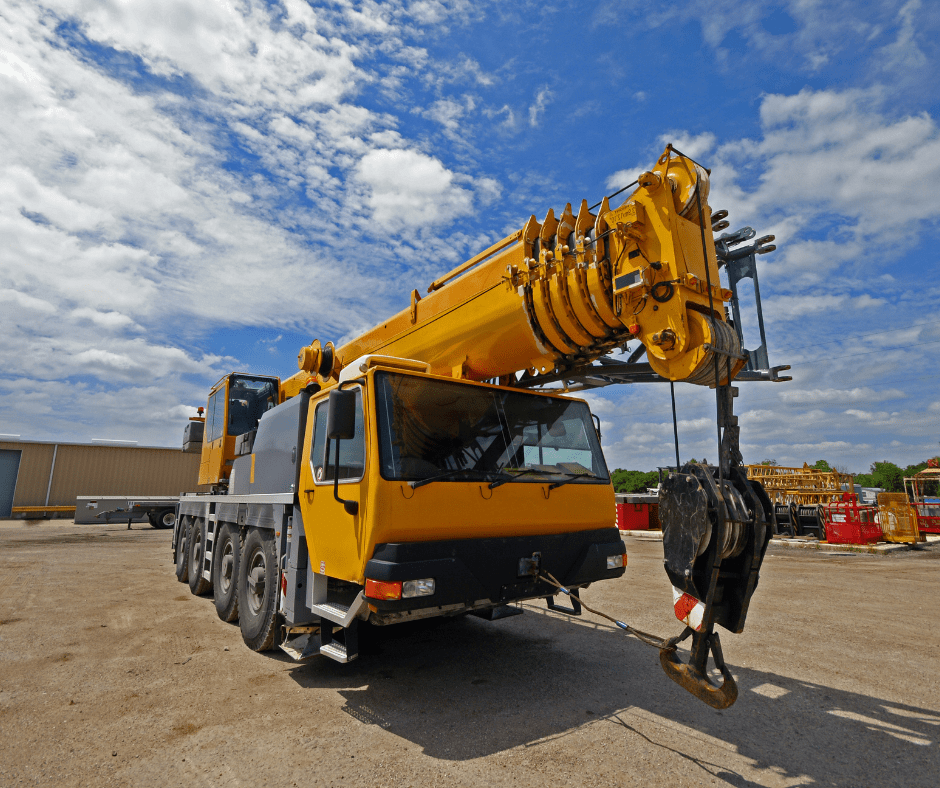
TLILIC0023 Licence to Operate a Mobile Slewing Crane up to 60 tonnes

slewing crane up to 60 tonnes

TLILIC0023 – LICENCE TO OPERATE A MOBILE SLEWING CRANE (up to 60 tonnes)

Course Description
Topics Covered
Duration and Cost
Assessment
Re- Assessment
Licences and Certification
HRWL - Application
Cancellations and Withdrawals
What You Need To Know
Resources Provided
Your Rights & Obligations
Additional Crane Courses

This unit specifies the skills and knowledge required to safely operate a slewing mobile crane with a Maximum Rated Capacity (MRC) up to 60 tonnes in accordance with all relevant legislative responsibilities. Competence in this unit, does not in itself result in a High-Risk Work Licence (HRWL) to operate this plant. 

Slewing mobile crane means a mobile crane incorporating a boom or jib that can be slewed, but does not include:

  • A front-end loader, or
  • a backhoe, or
  • an excavator, or
  • other earth moving equipment, when configured for crane operation.

A person performing this work is required to hold a slewing mobile crane with an MRC up to 60 tonnes HRWL.

This unit requires a person operating a slewing mobile crane with an MRC up to 60 tonnes to:

  • plan for the work/task
  • prepare for the work/task
  • perform work/task
  • pack up


Plan work/task

1.1

Task requirements are identified from work orders or equivalent, a lift plan is confirmed with associated personnel and a site inspection is conducted in accordance with workplace procedures

1.2

Work area operating surface is confirmed to determine ground suitability for operational use of mobile crane in accordance with lift plan, safe work and workplace procedures


1.3

Mobile crane Rated Capacity (RC) and the lifting gear Working Load Limit (WLL) are established and suitable for the load/s and work/task requirements in accordance with manufacturer requirements and workplace procedures

1.4

Appropriate paths for operating the mobile crane and moving and placing load/s in work area are assessed and determined in accordance with workplace procedures

1.5

Relevant hazard identification and risk elimination/control measures are applied and advised to associated personnel in accordance with workplace procedures

1.6

Traffic management plan implementation is confirmed in accordance with workplace procedures

1.7

Appropriate communication procedures are identified with associated personnel in accordance with workplace procedures

1.8

All crane and lifting operations are confirmed to ensure relevant work area requirements are correct in accordance with a lift plan and workplace procedures

1.9

Information required to ensure that lifting equipment and gear inspection, use, maintenance and storage complies with manufacturer requirements is obtained and interpreted

2

Prepare for work/task

2.1

Consultation with workplace personnel is established and maintained to ensure all crane and lifting operations are clear and consistent with site requirements in accordance with a lift plan and workplace procedures

2.2

Risk control measures for hazards identified are checked for implementation in accordance with the lift plan and safe work procedures

2.3

Mobile crane is accessed safely in accordance with manufacturer requirements and safe work procedures

2.4

Pre-start mobile crane checks are carried out and any damage and defects are reported, recorded and appropriate action is taken in accordance with manufacturer requirements and safe work procedures

2.5

Mobile crane is set up correctly with any lifting gear and stabilised as per the lift plan in accordance with relevant manufacturer requirements, including load chart/s and safe work procedures

2.6

Counterweight/s are set up as required in accordance with the lift plan, relevant manufacturer requirements and safe work procedures

2.7

Fly jib and/or luffing fly are set up as required in accordance with specific manufacturer requirements and safe work procedures

2.8

Operational checks are carried out and any damage and defects are reported, recorded and appropriate action is taken in accordance with manufacturer requirements and safe work procedures


2.9

Crane logbook is checked to confirm current compliance, is correct for the crane type, is completed and signed and required rectifications have been signed off in accordance with manufacturer requirements and safe work procedures

2.10

Weather and work environment conditions are assessed to determine any impact on mobile crane operations in accordance with manufacturer requirements and safe work procedures

2.11

Weight of the load is confirmed

2.12

Derated Working Load Limit (WLL) of lifting equipment resulting from selected slinging techniques is calculated and confirmed as suitable to meet the requirements of the lift plan

2.13

Suitable lifting points and slinging techniques are identified

2.14

Lifting equipment and gear are confirmed as ready for safe use

2.15

Load destination stability is confirmed ensuring it is able to bear the load and is prepared for safe access and landing

3

Perform work/task

3.1

Lifts are determined to be within the RC of the mobile crane in accordance with the load chart/s and lift plan

3.2

Boom/jib and hook block are safely positioned over the load following directions from associated personnel in accordance with the lift plan and safe work procedures

3.3

Main and/or auxiliary hook, including any lifting gear where required, are connected to the load and used safely in accordance with the lift plan, safe work procedures and manufacturer requirements

3.4

Test lift is carried out in accordance with dogging and safe work procedures

3.5

Loads are transferred using relevant crane movements and tag lines, as required, in accordance with lift plan and safe work procedures

3.6

Load and crane movement is monitored constantly and crane is operated safely in accordance with lift plan and safe work procedures

3.7

All required communication signals are correctly interpreted and followed whilst crane is operated in accordance with the lift plan and safe work procedures

3.8

Load is lowered and landed safely in accordance with lift plan and safe work procedures


3.9

Lifting gear is positioned for safe disconnection from the load and crane is positioned for next task in accordance with lift plan and safe work procedures

3.10

Lifting equipment and gear are inspected for defects, and defective items are isolated, labelled and reported

4

Pack up

4.1

Crane boom/jib, lifting gear and associated equipment are stowed and secured as required in accordance with manufacturer requirements and safe work procedures

4.2

Crane fly jib and/or luffing fly and counterweight/s are removed to storage position and secured as required in accordance with manufacturer requirements and safe work procedures

4.3

Relevant motion locks and brakes are applied as required in accordance with manufacturer requirements and safe work procedures

4.4

Outriggers, plates and/or packing are stowed and secured in accordance with manufacturer requirements and safe work procedures

4.5

Crane is shut down and secured to prevent unauthorised access/use in accordance with safe work procedures

4.6

Shutdown crane checks are carried out in accordance with safe work procedures and manufacturer requirements

  • 5 days including SafeWork NSW assessment
  • $2000.00
Three (3) assessments will be conducted over the duration of the course – (formative assessment) Knowledge, Calculations and Practical Assessments.
All critical components must be demonstrated and answered correctly.
  • Applicants deemed not yet competent will be provided the opportunity to undergo further training.
  • Applicants cannot be reassessed for a minimum of 48 hours from the date of the original assessment.
    Note: there may be an extra cost for re-assessment
This is a Nationally Recognised Training course and applicants deemed competent at the conclusion of the course will be provided with a Statement of Attainment and the relevant state’s WHS organisation PAPERWORK, IN nsw THIS INCLUDES THE Notice of Satisfactory Completion and application for a High Risk Work Licence..

This application is to be lodged at Australia Post which incurs and additional cost payable to Australia Post.

You will need to go to a participating Australia Post in person to apply. You need to do this within 60 days of receiving your Notice of Satisfactory Assessment from your SafeWork NSW assessor.

You will need to take:

  • your Notice of Satisfactory Assessment form
  • a completed Application for a National Licence to Perform High Risk Work – New Application form (N5 form provided by your SafeWork NSW assessor). Do not sign this form, you need to sign it at Australia Post
  • passport-quality photograph
  • proof of identity. See evidence of identity information sheet (PDF, 109.92 KB)
  • any current high risk work licences
  • payment method (view the cost in the fee schedule).
In the event of cancellation or withdrawal:

• Students who give notice to cancel their enrolment more than 10 days prior to the commencement of a program will be entitled to a full refund of fees paid.

• Students who give notice to cancel their enrolment less than 10 days prior to the commencement of a program will be entitled to a 75% refund of fees paid. The amount retained (25%) by All Onsite Training and Assessment Services is required to cover the costs of administration and resources which will have already been committed based on the students initial intention to undertake the training.

• Students who cancel their enrolment after a training program has commenced will not be entitled to a refund of fees.

If All Onsite Training and Assessment Services cancels the training course, and is not rescheduling then a full refund will be returned to the payer.

  • All students must pass a language, literacy & numeracy assessment (LLN)
  • Minimum 18 years of age (Workplace Health and Safety requirement)
  • PPE is required including safety boots and a hi-vis shirt
  • Identification must be the originals and not laminated,
  • 100 points Safework NSW EOI – SW08446-0718-423971.pdf
  • Unique Student Identifier Number –   http://www.usi.gov.au/create-your-USI/Pages/default.aspx – if you need help with this our trainer will help you on the day.

    All equipment
    All courseware and handouts

    Please refer to the AOTA Student Handbook through the Student Info Menu , as well as:

      AOTA can train all of the below, but we require access to the crane. The courses covered are:

      We can also provide training and assessment for companies.