
Forklift Licence | Your 2026 Guide to Getting Hired in the Illawarra
If you walk into any warehouse, distribution centre, or construction yard in the Illawarra, and Greater Sydney Regions you will see them. They are the heartbeat of the supply chain, moving tonnes of material every hour, keeping the economy flowing. We are talking, of course, about Forklift Operators.
As we head deeper into 2026, the demand for qualified logistics staff in NSW is hitting new highs. With the explosion of e-commerce and the expansion of industrial hubs in the Unanderra, Kembla Grange, Southern and Western Sydney corridor, the “Forklift Ticket” has become one of the most valuable pieces of plastic you can have in your wallet.
But here is the reality check: operating a forklift isn’t like driving a go-kart. It is classified as High Risk Work for a reason. A fully loaded counterbalance forklift weighs as much as three family cars and steers from the rear. If you get it wrong, you don’t just dent a bumper; you can bring down racking or crush a co-worker.
In this guide, we are going to break down exactly how to get your Forklift Licence (LF) in NSW, the difference between the tickets, and why quality training is the difference between getting hired and getting walked off-site.
The “LF” Ticket: What Actually Is It?
First, let’s clear up the jargon. In Australia, a forklift licence is officially known as a National High Risk Work Licence (HRWL), Class LF.
-
L stands for Load-shifting.
-
F stands for Forklift.
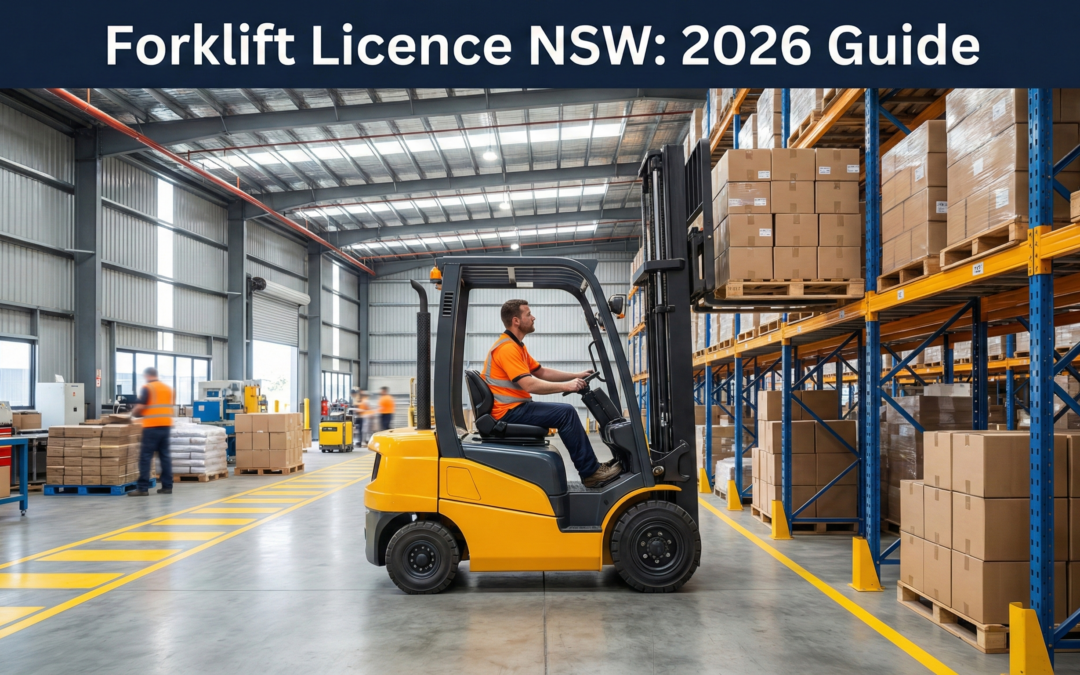
This licence permits you to operate a forklift truck equipped with a mast and an elevating load carriage. This covers almost every standard forklift you will see on a construction site or in a warehouse, including:
-
Counterbalance forklifts (gas, diesel, or electric).
-
Reach trucks (common in high-density warehousing).
-
Rough terrain forklifts (often used on building sites).
Important Note: This does not cover an “Order Picker” (LO). That is a completely different licence for machines where the operator rises into the air with the load. If you want to work in a high-tech distribution centre, you might eventually need both, but the LF is the industry standard starting point.
Why Do You Need a Licence? (Can’t I Just Learn on the Job?)
In the “old days,” you might have learned by hopping on a machine in the back paddock. Those days are gone.
Under SafeWork NSW legislation, you must hold a current High Risk Work Licence (HRWL) to operate a forklift in any workplace. Operating without one carries massive fines for both you and your employer. More importantly, if an accident occurs and the operator is unlicensed, insurance companies will walk away, leaving the business (and potentially the operator) liable for millions in damages.
This is why employers in 2026 are so strict. They won’t even look at your resume unless they see “Current HRWL – Class LF” listed at the top.
The 2-Day Course: What to Expect at AOTA
At All Onsite Training and Assessment (AOTA), we run a streamlined but rigorous 2-day Forklift Course. We designed this timeline to balance the need for thorough safety training with the reality that our students want to get qualified and get back to work quickly.
Here is the breakdown of the two days:
Day 1: Theory & Calculations (The Classroom)
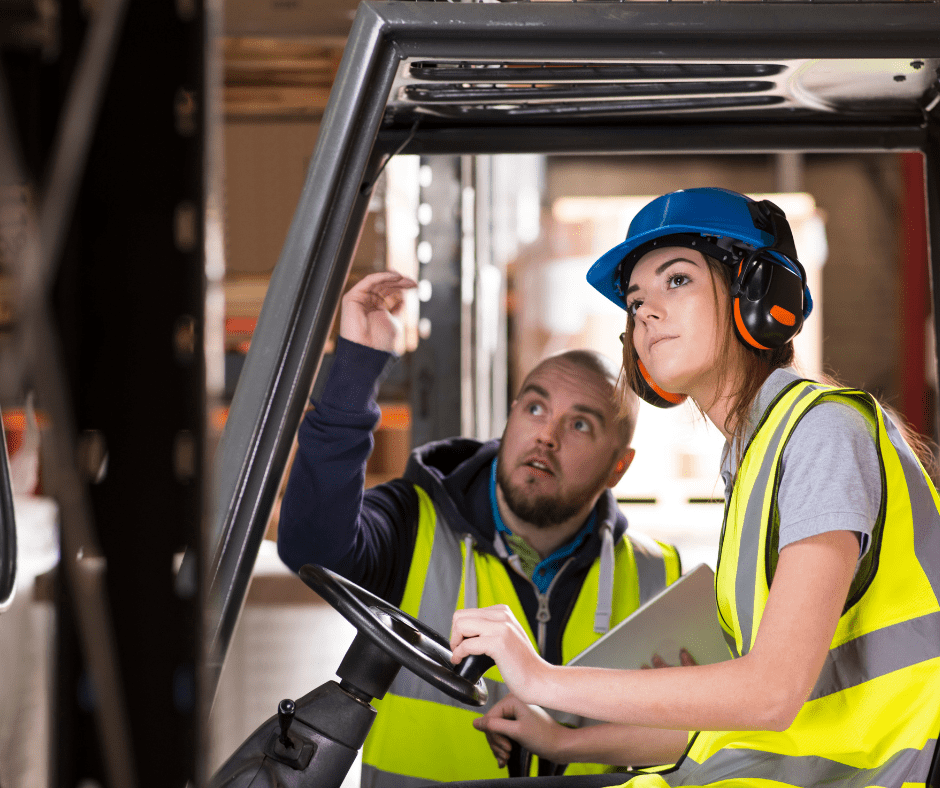
Before you touch the key, you need to understand the machine. Forklifts are unique vehicles with a “stability triangle.”
-
The Physics: You will learn why forklifts tip over (it’s usually cornering too fast or turning with a raised load).
-
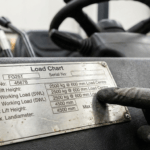
The Maths: Yes, there is a little bit of maths. You need to look at a data plate (load chart) and calculate if the forklift can safely lift a specific weight at a specific height and load centre distance.
-
Video Analysis: We review real-world incidents to show you exactly what happens when safety protocols are ignored.
Practical Training (The Seat Time)
This is where you develop your “muscle memory.” You will spend the day in our dedicated training facility in Unanderra, operating real machines.
-
Pre-Start Checks: Every shift starts with a check. You’ll learn to inspect tyres, hydraulics, fluids, and safety guards.
-
Maneuvering: You will practice navigating tight chicane courses (forward and reverse) without touching the cones.
-
The Lifts: You will practice lifting loads from different heights, stacking pallets, and placing loads into racking systems.
-
High & Low: We train you on different sized loads so you get a feel for how the machine’s balance changes.
Day 2: The Assessment
This is the day that counts. A SafeWork NSW accredited assessor will put you through the paces.
- Knowledge Test: A written assessment covering the theory from Day 1.
- Calculations Test: Proving you can read a load chart accurately.
- Performance Assessment: You will be given a specific task to complete in the forklift (e.g., “Move those three pallets from the racking to the truck loading zone”). You must complete this safely, following all procedures, to pass.
The “Cowboy” Factor: Why Cheap Courses Are a Trap
You might see ads online for “1-Day Forklift Tickets.” Be very careful.
Unless you have significant prior experience and just need to re-sit a licence, it is almost impossible for a beginner to learn the skills required to be safe in one day.
These “Tick and Flick” courses might get you the piece of paper, but they won’t get you the job. Why? Because the first thing a warehouse manager will do is give you a VOC (Verification of Competency). They will watch you drive for 5 minutes.
-
If you turn with your tynes too high…
-
If you forget to look over your shoulders before reversing…
-
If you scrape the racking…
You will be asked to leave immediately. The cheap course ends up costing you a career. At AOTA, we pride ourselves on producing operators who are “site-ready,” not just “test-ready.”
The Career Outlook in the Illawarra, Southern and Western Sydney
These areas are transforming. We are seeing a shift from pure heavy manufacturing to a diverse mix of logistics, construction, and green energy. All of these sectors need forklifts.
-
Warehousing: The rise of online shopping means more distribution centres in the greater Sydney and Illawarra regions
-
Retail: Every Bunnings, Woolworths, and major retailer needs ticketed staff.
-
Construction: With the housing and infrastructure boom, telehandlers and rough-terrain forklifts are working overtime.
Pay Rates: Entry-level forklift roles often start above the minimum award, but experienced operators who can handle high-reach machines or work in specialised environments (like cold storage or hazardous goods) can command significantly higher wages.
Ready to Get Started?
You don’t need a degree to earn a good living, but you do need the right ticket. A Forklift Licence is the most versatile qualification in the Australian industrial sector. It is the “Swiss Army Knife” of resumes—it’s always useful.
Prerequisites to Enrol:
-
Must be 18 years or older.
-
Must have 100 points of ID.
-
Must have basic English language skills (verbal and written).
Next Course Dates: We run Forklift courses every week at our Unanderra facility. Because the classes are capped to ensure everyone gets enough driving time, they book out quickly.
[Click Here to Check the Training Schedule and Book Your Spot]
Don’t wait for the job ad to appear before you get the licence. By then, it’s too late. Get qualified now, so when the opportunity knocks, you are ready to answer.
Ready to unlock your full potential? Explore our courses further to discover the perfect training path for you. Or, if you have any questions or need personalised guidance, don’t hesitate to contact us. Our friendly team is here to support you every step of the way.
Remember, your dream career is within reach. With AOTA by your side, you can build the skills, confidence, and qualifications you need to succeed. So, take the first step today and start building your future!
Dedicated to your success
Nigel
Know the Risk | Interactive Hazard Finder
From high-risk zones to hidden hazards, this interactive tool helps you identify worksite dangers and shows you the safety training to tackle them confidently.