



Call Us

02 42068378
Office Hours: 9am-5pm

logo 1
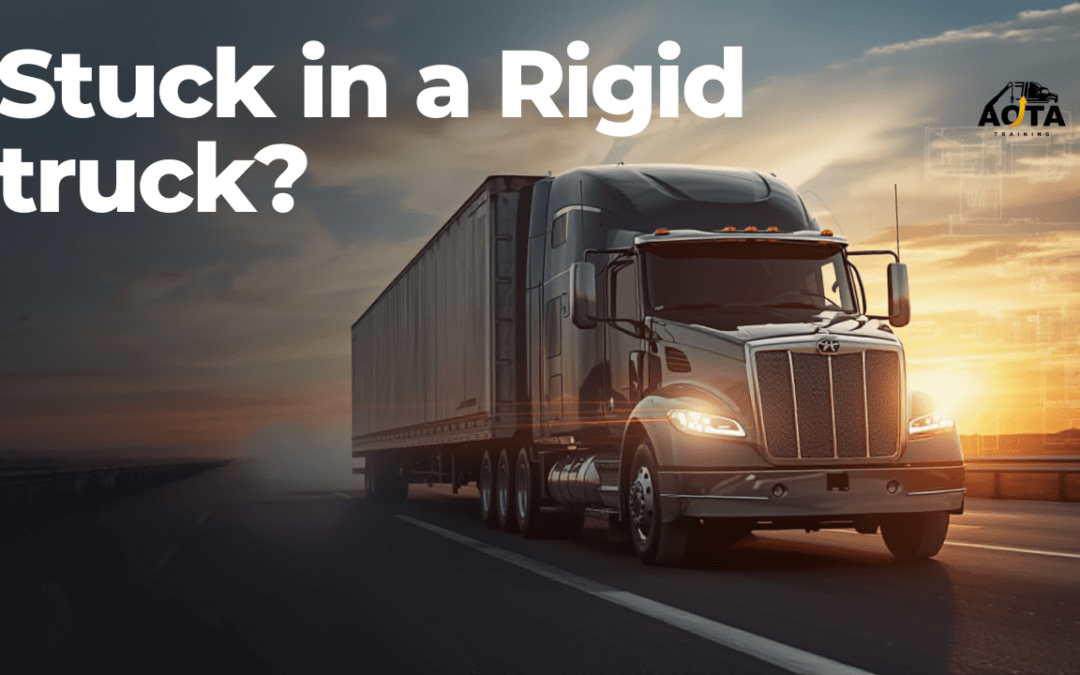
Stuck in a Rigid? Here’s Why 2026 is the Year to Upgrade to HC

Stuck in a Rigid? Here’s Why 2026 is the Year to Upgrade to HC

Stuck in a Rigid? Here’s Why 2026 is the Year to Upgrade to HC

You know the feeling.

It’s 2:00 PM on a Thursday. You’ve just finished your 15th drop of the day. Your back aches from hand-unloading pallets. You’re sitting in traffic on the Princes Highway, staring at the same dashboard you’ve stared at for three years.

A B-Double rolls past you in the right lane. The driver looks relaxed. He’s probably doing a line-haul run to Melbourne, listening to a podcast, with a thermos of coffee and a bunk in the back. He isn’t dealing with 15 site managers screaming about delivery times. He isn’t breaking his back on a tailgate loader.

And he’s definitely earning more money than you.

If this sounds familiar, you might be suffering from what we call the “Rigid Ceiling.”

It happens to the best of us. You get your Heavy Rigid (HR) licence, you land a decent local job, and you get comfortable. But comfort is the enemy of growth.

In 2026, the gap between “sticking with what you know” and “upgrading to what you’re worth” has never been wider. Here is why this is the year you finally need to make the jump to Heavy Combination (HC).

1. The “Rigid Ceiling” is Real (And It’s Costing You)

Most drivers hit a wall with their HR licence after about 2–3 years.

The Financial Wall

In a rigid truck, your earning potential is capped by the nature of the work. You are usually paid by the hour for local work.

  • HR Cap: You rarely see HR jobs advertised above $85,000 unless you are doing insane overtime.

  • The Trap: To earn more, you have to work longer, not smarter. You trade your family time for dollars.

The Lifestyle Wall

Let’s be honest: HR work is hard yakka.

  • Multi-Drop Burnout: Doing 20+ drops a day in a Pantech is physically exhausting. It’s not just driving; it’s logistics, customer service, and manual labour rolled into one.

  • Micromanagement: Local drivers are often the most tracked and micromanaged employees in the fleet. You have GPS on you, dispatch calling you every hour, and customers watching your every move.

The HC Difference: When you upgrade to HC, the dynamic changes. You are no longer a “delivery driver”; you are a Transport Operator. The runs are longer. The drops are fewer (often just one pick-up and one drop-off). The autonomy is higher. You are trusted to manage your own fatigue, your own load, and your own route.

2. The “Fear Factor”: Why You Haven’t Upgraded Yet

If the money and lifestyle are so much better, why doesn’t everyone upgrade? Usually, it comes down to two things: Articulation Anxiety and Gearbox Fear.

Fear #1: “I can’t reverse a trailer.”

We hear this every day at our Unanderra training centre. “I’ve driven a rigid for 10 years, but the idea of the trailer bending scares me.”

Here is the truth: Reversing a semi-trailer is actually easier than reversing a rigid—once you know the trick.

  • The Science: In a rigid, you have a short wheelbase that reacts instantly. In a semi, things happen slower. You have time to correct it.

  • The Training: At AOTA, we don’t just throw you in the deep end. We teach you the “Set Up.” If you set the truck up correctly before you even start reversing, the trailer wants to go into the hole.

Fear #2: “The Crash Box is too hard.”

The Eaton Fuller Road Ranger gearbox is legendary for a reason. It intimidates people. But think of it this way: It is a skill, not a talent. No one is born knowing how to double-clutch.

  • The Learning Curve: Yes, you will grind gears on Day 1. Everyone does.

  • The Click: By Day 2, something magical happens. Your left foot and your left hand start working together. You feel the revs instead of watching the tacho.

  • The Reward: Once you master it, you never lose it. It is the most satisfying driving experience you can have.

3. The 2026 Market: A Perfect Storm for Drivers

We are currently living through a unique moment in Australian transport history.

The “Grey Tsunami”

The average age of an Australian truck driver is pushing 50+. A massive wave of drivers is retiring right now. This “Grey Tsunami” is leaving a gaping hole in the Heavy Combination and Multi-Combination workforce.

The Desperation for Youth

Companies are desperate for “new blood.” They don’t just want steering wheel attendants; they want professional, safety-conscious drivers who can represent their brand. If you are under 45 and hold an HC licence, you are a unicorn. You can walk into almost any depot in the Illawarra—from Kembla Grange to South Nowra—and get an interview.

The “Sign-On” Bonanza

Because of this shortage, we are seeing perks that didn’t exist five years ago:

  • Sign-on bonuses ($2k – $5k is becoming common).

  • Set rosters (no more guessing when you’ll be home).

  • New equipment (companies are buying automatic Scanias and Volvos to attract drivers).

Note: Even though many fleets are buying automatics, they still prefer drivers with an Unrestricted (Road Ranger) Licence. It shows you have a higher level of mechanical sympathy and vehicle control.

4. How to Make the Jump (Without Quitting Your Day Job)

You don’t need to quit your current job to upgrade. At All Onsite Training and Assessment, we have designed our courses for working drivers.

The Assessment Process

  • Duration: usually 1 – 2 days (depending on experience).

  • Location: We train right here in Unanderra, so you don’t have to travel to Sydney.

  • The Truck: We use modern, industry-standard prime movers. You will be learning in the same gear you’ll be driving on the job.

Step-by-Step Plan

  1. Check your tenure: You must have held your MR or HR licence for at least 1 year.
  2. Book a weekend slot: Don’t burn your annual leave. Come see us on a Saturday. (N.B. Subject to change)
  3. The “Gap” Training: If you currently have an Automatic HR licence, we can do a specific “Condition B Removal” course to get you up to speed on the Road Ranger.

Don’t settle for “Good Enough”

Driving a rigid truck is a good job. It puts food on the table. But driving a Heavy Combination is a career.

It opens the door to the big leagues—interstate line-haul, heavy haulage, fuel tankers, and B-Doubles (MC). It is the difference between earning a wage and building wealth.

2026 is the year the industry is crying out for you to step up. The trucks are bigger, the roads are open, and the pay packet is waiting.

Stop looking at the B-Doubles in your mirror. Be the one driving them.

Ready to unlock your full potential? Explore our other course further to discover the perfect training path for you. Or, if you have any questions or need personalised guidance, don’t hesitate to contact us. Our friendly team is here to support you every step of the way.

Remember, your dream career is within reach. With AOTA by your side, you can build the skills, confidence, and qualifications you need to succeed. So, take the first step today and start building your future!

Dedicated to your success

Nigel

Know the Risk | Interactive Hazard Finder

From high-risk zones to hidden hazards, this interactive tool helps you identify worksite dangers and shows you the safety training to tackle them confidently.

Upgrading from Rigid to Combination | How to Boost Your Earning Potential in 2026

Upgrading from Rigid to Combination | How to Boost Your Earning Potential in 2026

Upgrading from Rigid to Combination | How to Boost Your Earning Potential in 2026

Let’s talk money.

You’re currently driving a Heavy Rigid (HR). Maybe it’s a waste truck, a concrete agitator, or a local delivery Pantech. You’re working hard, you’re paying the bills, but you aren’t getting ahead.

You’ve looked at the big rigs—the prime movers towing semi-trailers down the M1—and wondered if it’s worth the hassle of upgrading. Is the course cost worth it? Is the stress of reversing a trailer worth it?

In 2026, the answer is a mathematical “Yes.”

The gap between HR and HC wages has widened significantly over the last 12 months. With a massive driver shortage gripping Australia, upgrading your ticket is currently one of the smartest financial investments you can make.

Here is the breakdown of exactly how much more you could be earning.

The $20,000 Pay Gap

We pulled the latest salary data for New South Wales and Queensland to see the real difference between the two licences.

  • The HR Ceiling: Most Heavy Rigid roles are capped. The average salary sits between $65,000 and $85,000. To earn more than that in an HR, you are usually chasing massive overtime hours or working night shifts.

  • The HC Baseline: The starting salary for Heavy Combination drivers is significantly higher, often sitting between $95,000 and $115,000.

  • The Top End: For interstate or specialised HC drivers (like fuel tankers), salaries regularly push past $135,000.

The Maths: Even at the lower end, upgrading to HC puts an extra $20,000 to $30,000 in your pocket in the first year. That is a pay rise of roughly $500+ per week.

Why are HC Drivers Paid So Much More?

It’s not just because the truck is bigger. It’s because the utility of the driver is higher.

1. The “Linehaul” Factor

HR trucks are tethered to the local area. You drive out, you do your run, you come back. HC trucks are the arteries of the nation. They do the “Linehaul” runs—Sydney to Brisbane, Wollongong to Melbourne. Because these runs involve “Living Away From Home” (LAFH) allowances and higher kilometre rates, the base wage is just the start of your pay packet.

2. The “Drop and Swap” Efficiency

In an HR, you are often paid to wait. You wait at the dock to be unloaded. You wait for the forklift. In an HC, time is money. Logistics companies use “Drop and Swap” methods where you drop a loaded trailer, hook up an empty one, and get back on the road. Employers pay a premium for this efficiency because the truck is moving (and earning) for more hours of the day.

3. The Scarcity Premium

This is simple supply and demand. Australia is currently short nearly 28,000 drivers. The shortage is most acute in the “Heavy Combination” and “Multi-Combination” sectors. Employers are desperate for drivers who can handle articulated vehicles. We are seeing sign-on bonuses and inflated hourly rates just to secure staff. If you have the ticket, you have the leverage.

Calculating Your ROI (Return on Investment)

Let’s treat your licence upgrade like a business decision.

  • The Investment: A typical HC course costs between $1,400 and $1,800 (depending on the provider and hours needed).

  • The Return: A conservative salary increase of $20,000 in year one.

That is a 1,000% return on investment in the first 12 months. There is no stock, crypto, or savings account in the world that offers that kind of return. The cost of the course is usually paid off by your salary increase in the first 4 weeks of your new job.

The “Hidden” Financial Perks

Beyond the base salary, upgrading to HC unlocks several other income streams:

Dangerous Goods (DG)

Many fuel and chemical tankers are semi-trailers (HC). If you combine your HC licence with a Dangerous Goods ticket, you enter the elite tier of earning. These drivers often earn $45 – $50+ per hour because of the specialised knowledge required.

Recession-Proofing

When the economy slows down, construction (HR work) often slows down. But logistics (HC work) never stops. Food, medicine, and fuel must move, regardless of the economy. An HC licence is an insurance policy for your family’s income.

Condition B: The “Cheap” Option That Costs You Money

We need to touch on the gearbox again, because this affects your wallet.

If you choose to do your HC licence in an Automatic, you get a “Condition B” restriction. While this gets you the licence, it locks you out of the highest-paying sectors: Heavy Haulage, Dirt & Tipper Work, and Mixed Fleets.

Many of the top-paying employers in the Illawarra still run Road Ranger (Crash Box) gearboxes because they are unbreakable. If you can’t drive their trucks, you can’t get their wages. Don’t step over dollars to pick up cents. Spend the extra time learning the Road Ranger now so you don’t limit your earning potential later.

Stop Leaving Money on the Table

Every day you drive a Rigid truck when you could be driving a Combination, you are effectively working at a discount.

You are doing the hard yards—dealing with traffic, managing fatigue, handling compliance—but you aren’t getting paid the “Big Rig” rates.

2026 is the year to fix that.

Ready to boost your rate? At All Onsite Training and Assessment, we specialise in taking HR drivers and turning them into confident HC operators.

  • Location: Unanderra (Local & Convenient)

  • Gearbox: We teach the Road Ranger so you get the full pay packet.

  • Outcome: You leave with a ticket that pays for itself in a month.

[Check our Price List & Schedule Here] Call 8582 7997 to discuss your upgrade.

Ready to unlock your full potential? Explore our other course further to discover the perfect training path for you. Or, if you have any questions or need personalised guidance, don’t hesitate to contact us. Our friendly team is here to support you every step of the way.

Remember, your dream career is within reach. With AOTA by your side, you can build the skills, confidence, and qualifications you need to succeed. So, take the first step today and start building your future!

Dedicated to your success

Nigel

Know the Risk | Interactive Hazard Finder

From high-risk zones to hidden hazards, this interactive tool helps you identify worksite dangers and shows you the safety training to tackle them confidently.
HR vs. HC Licence | Which Heavy Vehicle Ticket is Right for You?

HR vs. HC Licence | Which Heavy Vehicle Ticket is Right for You?

It’s a rainy Tuesday morning at a loading dock in Unanderra. You’re sitting in the cab of your 10-tonne rigid, waiting for the forklift driver to finish his coffee. You watch a B-Double roll in—effortlessly reversing a 26-metre combination into a tight finger dock like he’s parking a Mini Cooper.

You know that driver is earning significantly more than you. You know he’s probably not hand-unloading 500 cartons of stock when he gets to the other end. And you know there’s a shortage of drivers just like him.

So, why are you still stuck in the rigid?

For many drivers, the jump from Heavy Rigid (HR) to Heavy Combination (HC) feels like a massive leap. It’s not just the size of the truck; it’s the articulation, the gearbox anxiety, and the cost of the course.

But with the Australian transport industry facing a critical shortage of 26,000 drivers right now—projected to hit 78,000 by 2029—there has never been a better time to upgrade.

If you are sitting on the fence, this guide is for you. We’re going to break down the real differences between HR and HC, not just in terms of axles and GVM, but in terms of lifestyle, bank balance, and career longevity.

The Heavy Rigid (HR): The “Backbone” of the Industry

Let’s start with the Heavy Rigid. If the transport industry is a human body, HR drivers are the muscles. They do the heavy lifting in our cities and suburbs.

What is it?

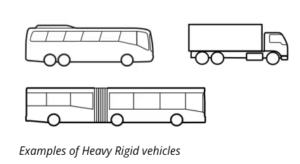
A Heavy Rigid vehicle is defined as a truck with 3 or more axles and a Gross Vehicle Mass (GVM) greater than 8 tonnes. Importantly, it is a rigid vehicle—meaning the cab and the trailer are fixed on a single chassis. It doesn’t bend.

The Typical Roles

If you hold an HR licence in the Illawarra or Sydney, you are likely looking at roles like:

  • Waste Management: Driving side-loaders or rear-loaders for council contracts.

  • Construction Agitators: Delivering concrete to sites (the classic “agitator driver” role).

  • Local Distribution: Delivering palletised goods to supermarkets and retail stores.

  • Removalists: Driving the big Pantechs for house moves.

The Salary Reality (2026)

According to the latest 2026 data, the average salary for an HR driver in Australia hovers between $65,000 and $85,000 per year.

It is solid, reliable money. But there is a ceiling. Because HR work is often “local,” you miss out on the lucrative kilometre rates and “living away from home” allowances that boost a truckie’s pay packet. You are trading salary for the convenience of sleeping in your own bed every night.

“HR Licence Driver Course Here”

The Heavy Combination (HC): The “Career Builder”

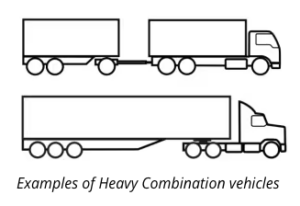
This is where the game changes. An HC licence allows you to drive a prime mover attached to a semi-trailer with a GVM of more than 9 tonnes.

The “Bend” Factor

The defining feature of the HC is articulation. The vehicle pivots behind the cab. This introduces a layer of complexity that scares many drivers off, but it’s also what makes the licence so valuable.

When you drive an HC, you aren’t just steering; you are managing a “sweep path.” You need to know where your trailer wheels are at all times because they aren’t following the same track as your steer tyres.

The Salary Jump

Here is the stat that matters: The average salary for HC and Interstate drivers sits in the $110,000 to $135,000 bracket.

That is a potential $40,000 per year pay rise just for adding a pivot point to your licence.

Why the gap?

  1. Skill Barrier: Fewer people can reverse a semi-trailer than a rigid. Scarcity drives up wages.
  2. Distance: HC roles often involve line-haul work (Sydney to Melbourne, or Illawarra to Brisbane), which attracts higher km rates.
  3. Dangerous Goods: Many fuel tankers and chemical transport rigs are HC vehicles. If you add a DG (Dangerous Goods) ticket to your HC licence, you are entering the top tier of driver earnings.

“HC Licence Driver Course Here”

The “Gearbox” Dilemma: Condition B vs. Road Ranger

This is the section most blogs gloss over, but it is the most critical decision you will make when booking your course.

In 2026, you can get your licence in an Automatic, but should you?

1. Automatic / Synchromesh (Condition B)

If you pass your test in an automatic or a synchromesh manual (like a car gearbox), your licence will be marked with a “Condition B” restriction.

  • Pros: It’s easier and faster to learn. You can often get licenced in 1-2 days.

  • Cons: You are legally forbidden from driving a Non-Synchromesh (Crash Box) vehicle.

2. The Road Ranger (Unrestricted)

The Eaton Fuller “Road Ranger” is a non-synchromesh gearbox. It requires you to double-clutch and match the engine revs (RPM) to the road speed (gear) to change gears. There is no synchro ring to help you slide it in.

  • Pros: If you pass in this, you get an Unrestricted Licence. You can drive anything—manual, auto, or crash box.

  • Cons: It takes longer to master. You will grind gears. You will get frustrated.

Why the “Crash Box” Still Matters in 2026

You might hear people say, “All new trucks are auto, don’t worry about it.” That is true for big logistics fleets like Toll or Linfox. But in the Illawarra construction, logging, and heavy haulage sectors, the Road Ranger is still king.

Why? Because automatics can struggle in thick mud or on steep quarry ramps. A Road Ranger gives the driver total control. If you want to work in civil construction or heavy haulage (where the big money is), an Unrestricted Licence is your golden ticket.

Our Advice: If you are young and building a career, suffer through the Road Ranger training. It future-proofs your resume.

The Hidden Differences: What They Don’t Tell You

Beyond the pay and the gears, there are three “invisible” differences between HR and HC work that you need to be ready for.

1. Fatigue Management becomes your religion

In an HR local job, you might work a standard 8-10 hour day. In an HC line-haul role, you are living by your logbook. You need to understand BFM (Basic Fatigue Management) and AFM (Advanced Fatigue Management) rules inside out. A 15-minute error in your logbook isn’t just a slap on the wrist; it’s a massive fine from the RMS/NHVR.

2. Load Restraint is harder

Strapping down a few pallets in a rigid Pantech is easy. Securing a 20-tonne excavator to a low-loader or strapping steel coils to a flatbed semi-trailer is an art form. As an HC driver, you are legally responsible for that load. If it shifts on the Mount Ousley descent, it’s on you. This is why our HC courses at AOTA spend significant time on load restraint theory.

3. The “Backing” Anxiety

Reversing a rigid is intuitive: turn left, the back goes left. Reversing a semi is counter-intuitive: turn left, the trailer goes right. The first time you try to back a semi into a finger dock, you will jackknife. Everyone does. The difference between a rookie and a pro is patience. Our instructors teach you the “set up”—getting the truck in the right position before you even start reversing.

The 2026 Market: Why Upgrade Now?

We mentioned the shortage earlier, but let’s look at the demographics. Currently, 47% of Australian truck drivers are aged over 55. Only 6.4% are female.

This is a demographic time bomb. As these older drivers retire over the next 3-5 years, the desperate need for HC and MC drivers is going to push wages even higher.

If you are a younger driver (and in this industry, “younger” means under 45), or a female driver looking for a secure career, you are in the driver’s seat. Companies are actively trying to diversify their fleets and lower their average driver age.

Verdict: Should You Make the Jump?

Stick with HR if:

  • You love being home every night for dinner at 6pm.

  • You prefer physical work (loading/unloading) over long hours of driving.

  • You are happy with a salary capped around the $85k mark.

Upgrade to HC if:

  • You want to break the $100k+ salary barrier.

  • You want less physical lifting and more driving.

  • You want the freedom of the open road and the challenge of handling big machinery.

  • You want a recession-proof skill set that is in demand across every state in Australia.

Ready to Upgrade?

At All Onsite Training and Assessment, we don’t just teach you to pass the test; we teach you to survive the job.

We offer:

  • Flexible Training: Weekend slots available in Unanderra. (N.B. dates subject to change)

  • The “Crash Box” Challenge: Learn on a real Road Ranger gearbox.

  • Job-Ready Skills: We focus on the reversing and load restraint skills that employers actually test you on.

Don’t let another year go by watching the big rigs pass you on the highway.

View our HC Course Dates Here. N.B. Driver training subject to change. Call us on 8582 7997 to book your assessment.

Ready to unlock your full potential? Explore our other course further to discover the perfect training path for you. Or, if you have any questions or need personalised guidance, don’t hesitate to contact us. Our friendly team is here to support you every step of the way.

Remember, your dream career is within reach. With AOTA by your side, you can build the skills, confidence, and qualifications you need to succeed. So, take the first step today and start building your future!

Dedicated to your success

Nigel

Know the Risk | Interactive Hazard Finder

From high-risk zones to hidden hazards, this interactive tool helps you identify worksite dangers and shows you the safety training to tackle them confidently.
What is a HC Licence and Why is it Essential in the Illawarra in 2025?

What is a HC Licence and Why is it Essential in the Illawarra in 2025?

From Coffee Run to Cross-Country Hauls – The HC Licence Journey

Imagine this, you’re stuck in traffic on the Princes Highway, late for a coffee run. Next to you, a massive truck and dog trailer effortlessly merges, hauling what looks like enough steel to build a skyscraper. That driver, cool as a cucumber behind the wheel, isn’t just driving a truck; they’re commanding a beast. They hold the key to keeping the Illawarra’s economy moving – a Heavy Combination (HC) licence. And in a region like ours, pulsating with industry, that licence is pure gold.

You see, the Illawarra isn’t just about beautiful beaches. We’re a powerhouse of industry, a vital link in Australia’s supply chain. From the roaring furnaces of BlueScope Steel to the bustling docks of Port Kembla, goods are constantly on the move. And who’s making those moves happen? HC drivers. According to the Australian Industry Standards’ March 2023 release of the Transport and Logistics Bulletin, there’s a 25% job vacancy rate in road freight transport across Australia. That number is likely even higher in booming regions like ours. That means skilled HC drivers are in serious demand. Getting your HC licence isn’t just about a job; it’s about becoming an essential part of the Illawarra’s economic engine and securing a stable, well-paid career. The job is also seeing a consistent 14% expected growth over the next five years.

Understanding the HC Licence, More Than Just a Big Truck

So, what exactly is this magical HC licence? It’s not just about driving a big truck; it’s about mastering the art of handling heavy combination vehicles. Think of the biggest trucks you see on the road – the ones pulling long trailers, often carrying heavy loads.

What Vehicles Can You Drive?

With an HC licence, you’re qualified to operate:

  • Articulated trucks: These are your classic semi-trailers, the backbone of long-haul transport.
  • Truck and dog trailers: These rigs consist of a rigid truck towing a trailer that connects via a drawbar. They’re commonly used for construction materials, bulk goods, and heavy equipment.

Eligibility – Are You Ready to Roll?

Before you jump behind the wheel, there are a few boxes to tick:

  • Current driver’s licence: You need to have held a car (C class) licence for at least two years, or a medium rigid (MR) or heavy rigid (HR) licence for at least one year.
  • Eyesight test – You’ll need to pass a standard eyesight test to ensure you can safely navigate the roads.
  • Knowledge test – Passing the HC knowledge test shows you’re aware of road rules and the unique challenges of driving heavy combination vehicles.
  • Medical fitness – A medical assessment confirms you’re fit to handle the demands of the job.
  • Practical assessment – This is where you show off your driving skills under the watchful eye of an assessor.

The Importance of Proper Training – Don’t Skimp on Skills

Think you can just wing it? Think again. Driving a heavy combination vehicle is a whole different ball game compared to your average car. That’s why proper training with a registered training organisation (RTO) is absolutely crucial. A good RTO will not only help you meet the legal requirements but also teach you invaluable skills;

  • Safe operation – Learn how to handle these massive vehicles in various conditions, including tight corners, reversing, and navigating different road surfaces.
  • Load securing – Improperly secured loads are a major hazard. You’ll learn the correct techniques to ensure your cargo stays put. This is one of the most overlooked aspects of HC training, but is essential to safe driving. Many drivers learn bad habits in their driving career, and never really understand the nuances of proper load securing.
  • Pre-trip inspections – Develop a keen eye for spotting potential mechanical issues before they become major problems.
  • Fatigue management – Long hours behind the wheel can be tiring. Learn strategies to stay alert and avoid fatigue-related accidents. This is very important, as Transport for NSW research has shown that fatigue is a major cause in heavy vehicle accidents in Australia.

Here in the Illawarra, we’re lucky to have reputable RTOs that understand the specific needs of our local industries. They’ll not just teach you to pass the test, but also to thrive in the real-world conditions you’ll face on the job.

Why the Illawarra is Crying Out for HC Drivers

The Illawarra isn’t just any region, it’s a major industrial hub, and that means a constant flow of goods in and out. And that flow relies heavily on skilled HC drivers. Let’s break down why:

Port Kembla – The Heartbeat of the Illawarra’s Freight Network

Port Kembla is one of the largest ports in Australia, handling everything from coal and grain to motor vehicles and containers. Every ship that docks or departs means HC drivers are needed to move cargo to and from warehouses, distribution centers, and other businesses across the region and beyond. The ongoing expansion of the port only amplifies this demand. With the current plans to expand the Outer Harbour, the need for drivers will only increase.

Construction Boom – Building the Future, One Load at a Time

Drive around the Illawarra, and you’ll see construction everywhere – new homes, commercial buildings, and infrastructure projects. All those building materials – the steel, the concrete, the timber – they don’t magically appear on site. HC drivers, particularly those with truck and dog trailer experience, are essential for delivering these materials, keeping construction projects on schedule. With major roadworks projects and Port Kembla harbour expansion, and being positioned as the next major container terminal the need for drivers is greater than ever.

The Illawarra’s Logistics Lifeline

The Illawarra’s strategic location between Sydney and the South Coast makes it a crucial link in the national logistics chain. Warehouses and distribution centers in areas like Unanderra and Dapto rely on HC drivers to transport goods to and from other parts of the state and country. As online shopping continues to grow, the demand for efficient logistics, and therefore HC drivers, will only intensify.

Local Businesses – The Unsung Heroes of HC Demand

It’s not just the big players. Countless local businesses in the Illawarra, from landscaping suppliers to waste management companies, rely on HC drivers for their daily operations. These businesses often offer stable, long-term employment opportunities for skilled drivers. Companies such as Bluescope Steel, South 32 mining, and Manildra are all looking for qualified HC drivers.

The Sweet Rewards of an HC Licence in the Illawarra

So, why should you consider getting your HC licence? Let’s talk benefits:

Earn More, Drive More

Let’s be honest, money matters. HC drivers are generally well-compensated for their skills and the demands of the job. You can expect to earn significantly more than drivers with lower-class licences. According to Talent.com, the average HC driver salary in Australia is around $75,000-$95,000 per year, and experienced drivers in high-demand areas like the Illawarra can earn even more. Many companies will offer bonuses for experienced drivers, and pay for travel and expenses.

Job Security – A Licence to Stability

In a world of uncertain job markets, the demand for HC drivers in the Illawarra offers a level of security that’s hard to beat. As long as industries are booming and goods need to move, your skills will be in demand, providing a stable career path. As mentioned before, job growth in this sector is expected to be 14% in the next five years.

Career Progression – Beyond the Driver’s Seat

Your HC licence can be a stepping stone to other opportunities in the transport and logistics industry. With experience, you could move into roles like:

  • Driver trainer – Share your expertise and help train the next generation of HC drivers.
  • Operations supervisor – Oversee the scheduling and coordination of transport operations.
  • Logistics manager – Take on a more strategic role, managing the flow of goods and optimizing supply chains.
  • Heavy haulage specialist – Move into the exciting and very lucrative world of transporting oversized and overweight loads.

The Local Advantage – Training Tailored to the Illawarra

Choosing a local RTO for your HC training gives you a unique advantage. They understand the specific challenges and opportunities of driving in the Illawarra. They’re familiar with the local roads, the industries, and the employers. This local knowledge can make a big difference in your training and job prospects. Many local RTO’s will have industry connections with large companies, meaning that completing your training with them can often lead to immediate employment.

Ready to Hit the Road? Your HC Journey Starts Now

Getting your HC licence is a smart move for anyone seeking a rewarding and secure career in the Illawarra. The region’s industries are thriving, the demand for skilled drivers is high, and the financial rewards are substantial.

So, are you ready to take the wheel?

Take the next step;

  1. Research local RTOs – Look for reputable training providers in the Illawarra that offer HC licence courses. Consider factors like their experience, facilities, success rates, and industry connections.
  2. Contact your chosen RTO – Get in touch to discuss your training needs, course availability, and any questions you may have. Many will offer free consultations to help you make an informed decision.
  3. Enrol in a course – Once you’ve chosen your RTO, enrol in an HC licence course and commit to your training.
  4. Hit the books (and the road!)  Study hard, practice your driving skills, and prepare for your assessments.
  5. Get your licence and start your new career!

The open road awaits, and with an HC licence in your hand, you’ll be well-equipped to navigate the exciting opportunities that the Illawarra has to offer. Don’t wait, your future as a in-demand HC driver starts now!

Ready to unlock your full potential in the transport industry? Explore our website further to discover the perfect training path for you. Or, if you have any questions or need personalised guidance, don’t hesitate to contact us. Our friendly team is here to support you every step of the way.

Remember, your dream career is within reach. With AOTA by your side, you can build the skills, confidence, and qualifications you need to succeed. So, take the first step today and start building your future!

Dedicated to your success

Nigel