by john | Sep 25, 2024 | Construction, Earthmoving, First Aid, High Risk Work, Verification of Competency (VOC)
Verification of Competency (V.O.C.) Refresher Training
Your Rights & Obligations
Current industry regulations require employers and ‘persons conducting a business undertaking’ (PCBU) to ensure their workers can clearly demonstrate their ability to perform the tasks related to their job role when plant is used. Refresher Training or, as it’s called in the industry, a ‘Verification of Competency’ (V.O.C.) is a method of assessment that can be used to demonstrate the worker’s ability to operate equipment and/or undertake the responsibilities of these roles.
V.O.C. is an assessment that covers all areas within a worker’s job description and requires them to demonstrate that they have retained sufficient knowledge and skills relevant to their role as specified by their employer or PCBU. The assessment takes place over 4 hours per unit of competency and must be conducted by an authorised RTO with experience in assessing competencies within the workplace environment
As a worker, you will often be asked by new employers to demonstrate your ability to operate the equipment and perform the tasks relevant to your job role. With the introduction of new regulations placing more responsibility on the employers to ensure their staff’s training is kept up-to-date, more and more companies are requiring workers to hold a Verification of Competency (V.O.C.) before they are able to commence work onsite.
*Note – an operator MUST hold a current High Risk Licence or Plant Ticket to qualify for a Verification of Competency. A current licence or ticket is one that is still acceptable in the relevant industry or still renewable by a Regulator.
Some jurisdictions allow 1 or 2 years for renewal after the stated expiry date of a Licence.
Some tickets do not have expiry dates. If in doubt please contact us to clarify.
It is the legal responsibility of the employer to ensure that the skills of staff working on site are up-to-date and compliant. In January 2012, a new set of Workplace Health and Safety laws were introduced, putting more responsibility onto the employer to undertake ‘all reasonably practicable measures to prevent the risk to health and safety occurring’. (Source: Safe Work Australia).
A licence or ‘ticket’ is no longer an adequate measure of your workers ability to perform their tasks and operate machinery in a manner compliant with regulations. In the unfortunate event there is an accident on site, will you be able to prove that you – as an employer – took every reasonable step to ensure the competency of your workers? Encouraging your employees and contractors to complete their V.O.C. training – preferably before commencing work on site – will allow you to demonstrate that reasonable measures have been taken to ensure the health and safety of all workers on site.
Please refer to the AOTA Student Handbook through the Student Info Menu , as well as:
by john | Sep 25, 2024 | Construction, Courses, Earthmoving, Skid Steer Licence Course (RIIMPO318F)
RIIMPO318F – Conduct civil construction skid steer loader operations
Your Rights & Obligations
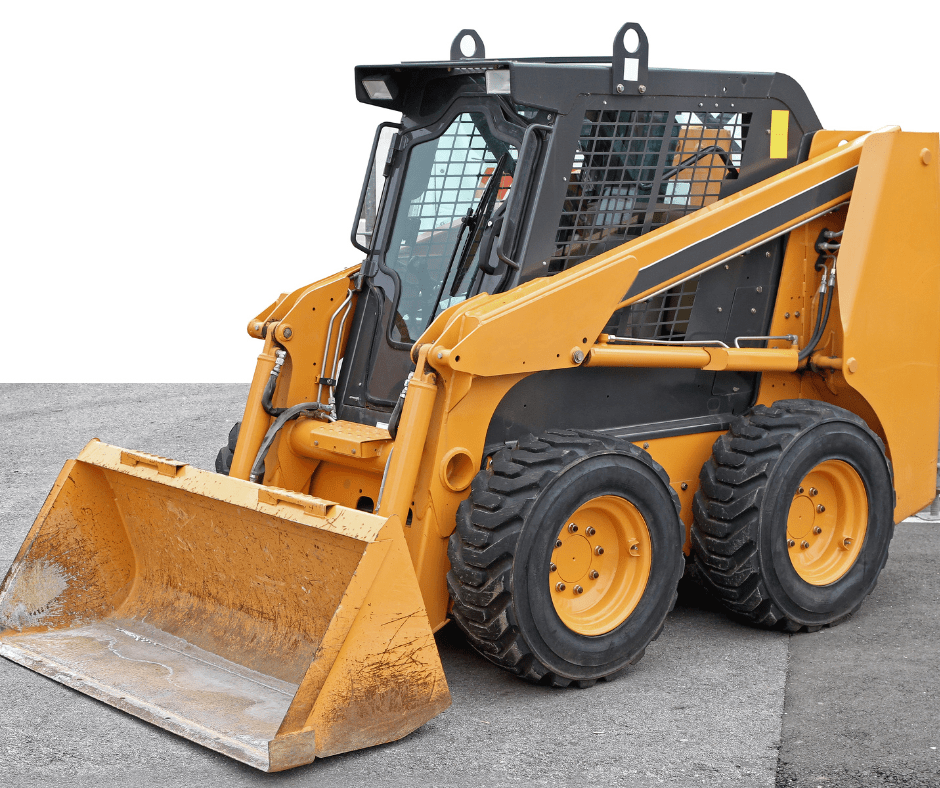
This unit describes the skills and knowledge required operate a skid steer loader to load, haul and distribute materials.
This unit applies to those working in site based roles.
Licensing, legislative, regulatory and certification requirements that apply to this unit can vary between states, territories, and industry sectors, and must be sourced from state jurisdictions prior to applying this unit.
This unit alone does not provide sufficient skill to independently load and unload equipment. To perform this activity safely, personnel must either complete or be assisting someone who has completed RIIHAN308F Load and unload plant or equivalent.
- $650.00 per machine (Must have access to the machines)
- Theory Training: 8hrs
- Practical Training: 8hrs
- Theory & Practical Assessment: 2 Hrs
- Skid Steer types, characteristics, technical capabilities and limitations
- Principles of soil technology and soil compaction for civil works
- Techniques for calculating safe working loads
- Operational maintenance and basic diagnostic procedures
- Licensing, legislative, regulatory and certification requirements that apply in NSW
- Site and Equipment safety requirements
- Skid Steer techniques related to essential tasks
- Site isolation and traffic control responsibilities and authorities
- Civil construction terminology
- Methods of changing machine attachments
- Safe operating and techniques in all terrain
- Basic earthworks calculations
- Theory Exam
- Practical Observation
- Log Book
- Oral Questioning
Applicants deemed not yet competent will be provided the opportunity to undergo further training. Applicants cannot be reassessed for a minimum of 48 hours from the date of the original assessment. Note: There may be an extra cost for reassessment
On successful completion of this course, participants will be issued with a Statement of Attainment in RIIMP0318D – Conduct Civil Construction Skid Steer Loader Operations
This unit of competency is appropriate for people who are working in mobile operator roles within civil construction.
Training/assessment can be conducted at AOTA Training Facility – 275a Princess Highway, Unanderra NSW
- The Practical Assessment will be conducted on our machine or at the learner’s workplace on their compliant machine.
Please refer to the AOTA Student Handbook through the Student Info Menu , as well as:
by john | Sep 25, 2024 | Cert III, Civil Construction Cert III (RII30920), Construction, Courses, Earthmoving
RII30920 – Certificate III in Civil Construction (Civil Construction General)
Is This Course Right For You?
Units taught in this course
Your Rights & Obligations
Build the practical skills you need to get your start in the dynamic civil construction industry. Get an all-rounder’s introduction, become a qualified civil construction worker and help to shape the future of Australia’s infrastructure.
This qualification reflects the role of a skilled operator working in civil construction. It covers common skills for the construction industry, as well as specialised skills for different areas of work.
Some job titles in this career include:
- Civil Construction Pipe Layer
- Civil Road Construction
- Maintenance worker.
The qualification is made up of 7 core units, plus 18 elective units. It takes 25 units to complete the qualification. Construction Industry Training has customised their electives for this qualification in order to provide two specialist learning pathways: (1) Pipe Laying and (2) Road Construction and Maintenance.
To work on a construction site, you need to have the right training. The National Code of Practice for Induction Training for Construction Work (ASCC 2007) requires that you complete the “CPCCWHS1001 – Prepare to Work Safely in the Construction Industry” unit or its equivalent. By doing so, you will receive a nationally recognised qualification for preparing for work in the construction industry.
Through a mixture of theory and practical course work, learn to:
-
- Plan and organise civil construction tasks
- Read and interpret plans
- Use hand and power tools
- Operate a small plant and equipment
- Follow work health and safety (WHS) procedures
- Perform measurements and calculations
Gain practical experience and develop specialist skills that give you an advantage in the job market.
- Experience liaising with real clients and stakeholders
- Skills in working to project deadlines
- Experience working on a real work site with colleagues and supervisors
- The ability to use a variety of hand tools, power tools, and civil construction equipment
- A strong pathway to continue your study and enhance your career opportunities
Entry requirements
This course requires evidence of previous experience or study before you can enrol.
- That you hold a valid general construction induction card (commonly known as a white card), as evidenced by a copy of your card
- All students must pass a language, literacy & numeracy assessment (LLN)
- This course may also be offered as a non-apprenticeship. Enquire today to discuss your eligibility
We currently have a Smart and Skilled contract with Training Services NSW. This means that if you meet the eligibility criteria, we can give you subsidised training.To find out more download our student information handbook.. or contact one of our team members.
To be prepared for this course, we recommend that you have:
- Have good hand-eye coordination and the ability to use hand tools
- Are comfortable working at heights and in confined spaces
- Have an intermediate level of fitness to manage physical tasks like shovelling, moving surveying equipment, and walking long distances
- The ability to work well as part of a team
- A commitment to safety
Our graduates go onto roles like:
EARTHMOVING PLANT OPERATOR (GENERAL)
Earthmoving Plant Operators (General) operate a range of earthmoving plants to assist with building roads, rail, water supplies, dams, treatment plants and agricultural earthworks.
Other jobs include:
- Civil construction worker,
- Civil construction road surfacing worker,
- Civil construction site maintenance worker,
- Civil construction road maintenance worker,
- Civil construction bridge maintenance worker,
- Civil construction pipe laying worker and
- Civil construction mobile plant worker
Licensing, legislative, regulatory and certification requirements that apply to this qualification can vary between states, territories, and industry sectors. These also may vary depending on your specialty units and employment options. Your teacher will advise you if there are any applicable to your study. Visit NSW Fair Trading for more information on licensing requirements and guidelines.
Courses are made up of a combination of both core and specialty units. In the Certificate III in Civil Construction (Civil Construction General) qualification, you’ll need to successfully complete 25 units of competency, including 7 core and 18 speciality units.
Core Units
- Plan and organise work – RIIBEF201E
- Carry out measurements and calculations – RIICCM201E
- Read and interpret plans and job specifications – RIICCM203E
- Use hand and power tools – RIISAM203E
- Operate small plant and equipment – RIISAM204E
- Work safely and follow WHS policies and procedures – RIIWHS201E
- Communicate in the workplace – RIICOM201E
- Apply risk management processes – RIIRIS301E
Electives (examples)
- Deliver and monitor a service to customers – BSBOPS304
- Enter and work in confined spaces – RIIWHS202E
- Work safely at heights – RIIWHS204E
- Participate in sustainable work practices – BSBSUS21
- Conduct underground development shotfiring – RIIBLA303E
- Conduct surface shotfiring operations – RIIBLA301E
- Store, handle and transport explosives – RIIBLA205E
- Support shotfiring operations – RIIBLA201
To view full list of electives: Click Here
Training/assessment can be conducted at AOTA Training Facility – 275a Princess Highway, Unanderra NSW
Please refer to the AOTA Student Handbook through the Student Info Menu , as well as:
by john | Sep 25, 2024 | Cert III, Construction, Courses, Earthmoving, Plant Operations, RII30820 – Certificate III in Civil Construction Plant Operations
RII30820 – Cert III in Civil Construction Plant Operations
Units Taught In This Course
Your Rights & Obligations
This qualification reflects the role of individuals working as skilled operators with civil construction plant, who apply a broad range of skills in varied work contexts, using some discretion and judgement and relevant theoretical knowledge. These individuals may provide theoretical advice and support a team.
Licensing, legislative, regulatory or certification considerations
Licensing, legislative and certification requirements that apply to this qualification can vary between states, territories, and industry sectors. Users must check requirements with relevant body before applying the qualification.
Through a mixture of theory and practical course work, learn to:
- Operate a small plant and equipment including excavators, loaders, dozers, graders, and rollers
- Handle resources and infrastructure materials
- Safely dispose of non-toxic materials
- Identify, locate, and protect underground services
- Gain practical experience and develop specialist skills that give you an advantage in the job market.
- Experience reviewing real construction plans, specifications and drawings
- Industry networks with peers, colleagues and plant operations professionals
- A strong pathway to continue your study and enhance your career opportunities
- Accreditation to work as a trade qualified plant operator
-
Courses are made up of a combination of both core and specialty units. In the Certificate III in Civil Construction Plant Operations qualification, you’ll need to successfully complete 20 units of competency, including 15 core and 5 speciality units.
Core units are central to the job outcomes of a particular industry or occupation. These are the units industry has agreed are essential to be capable and qualified at a particular study level.
Core Units
- Support plant operations – RIICCM206E
- Carry out basic levelling – RIICCM208E
- Carry out measurements and calculations – RIICCM201E
- Plan and organise work – RIIBEF201E
- Spread and compact materials manually – RIICCM207E
- Handle resources and infrastructure materials and safely dispose of nontoxic materials – RIISAM201E
- Carry out manual excavation – RIICCM205F
- Drain and dewater civil construction sites – RIIWMG203E
- Read and interpret plans and job specifications – RIICCM203E
- Identify, locate and protect underground services – RIICCM202E
- Use hand and power tools – RIISAM203E
- Apply risk management processes – RIIRIS301E
- Operate small plant and equipment – RIISAM204E
- Work safely and follow WHS policies and procedures – RIIWHS201E
- Communicate in the workplace – RIICOM201E
This course requires evidence of previous experience or study before you can enrol;
- That you hold a valid general construction induction card (commonly known as a white card)
- All students must pass a language, literacy & numeracy assessment (LLN)
To be prepared for this course, we recommend that you have:
- An interest in working outdoors and be involved with big machinery
- Relevant employment or access to appropriate workplace environments to prove your skills
- Intermediate level fitness to manage the physical demands of the role
- Good organisational skills and the ability to multitask and respond well to rapid change
- Experience in handling tools and equipment
Training/assessment can be conducted at AOTA Training Facility – 275a Princess Highway, Unanderra NSW
All equipment
All courseware and handouts
Please refer to the AOTA Student Handbook through the Student Info Menu , as well as:
by john | Sep 25, 2024 | Construction, Courses, Earthmoving, Loader Licence Course (RIIMPO321F
RIIMPO321F – CONDUCT CIVIL CONSTRUCTION WHEELED FRONT END LOADER OPERATIONS
Cancellations and Withdrawals
Your Rights & Obligations
This unit describes the skills and knowledge required to conduct wheeled front end loader operations.
This unit applies to those working in site- based roles.
Where equipment being assessed requires the fitting and removal of attachments to be demonstrated an integrated tool carrier unit should be used.
Licensing, legislative, regulatory and certification requirements that apply to this unit can vary between states, territories, and industry sectors, and must be sourced from state jurisdictions prior to applying this unit.
This unit alone does not provide sufficient skill to independently load and unload equipment. To perform this activity safely, personnel must either complete or be assisting someone who has completed RIIHAN308F Load and unload plant or equivalent.
- 1-2 Days depending on experience (that can be verified)
- $650.00 per machine (N.B.must have access to machine)
- Locates and applies relevant documentation, policies and procedures
- Implements the requirements, procedures and techniques for the safe, effective and efficient completion of civil construction wheeled front end loader operations including:
- Conducting pre-start checks prior to commencing operations and shutdown procedures on completion of operations
- Carrying out vehicle refuelling requirements and procedures
- Driving and operating the equipment to site conditions
- Applying safe work practices and identifying and reporting all potential hazards, risks and environmental issues
- Applying problem solving and troubleshooting techniques
- Applying levelling techniques
- Selecting and using the required tools and equipment
- Working safely around other machines and personnel
- Applying methods of changing machine attachments
Prior to enrolling in this course you will need to obtain a Unique Student Identifier (USI) please visit www.usi.gov.au and ensure you have at least one form of identification
-
- You Must be a minimum of 16 years of age
- You will be required to conduct mathematical calculations throughout this course
- All students must pass a language, literacy & numeracy assessment (LLN)
- Identification must be the originals and not laminated, also add a link to Safework NSW EOI: SW08446-0718-423971.pdf
- PPE is required including safety boots and a hi-vis shirt.
- Tea and Coffee is provided (If course is held at our facility)
- Please arrive 10 minutes prior to the commencement of training
- Assessments will be conducted over the duration of the course – Knowledge, Calculations and Practical Assessments.
- All critical components must be demonstrated and answered correctly.
- Applicants deemed not yet competent will be provided the opportunity to undergo further training. Note: There may be an extra cost for reassessment
This is a Nationally Recognised Training course and applicants deemed competent at the conclusion of the course will be provided with a Statement of Attainment for the RIIMPO321F Conduct civil construction wheeled front end loader operations.
In the event of cancellation or withdrawal:
- Students who give notice to cancel their enrolment more than 10 days prior to the commencement of a program will be entitled to a full refund of fees paid.
- Students who give notice to cancel their enrolment less than 10 days prior to the commencement of a program will be entitled to a 75% refund of fees paid. The amount retained (25%) by All Onsite Training and Assessment is required to cover the costs of administration and resources which will have already been committed based on the students initial intention to undertake the training.
- Students who cancel their enrolment after a training program has commenced will not be entitled to a refund of fees.
- If All Onsite Training and Assessment cancels the training course, and is not rescheduling then a full refund will be returned to the payer.
Please refer to the AOTA Student Handbook through the Student Info Menu , as well as:
by john | Sep 25, 2024 | Backhoe Licence Course (RIIMPO319E), Construction, Courses, Earthmoving
RIIMPO319E – Conduct backhoe/loader operations
Cancellations and Withdrawals
Your Rights & Obligations
This unit describes the skills and knowledge required to operate a backhoe/loader to load, distribute and place materials.
This unit applies to those working in site based roles.
Licensing, legislative, regulatory and certification requirements that apply to this unit can vary between states, territories, and industry sectors, and must be sourced from state jurisdictions prior to applying this unit.
- 1-2 Days depending on experience (that can be verified).
- $650.00 per machine (Must have access to the machines)
- Dates available upon request
The student must demonstrate completion of loader/backhoe operations that safely, effectively and efficiently follows workplace procedures to carry out work activity on at least two occasions, and include:
- conducting prestart checks prior to commencing operations and shutdown procedures on completion of operations
- driving and operating the equipment, and adjusting techniques to suit site conditions
- completion of operations to specification using at least two different material types (i.e. one different material type per occasion) including:
- mixing materials
- stripping/spreading materials
- trench excavation
- backfilling
- lifting and carry materials
- loading dump trucks, wagons, hoppers or chutes
- cutting/boxing
- selecting, fitting, testing, using and removing at least two attachments (i.e. one attachment per occasion), which must be certified and approved in line with workplace procedures and could include, but are not limited to, the following:
- extending devices
- tilt bucket
- buckets
- compaction wheel
- ripper
- plate compactor
- rock breaker
- auger
- broom
- mower/slasher
- forklift
- 4 in 1 bucket and free/rock grab
- parking and securing of equipment
In the course of the above work the student must also:
- locate and apply relevant documentation, policies and procedures
- select and wear personal protective equipment required for work activities
- carry out vehicle refuelling requirements and procedures where applicable
- apply safe work practices, identifying and reporting all potential hazards, risks and environmental issues
- apply problem solving and troubleshooting techniques when operating equipment
- monitor and manage equipment performance using indicators and alarms
- identify common equipment faults
- apply levelling techniques
- establish weight of load
- manage changes in the loads centre of gravity during transportation
- select and use the required tools and equipment
- work safely around other machines and personnel
- apply methods of changing machine attachments
- use a range of communication techniques and equipment essential to the safe completion of work activity, including hand, audible and other signals
- meet written and verbal reporting requirements and procedures associated with equipment operations
- organise work activities to meet all task requirements
- Prior to enrolling in this course you will need to obtain a Unique Student Identifier (USI) please visit www.usi.gov.au and ensure you have at least one form of identification
-
- You will be required to conduct mathematical calculations throughout this course
- All students must pass a language, literacy & numeracy assessment (LLN)
- identification must be the originals and not laminated, also add a link to Safework NSW EOI: SW08446-0718-423971.pdf
- PPE is required including safety boots and a hi-vis shirt
- Tea and Coffee is provided (if conducted at our facilities), local shops are nearby
- Please arrive 10 minutes prior to the commencement of training
Assessments will be conducted over the duration of the course – Knowledge, Calculations and Practical Assessments. All critical components must be demonstrated and answered correctly.
Re -assessment
Applicants deemed not yet competent will be provided the opportunity to undergo further training Note: There may be an extra cost for reassessment
This is a Nationally Recognised Training course and applicants deemed competent at the conclusion of the course will be provided with a Statement of Attainment for the applicable unit of competency that they completed.
In the event of cancellation or withdrawal:
- Students who give notice to cancel their enrolment more than 10 days prior to the commencement of a program will be entitled to a full refund of fees paid.
- Students who give notice to cancel their enrolment less than 10 days prior to the commencement of a program will be entitled to a 75% refund of fees paid. The amount retained (25%) by All Onsite Training and Assessment is required to cover the costs of administration and resources which will have already been committed based on the students initial intention to undertake the training.
- Students who cancel their enrolment after a training program has commenced will not be entitled to a refund of fees.
- If All Onsite Training and Assessment cancels the training course, and is not rescheduling then a full refund will be returned to the payer.
Please refer to the AOTA Student Handbook through the Student Info Menu , as well as: