

Call Us

02 42068378
Office Hours: 9am-5pm

logo 1
Get Your Hiab (CV) Licence in Wollongong | A Tradie & Driver’s Guide

Get Your Hiab (CV) Licence in Wollongong | A Tradie & Driver’s Guide

The Hiab Ticket: The Smartest Move for Any Driver or Tradie in the Illawarra

From “Just a Driver” to a One-Man-Band

For the longest time, my job has been driving a truck. I drop off building materials to sites all over the Illawarra, from new builds in West Dapto to renovations up in Bulli. And at almost every stop, it was the same story: I’d pull up and then have to wait. Wait for the site foreman, wait for the forklift, wait for the labourers to be free to unload me by hand. All that waiting is time, and time is money.

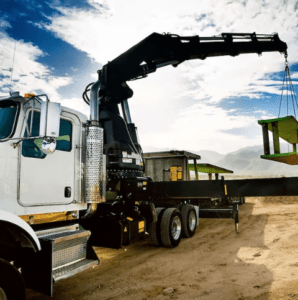
I kept seeing other trucks, especially from the big steel and timber suppliers, with TLILIC0024 Licence to operate a vehicle loading crane (capacity 10 tonnes and above) (Hiabs) on them. The driver would pull up, set up his outriggers, and have his entire load placed exactly where the builder wanted it in 20 minutes. No waiting, no fuss. He was a self-sufficient unit. That’s when I knew I needed my CV (Vehicle Loading Crane) licence. The Australian transport and logistics industry is facing a skills shortage, but they’re not just looking for drivers; they’re looking for drivers who can solve problems. This ticket is a no-brainer for adding value and getting into those higher-paid, more respected roles.

Why the Hiab is King for Logistics and Trades in Our Area

In a region like the Illawarra, with its mix of tight residential streets, sprawling new estates, and busy industrial areas, the versatility of a Hiab is unmatched.

The Ultimate Problem-Solver

  • For Drivers: Think of all the logistics companies running out of Port Kembla or the building suppliers with yards in Albion Park. A Hiab ticket makes you a premium employee. You can handle deliveries to tricky sites with no forklift access, lifting over fences or onto second-story balconies. You become the solution to the client’s problem.
  • For Tradies: If you’re a builder, plumber, or landscaper, how much time do you waste with manual handling? With a Hiab on your truck, you can lift pipes, timber packs, generators, or bags of soil right where you need them. It saves your back, saves you time, and makes your whole operation look more professional.

The Business Case | Earning More

For an owner-driver, a Hiab is a revenue-generating machine. You can charge a premium for crane truck services. For an employee, it puts you in a higher pay bracket. Companies are willing to pay more for a driver who can do the job of two people (a driver and a crane operator). It also opens up specialised niches, like delivering swimming pools or machinery, which command higher rates.

A Quick Look at What Really Matters in the Course

The formal training for a High-Risk Work Licence like this is about more than just getting the certificate; it’s about understanding the unique dangers of a crane that’s mounted on a truck.

It’s All About Stability

The number one thing they drill into you is stability. A mobile crane has a purpose-built, heavy base. A truck doesn’t. You’ll spend a lot of time learning how to properly deploy the outriggers to create a stable lifting platform. You’ll learn to assess the ground you’re setting up on – is it soft? Is it on a slope? This is something most blogs don’t talk about; the setup is more important than the lift itself.

Understanding the Load Chart on the Fly

Unlike a workshop crane, every single setup with a Hiab is different. The specific load chart changes depending on how far you’ve extended your outriggers. The course teaches you how to read these charts quickly and accurately, ensuring you never try to lift more than the crane can handle in that specific configuration. It’s a crucial, on-the-fly skill that keeps everyone safe.

Reading the Environment

This is a key “insider” skill. Before you even extend the boom, you’re scanning for hazards. Are there powerlines overhead? Are there tree branches in the way? Is there public access that needs to be cordoned off? The course teaches you to develop this “sixth sense” for potential dangers in a constantly changing environment.

Is This Licence Right for You?

This ticket is ideal for the independent problem-solver. Ask yourself:

  • Are you a good planner? Every job requires you to think ahead about where you’ll park, how you’ll set up, and the sequence of your lifts.
  • Do you enjoy working independently? Often, you’ll be on your own, responsible for the entire operation from start to finish.
  • Are you good with clients? You’re the face of the company on-site, so a bit of customer service skill goes a long way.
  • Can you adapt to new challenges? No two job sites are the same. You need to be able to think on your feet.

A Simple Way to Earn More on Every Single Job

For any driver or tradie in the Illawarra, the Hiab ticket is one of the fastest and most cost-effective ways to boost your skills and your pay packet. It makes you more independent, more efficient, and more valuable. It’s about taking charge of your own work and proving you can do the whole job, from transport to placement, all on your own. It’s the definition of working smarter, not harder.

Courses that compliment:

Ready to unlock your full potential? Explore our full range of courses further to discover the perfect training path for you. Or, if you have any questions or need personalised guidance, don’t hesitate to contact us. Our friendly team is here to support you every step of the way.

Remember, your dream career is within reach. With AOTA by your side, you can build the skills, confidence, and qualifications you need to succeed. So, take the first step today and start building your future!

Dedicated to your success

Nigel

Know the Risk | Interactive Hazard Finder

From high-risk zones to hidden hazards, this interactive tool helps you identify worksite dangers and shows you the safety training to tackle them confidently.
Overhead Crane Licence (CB) in Illawarra | Guide for Workshop Staff

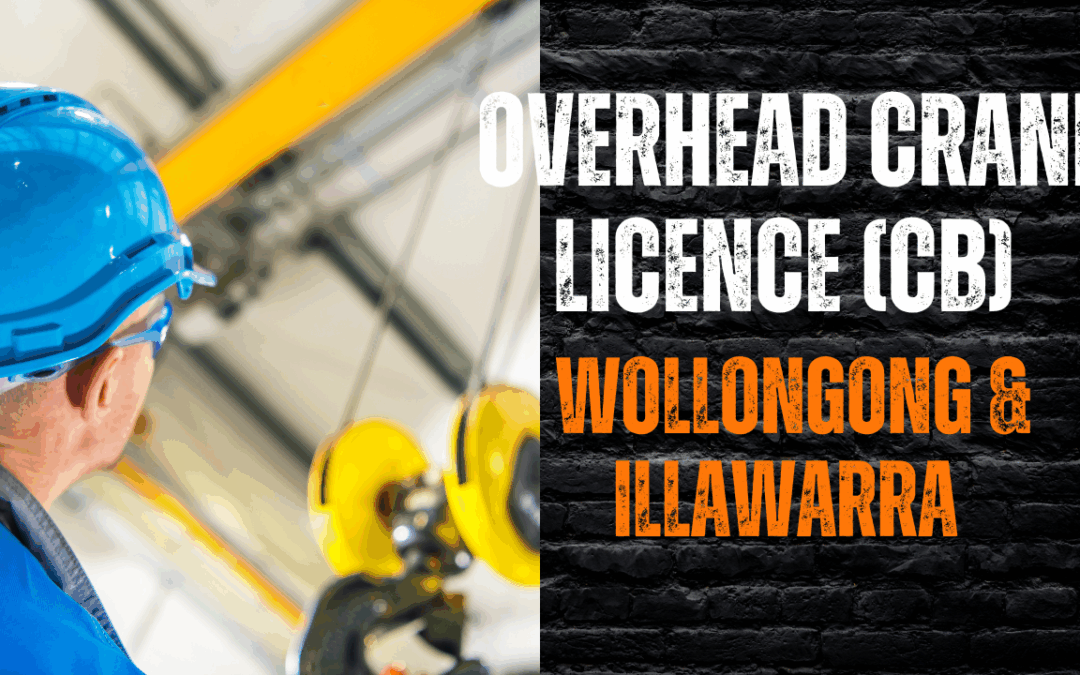
Overhead Crane Licence (CB) in Illawarra | Guide for Workshop Staff

The Unsung Hero of the Workshop: Why I’m Getting my Bridge and Gantry Crane Licence

The Daily Grind of Waiting for a Lift

I’ve spent the last six years in a fabrication workshop in Unanderra. I love the work, but I’ll tell you what drives me mad: waiting. Every day, multiple times a day, our entire workflow comes to a halt. We’ll have a 2-tonne steel beam fabricated and ready to go, but we have to stand around, tools down, waiting for one of the two guys with an overhead crane ticket to be free. It’s a massive bottleneck. You can feel the productivity—and the money—draining away.

I see it as a huge opportunity. With the manufacturing sector in Australia focusing more on high-efficiency and specialised production, being a multi-skilled worker is more valuable than ever. Getting my CB licence (Bridge and Gantry Crane) isn’t just about being able to move something from A to B. It’s about making myself an indispensable part of the team, safer in my own job, and opening doors for future leadership roles. I’ve always had my eye on a job at BlueScope, and a ticket like this is a basic requirement, not a bonus.

The Bridge and Gantry Crane, The Backbone of Illawarra Industry

These aren’t the cranes you see on the news, but they are the workhorses that keep the Illawarra’s industrial heart beating. They are a foundational piece of equipment for our region’s key industries.

Where You’ll Find Them

They are everywhere in our region. From the massive steel manufacturing plants in Port Kembla to the engineering workshops in Fairy Meadow and the countless warehouses dotted around, bridge and gantry cranes are essential. It’s a foundational skill for heavy industry. It tells an employer you’re serious and that you understand the mechanics of a productive and safe workshop.

Career Path and Internal Promotion

This ticket is often the first step towards a supervisory or leading-hand role. When you’re the one who can operate the crane, you naturally start directing the workflow on the floor. You become the go-to person. This leads to more responsibility and, ultimately, a better pay grade. It shows you have initiative and a broader understanding of the workshop’s operations, making you a prime candidate for promotion when a position opens up.

What’s Really Involved in the Training?

What most people don’t think about with overhead cranes is the finesse involved. It’s not like a video game. These machines move thousands of kilos of steel, and your job is to do it with precision and care, often in very tight spaces.

More Than Just Up, Down, Left, and Right

The training dives deep into things you might not consider:

  • Slinging Techniques: You learn how to safely and securely sling a load. What’s the difference between a basket hitch and a choker hitch? How do you find the centre of gravity on an awkward load to stop it from tipping? This knowledge is critical and protects both the product and your workmates.
  • Avoiding “Shock Loading”: Anyone can drop a load, but a professional knows how to land it gently. Abruptly stopping or starting a lift can put immense stress—a “shock load”—on the crane and the rigging. The course teaches you how to feather the controls for a smooth, safe landing.
  • The Importance of Pre-Start Checks: This is a big one. A good operator doesn’t just jump in and go. You learn a rigorous inspection process – checking the wire ropes, the hook, the brakes, and the emergency stop. It’s about creating a safety-first mindset that prevents accidents before they happen. 

Precision Over Power

A key skill you’ll learn is how to manage “load swing.” When you move the crane, the load will want to swing like a pendulum. You learn to anticipate this and make small, precise movements to keep the load steady. This is especially crucial when you’re placing a heavy object onto a machine or a truck with millimetres to spare.

Is This Licence Right for You?

This role is perfect for a certain type of person. Ask yourself:

  • Do you have good attention to detail? This job is all about precision and following procedures perfectly every time.
  • Are you a team player? You’ll be working closely with people on the floor, so clear communication is essential.
  • Do you enjoy a structured environment? Workshop jobs are often about routine and process. This skill fits perfectly into that.
  • Are you proactive about safety? You need to be the kind of person who spots a frayed sling or a potential hazard before it becomes a problem.

Becoming an Essential, Not an Optional, Team Member

With this licence, I’m no longer just another person on the floor waiting for a lift. I become a key player, someone who can keep the workflow moving and contribute directly to the team’s productivity and safety. It’s a straightforward, affordable way to add a formal High-Risk Work Licence to my name and immediately increase my value to any industrial employer in the Illawarra. It’s about taking control of my role and proving I am essential.

Courses that compliment you Overhead Crane Licence:

Ready to unlock your full potential? Explore our website further to discover the perfect training path for you. Or, if you have any questions or need personalised guidance, don’t hesitate to contact us. Our friendly team is here to support you every step of the way.

Remember, your dream career is within reach. With AOTA by your side, you can build the skills, confidence, and qualifications you need to succeed. So, take the first step today and start building your future!

Dedicated to your success

Nigel

Know the Risk | Interactive Hazard Finder

From high-risk zones to hidden hazards, this interactive tool helps you identify worksite dangers and shows you the safety training to tackle them confidently.

Get Your C6 Crane Licence in Wollongong & Illawarra | A Local’s Guide

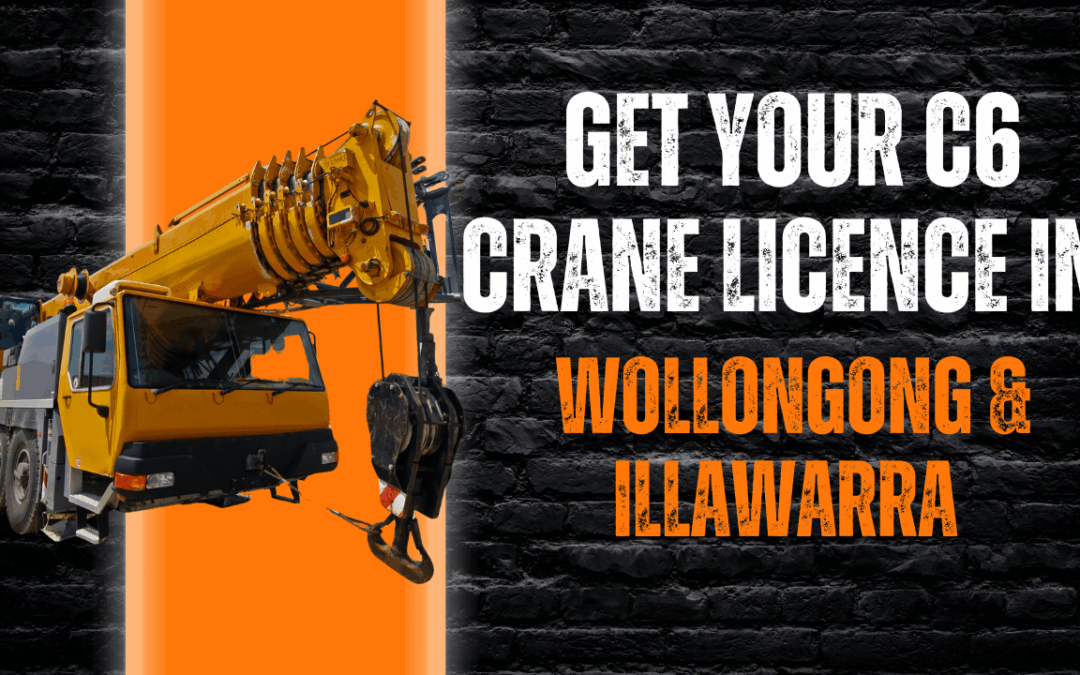
Get Your C6 Crane Licence in Wollongong & Illawarra | A Local’s Guide

Upskilling in the Illawarra | A Local’s Guide to Getting Your Crane Licence

Written by a local worker looking to secure their future in the Illawarra job market.

Getting My Slewing Mobile Crane Ticket (Up to 60T) for the Big Rigs

The Moment I Looked Beyond the Shovel

I remember the exact moment. It was a freezing mid-winter morning on a site in Wollongong, the wind whipping off the escarpment. I was leaning on my shovel, trying to get some feeling back in my fingers, watching the dogman guide a huge precast panel into place. Sitting in a warm cab with a perfect view, was the crane operator. He wasn’t just lifting; he was conducting the whole orchestra. The site moved at his pace. In that moment, I realised that while my back was breaking for a decent day’s pay, he was earning a premium for his skill, his focus, and his ticket.

Job security is the main thing on everyone’s mind right now. We’ve all seen how quickly things can change. According to Jobs and Skills Australia, the construction industry is projected to need tens of thousands of new skilled workers in the next few years. But here’s the kicker they don’t always mention: the biggest demand is for skilled operators, not general labourers. That really hit home. I decided I don’t want to be just another number on a timesheet anymore. I want to be the person they can’t afford to lose. For me, that means getting my C6 Slewing Mobile Crane licence (for cranes up to 60 tonnes). It feels like the sweet spot – it covers the big Frannas and city cranes you see on nearly every major commercial and civil site, making it one of the most versatile tickets you can get.

Connecting the C6 Licence to Real Illawarra Growth

You only have to drive from Thirroul to Kiama to see the opportunity. Cranes dot the skyline. It’s not just a feeling; it’s a fact. Billions are being poured into local infrastructure, and every single project needs skilled operators. Check our: IllawarraContruct Interactive App

Where the Jobs Are Right Now

  • Major Infrastructure: Think about the recently completed Albion Park Rail bypass or the ongoing upgrades to the Princes Highway. Those projects rely on a constant flow of skilled slewing mobile crane operators to lift everything from concrete barriers and bridge beams to heavy machinery.
  • Commercial and Residential High-Rises: The Wollongong CBD is growing upwards. Every new apartment block or office building needs operators for months, sometimes years, from the initial steel erection to lifting materials.
  • The Steelworks and Port Kembla: These have always been the heart of our region’s industry. They’re in a constant state of maintenance, upgrades, and expansion. A C6 licence opens doors to long-term, stable work inside these major industrial hubs, not just in construction but also in shipping and logistics at the port.

Career Path and Earning Potential

Let’s be blunt, this is about securing a better financial future. A general labourer in NSW might be on a good daily rate, but a skilled C6 operator is on another level. You’re looking at a significant jump in your hourly rate, plus potential for overtime and allowances. This isn’t just a job; it’s a career path. You start with the C6, get a few years of experience, and you can progress to your C1 (up to 100 tonnes) or even your C0 (over 100 tonnes) licence, putting you in an elite category of operators who are always in demand for the biggest jobs.

What the AOTA Course Really Teaches You

A lot of guys think getting your crane ticket is just about learning which lever does what. But what the blogs and course descriptions don’t always tell you is that you’re learning to be a planner, a mathematician, and the most important safety officer on site, all from one seat.

Beyond the Controls: The Mental Game

It’s not just about pulling levers; it’s about complex calculations. You’ll become obsessed with load charts. These aren’t just guides; they are the absolute law. You’ll learn to calculate the crane’s capacity based on the boom angle, the radius, and the configuration. You’re constantly doing mental maths: What’s the weight of the load? What about the chains and slings? What’s the wind doing? Getting it wrong isn’t an option. The course drills this into you until it’s second nature.

Becoming the Person Everyone Trusts

The focus on safety is immense. You learn to be the one who says “no.” When a rigger wants to push the limits, or the wind picks up, you are the final authority. That requires confidence, and that confidence comes from the hands-on training where you get a real feel for the machine. You learn to sense when the crane is balanced, how it reacts under load, and what a “good lift” feels like. It’s about building a reputation as a safe, reliable operator – that’s what gets you the callback for the next job.

Mastering On-Site Communication

What they don’t tell you is that a huge part of the job is communication. You’ll be working with a dogman or rigger, communicating through hand signals and two-way radios over the noise of the site. The training teaches you this language, ensuring you can understand and give clear, concise instructions when a multi-tonne load is in the air.

Is This Licence Right for You?

Before you jump in, ask yourself these questions honestly:

  • Are you calm under pressure? When things get tricky, everyone will be looking to you. You need to be the calmest person on site.
  • Can you think in 3D? The job requires excellent spatial awareness, understanding where the load is, where it’s going, and what’s around it at all times.
  • Are you happy with responsibility? The safety of the entire site is literally in your hands. You have to be comfortable with that weight on your shoulders.

My Path to a Better Paycheck and a Real Career

This isn’t just another ticket to stick in my wallet. For me, getting my slewing mobile crane licence is a proper career move. It’s the difference between being a labourer and being a skilled professional whose expertise is valued and rewarded. For any other bloke (or woman!) in the Illawarra who’s tired of the shovel and wants a skill that’s in high demand, this is a solid investment in your future. It’s time to get off the ground, literally.

Ready to unlock your full potential? Explore our website further to discover the perfect training path for you. Or, if you have any questions or need personalised guidance, don’t hesitate to contact us. Our friendly team is here to support you every step of the way.

Remember, your dream career is within reach. With AOTA by your side, you can build the skills, confidence, and qualifications you need to succeed. So, take the first step today and start building your future!

Dedicated to your success

Nigel

Know the Risk | Interactive Hazard Finder

From high-risk zones to hidden hazards, this interactive tool helps you identify worksite dangers and shows you the safety training to tackle them confidently.
Beyond the Warehouse | Essential Tickets for Port and Logistics Jobs in the Illawarra

Beyond the Warehouse | Essential Tickets for Port and Logistics Jobs in the Illawarra

The Supply Chain Champions: Your Guide to a Career in Illawarra’s Logistics & Ports

Every single day, thousands of tonnes of goods flow through the Illawarra. From the massive ships at Port Kembla to the bustling warehouses and transport depots that dot our region, this is the engine room of our local economy. The Illawarra Shoalhaven Regional Plan 2041 identifies the growth of Port Kembla as an international trade hub as a top priority, with the potential to create up to 30,000 new jobs in linked industries.  This is a world of constant movement, where efficiency and safety are everything. A career in logistics and port operations is a career in a sector that never sleeps. But to be a part of it, you need the right qualifications. This isn’t just about driving a truck or a forklift; it’s about being a trusted professional in a high-stakes environment.

This guide will break down the key operational areas within the Illawarra’s logistics sector and show you the specific licences that will open doors.

The Heart of the Operation | The Warehouse and Yard

The modern warehouse is a high-tech, fast-paced environment. It’s the central hub where goods are received, sorted, stored, and dispatched.

King of the Aisles, The Forklift Licence (LF)

The forklift is the undisputed workhorse of any warehouse or yard. If you want a job in this environment, a Forklift Operations licence is the single most important qualification you can have.

  • What you don’t know: This isn’t just a simple competency; it’s a High-Risk Work Licence (HRWL). That means it’s nationally recognised and requires you to be formally assessed as competent to operate safely.
  • The environment: You’ll be working in tight spaces, loading and unloading trucks against the clock, and navigating around pedestrians and other machinery. Formal training teaches you about load stability, reading data plates, and maintaining situational awareness—skills that prevent accidents and make you an efficient, valuable operator.

The Heavy Hitters | Port Operations & Bulk Loading

When you move from a standard warehouse to a major facility like Port Kembla, the scale changes dramatically. Here, you’re dealing with shipping containers, heavy machinery, and bulk materials that weigh many tonnes. This is where advanced high-risk skills are essential.

The Art of the Heavy Lift: Dogging, Rigging & Cranes

Lifting a 20-tonne container off a ship is a world away from moving a pallet. This is where the lifting professionals come in.

  • Dogging (DG): Just like on a construction site, the dogger is essential for any crane lift. They are responsible for inspecting lifting gear, applying the correct slinging methods, and directing the crane operator to move the load safely from ship to shore, or from truck to storage.
  • Rigging (RB, RI, RA): Riggers are needed for more complex tasks, such as assembling and dismantling temporary structures, working with specialised lifting equipment, and managing unconventional or unbalanced loads.
  • Slewing Mobile Cranes (C6): These versatile cranes are the backbone of many port operations, able to move around the site and perform a huge variety of lifts. Operating a crane with a capacity of up to 60 tonnes requires a C6 High-Risk Work Licence and is a highly sought-after skill.

Connecting the Dots | Transport and Haulage

The final link in the supply chain is the transport network that moves goods from the port or warehouse to their final destination. This requires skilled, professional drivers who hold the correct class of licence.

On the Road, Heavy Vehicle Licences

  • HR (Heavy Rigid): This allows you to drive trucks with three or more axles. It’s a common licence for local delivery and transport roles.
  • HC (Heavy Combination): This is for semi-trailers, the most common type of truck for long-distance and B2B freight.
  • MC (Multi Combination): This is the highest class of licence, for operating B-doubles and road trains.

Holding a Heavy Vehicle Licence opens up a huge range of career opportunities, from local delivery runs to interstate haulage.

The Human Factor | Safety in a 24/7 World

The logistics industry operates under constant pressure, which makes a focus on human safety absolutely critical.

  • Provide First Aid: In a fast-paced environment with heavy machinery, being able to provide an immediate response to an injury is vital. A Provide First Aid qualification is a huge asset.
  • Mental Wellbeing: The life of a transport worker or logistics operator can be demanding. Factors like social isolation, tight deadlines, and shift work can take a significant toll on mental health. A Mental Health First Aid course provides the skills to recognise when a colleague is struggling and the confidence to offer support, fostering a safer and more positive workplace culture for everyone.  From the warehouse floor to the driver’s seat of a B-double, the Illawarra’s logistics sector offers a diverse range of career paths, each one starting with the right nationally recognised qualification.

References:

  • Illawarra Shoalhaven Regional Plan 2041.  
  • Property Council of Australia, ‘Backing the Illawarra Shoalhaven: Invest to Support Growth’ Media Release.   
  • Monash University, ‘Why investing in truck drivers’ health is crucial’ Research.
  • icare NSW, ‘Mental health injuries in the truck driving industry’. 
  • All Onsite Training and Assessment, Mental Health First Aid Course Information.

Ready to unlock your full potential? Explore our website further to discover the perfect training path for you. Or, if you have any questions or need personalised guidance, don’t hesitate to contact us. Our friendly team is here to support you every step of the way.

Remember, your dream career is within reach. With AOTA by your side, you can build the skills, confidence, and qualifications you need to succeed. So, take the first step today and start building your future!

Dedicated to your success

Nigel

Know the Risk | Interactive Hazard Finder

From high-risk zones to hidden hazards, this interactive tool helps you identify worksite dangers and shows you the safety training to tackle them confidently.
Crane Operator Licenses

AOTA Crane Operator Training

AOTA (All Onsite Training and Assessment) offers comprehensive crane operator training courses for various types of cranes. With access to the necessary cranes, we provide both theoretical and practical instruction to ensure you gain the skills and knowledge required to operate these machines safely and effectively.  

“We can provide training and assessment for companies.”

Courses Offered:

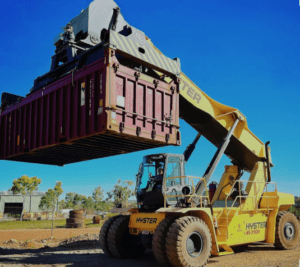
TLILIC0011 Licence to operate a reach stacker (greater than 3 tonnes capacity)
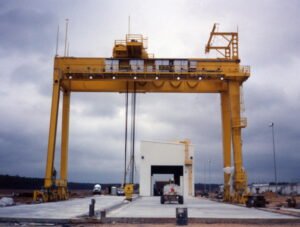
TLILIC0016 Licence to operate a bridge and gantry crane
TLILIC0020 Licence to operate a slewing mobile crane (over 100 Tonnes)
TLILIC0021 Licence to operate a slewing mobile crane (up to 100 Tonnes)
TLILIC0022 Licence to operate a slewing mobile crane (up to 20 tonnes)
TLILIC0024 Licence to operate a vehicle loading crane (capacity 10 tonnes and above)
TLILIC0040 Licence to operate a non-slewing mobile crane (greater than 3 tonnes capacity)

This unit specifies the skills and knowledge required to operate a reach stacker with a Maximum Rated Capacity (MRC) exceeding 3 tonnes safely, in accordance with all relevant legislative responsibilities. Competence in this unit, does not in itself result in a HRWL licence to operate this plant.

Reach stacker means a powered reach stacker that incorporates an attachment for lifting and lowering a shipping container.

This unit applies to the activities of a person operating a reach stacker greater than 3 tonnes capacity that incorporates an attachment for lifting, moving and travelling with a shipping container (not including a shore based container handling gantry crane).

A person performing this work is required to hold a reach stacker High-Risk Work Licence (HRWL)

This unit requires a person operating reach stacker with an MRC exceeding 3 tonnes to:

  • plan the work/task
  • prepare for the work/task
  • perform work/task
  • Pack up

This unit specifies the skills and knowledge required to operate bridge cranes and gantry cranes safely. Competence in this unit, does not in itself result in a High-Risk Work Licence (HRWL) to operate this plant.

Bridge crane means a crane that:

  • consists of a bridge beam or beams, that are mounted to end carriages at each end, and
  • can travel along elevated runways, and
  • has one or more hoisting mechanisms arranged to traverse across the bridge.

Gantry crane means a crane that:

  • consists of a bridge beam or beams supported at one or both ends by legs mounted to end carriages, and
  • can travel on supporting surfaces or deck levels, whether fixed or not, and
  • has a crab with one or more hoisting units arranged to travel across the bridge

This unit applies to the activities of a person operating a bridge crane or gantry crane that is:

  • controlled from a permanent cabin or control station on the crane, or
  • remotely controlled and having more than three powered operations.

A person performing this work is required to hold a bridge and gantry crane HRWL.

This unit requires a person operating a bridge crane or gantry crane to:

    • plan for the work/task
    • prepare for the work/task
    • perform work/task
    • pack up.

This unit specifies the skills and knowledge required to safely operate a slewing mobile crane with a Maximum Rated Capacity (MRC) over 100 tonnes in accordance with all relevant legislative responsibilities. Competence in this unit, does not in itself result in a High-Risk Work Licence (HRWL) to operate this plant.

Slewing mobile crane means a mobile crane incorporating a boom or jib that can be slewed, but does not include:

  • a front-end loader, or
  • a backhoe, or
  • an excavator, or
  • other earth moving equipment, when configured for crane operation.

A person performing this work is required to hold a slewing mobile crane with an MRC over 100 tonnes HRWL.

This unit requires a person operating a slewing mobile crane with an MRC over 100 tonnes to:

  • plan for the work/task
  • prepare for the work/task
  • perform work/task
  • pack up.

    This unit specifies the skills and knowledge required to safely operate a slewing mobile crane with a Maximum Rated Capacity (MRC) up to 100 tonnes, in accordance with all relevant legislative responsibilities. Competence in this unit, does not in itself result in a High-Risk Work Licence (HRWL) to operate this plant.

    Slewing mobile crane means a mobile crane incorporating a boom or jib that can be slewed, but does not include:

    • a front-end loader, or
    • a backhoe, or
    • an excavator, or
    • other earth moving equipment, when configured for crane operation.

    A person performing this work is required to hold a slewing mobile crane with an MRC up to 100 tonnes HRWL.

    This unit requires a person operating a slewing mobile crane with an MRC up to 100 tonnes to:

      • plan for the work/task
      • prepare for the work/task
      • perform work/task
      • pack up.

    This unit specifies the skills and knowledge required to safely operate a slewing mobile crane with a Maximum Rated Capacity (MRC) up to 20 tonnes in accordance with all relevant legislative responsibilities. Competence in this unit, does not in itself result in a High-Risk Work Licence (HRWL) to operate this plant.

    Slewing mobile crane means a mobile crane incorporating a boom or jib that can be slewed, but does not include:

    • a front-end loader, or
    • a backhoe, or
    • an excavator, or
    • other earth moving equipment, when configured for crane operation.

    A person performing this work is required to hold a slewing mobile crane with a MRC up to 20 tonnes HRWL.

    This unit requires a person operating a slewing mobile crane with an MRC up to 20 tonnes to:

    • plan for the work/task
    • prepare for the work/task
    • perform work/task
    • pack up.

    This unit specifies the skills and knowledge required to safely operate a vehicle loading crane with a Maximum Rated Capacity (MRC) of 10 metre tonnes or more. Competence in this unit, does not in itself result in a High-Risk Work Licence (HRWL) to operate this plant.

    Vehicle loading crane means a crane mounted on a vehicle for loading and unloading the vehicle.

    A person performing this work is required to hold a vehicle loading crane HRWL.

    This unit requires a person operating a slewing vehicle loading crane with a MRC of 10 metre tonnes or more to:

    • plan for the work/task
    • prepare for the work/task
    • perform work/task
    • pack up.

    This unit specifies the skills and knowledge required to operate a non-slewing mobile crane with a Rated Capacity (RC) exceeding three tonnes safely, in accordance with all relevant legislative responsibilities. Competence in this unit, does not in itself result in a High Risk Work Licence (HRWL) to operate this plant. Competence in this unit does not allow for driving an articulated mobile crane on a main or public road. In order to drive on a main or public road, a valid heavy vehicle licence, issued by a transport regulator, is required.

    Non-slewing mobile crane means a mobile crane incorporating a boom or jib that cannot be slewed, and includes:

    • an articulated mobile crane
    • a locomotive crane
    • but does not include vehicle tow trucks.

    A person performing this work is required to hold a non-slewing mobile crane HRWL.

    This unit requires a person operating non-slewing mobile crane with an RC exceeding three tonnes to:

    • plan the work/task
    • prepare for the work/task
    • perform work/task
    • prepare to drive an articulated mobile crane on road
    • drive an articulated mobile crane
    • pack up.

    Contact

    Call HQ

    (02)  42068378

    Office Hours: 9am – 5pm Monday to Friday

    Training Facility 

    275A Princes Hwy, Unanderra NSW 2526

    Training Hours: 7am – 3pm Monday to Friday

    Email Us