



Why Ditching Condition B Could Be Your Best Career Move Yet
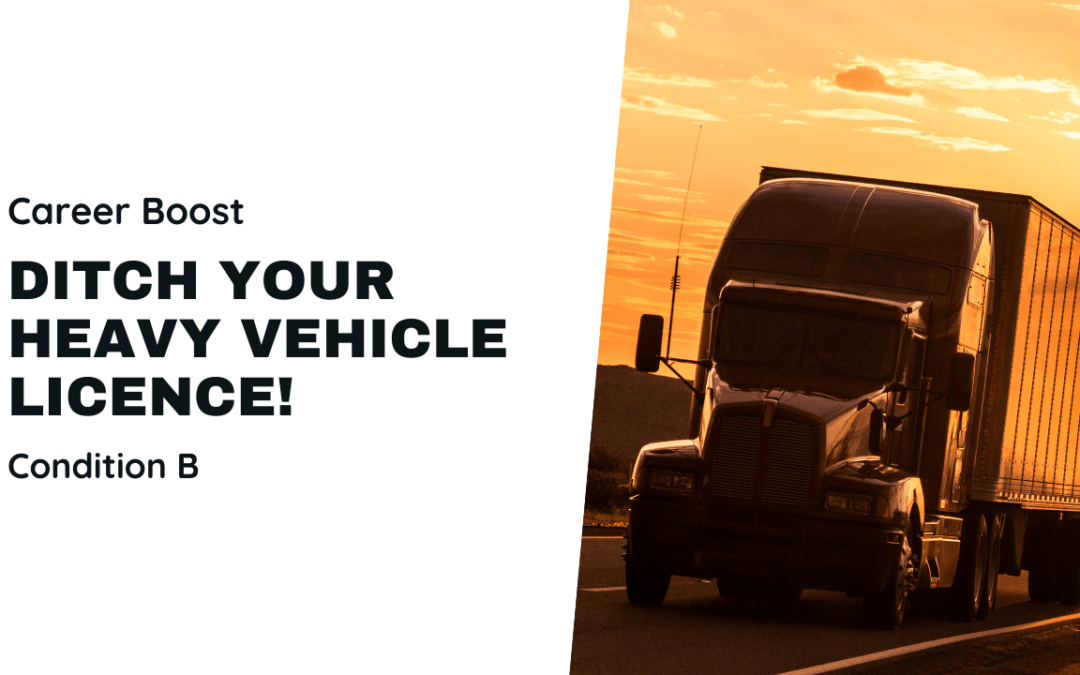
Is it Time to Ditch Condition B on Your Heavy Vehicle Licence?
Ever scrolled through truck driving job ads in NSW, your eyes lighting up at a cracking opportunity, only to hit that one phrase that makes your heart sink? “Manual Transmission Licence Required.” Yep, there it is again. If you’re driving with a Condition B restriction on your heavy vehicle licence, you know this feeling all too well. It’s like seeing the juiciest steak on the menu, but being told you can only order salad. Frustrating, right?
Let’s be honest, getting your heavy vehicle licence in the first place is a huge achievement. You put in the hours, mastered the road rules, and got your wheels rolling. Maybe you even got your licence in an automatic, earning that Condition B honestly. Nothing wrong with that! But as you get further down the road in your driving career, you might be starting to wonder… is that Condition B actually holding you back?
What is Condition B REALLY Holding You Back From? More Than You Think!
The Condition B Lowdown; Automatic Only
First things first, let’s clarify. Condition B on your NSW heavy vehicle licence simply means you’re licensed to drive heavy vehicles – but only those with an automatic transmission. Plain and simple. When you were learning, maybe automatics were more readily available for training, or maybe it just felt easier to get through the test. Totally understandable! But here’s the kicker: the heavy vehicle world in Australia, and especially in NSW, is still heavily reliant on manual transmissions.
The Job Market Reality – Manuals Still Rule the Road
Think about the diverse landscape of trucking and transport. Sure, automatics are becoming more common, especially in newer fleets and for long-haul work. But take a good look around at worksites, farms, construction zones, and even local delivery routes. You’ll see a whole lot of manual gearboxes still doing the hard yards.
- Construction & Mining – Tippers, concrete mixers, heavy haulage – often manual for better control in tough conditions.
- Agriculture – Tractors, harvesters, farm trucks – manuals are still king on the land.
- Specialised Transport – Recovery vehicles, crane trucks, some heavy rigid deliveries – frequently manual for specific operational needs.
- Older Fleets – Many smaller businesses and even some larger ones operate older, well-maintained trucks that are predominantly manual.
What does this mean for you with Condition B? It means you’re automatically excluded from a significant chunk of the job market. You’re essentially limiting your choices right from the get-go. And in a competitive job market, that’s not ideal.
Australian Driver Shortage – Your Leverage Point
Here’s a stat that should get your engine revving: Australia is currently facing a serious truck driver shortage. Estimates vary, but figures from bodies like the Australian Trucking Association (ATA) and reports in publications like Fully Loaded indicate a shortfall of tens of thousands of drivers across the country. In fact, some reports suggest we could be short over 40,000 drivers by 2030 if current trends continue! [Reference: Fully Loaded].
This shortage should be good news for drivers, right? Yes, it is! But it also means employers are getting pickier about skills. While they desperately need drivers, they also want drivers who are versatile and can operate a wider range of vehicles. And guess what skillset makes you instantly more versatile? Manual transmission mastery!
The Money Talk – How Manual Skills Translate to $$$ – It’s More Than Just a Few Extra Bucks
Let’s get down to brass tacks. Why should you bother going through the effort of removing Condition B? The biggest reason, plain and simple: more money in your pocket!
Increased Job Opportunities = Increased Earning Power
Think of it like this: By removing Condition B, you’re not just opening yourself up to more jobs, you’re opening yourself up to potentially better jobs. Roles that require manual transmission skills often come with:
- Higher Pay Rates – Companies are willing to pay more for drivers who can handle a wider range of vehicles and tasks. Specialised roles requiring manual dexterity often command premium wages.
- Overtime & Bonuses – Manual transmission roles might be linked to industries with more demanding schedules or projects that offer overtime and bonus opportunities.
- Career Advancement – Demonstrating the initiative to upgrade your licence shows employers you’re serious about your career and willing to invest in yourself – making you a prime candidate for promotions and more senior positions down the line.
Real-World Examples; Where Manual Skills Pay Off
Imagine two drivers, Driver A with Condition B, and Driver B with an unrestricted licence. Two identical job ads pop up;
- Job Ad 1 – Local Delivery Driver (Automatic Trucks Available) – Both can apply. Pay is standard for local delivery.
- Job Ad 2 – Heavy Haulage Driver (Manual Road Ranger Gearbox, Interstate Runs) – Only Driver B can apply. This role likely offers significantly higher pay, overnight allowances, and more challenging (and often more rewarding) work.
Driver B, thanks to their unrestricted licence, has twice the opportunities and access to the higher-paying role. It’s not just about getting a job; it’s about getting the best job for your skills and ambitions.
Debunking the “Too Hard” Myth – It’s an Investment, Not an Obstacle
Okay, so you’re convinced about the benefits, but maybe you’re thinking, “Sounds great, but learning manual… isn’t that a hassle? Is it expensive? Will I even pass the test?”
It’s an Investment in YOUR Future
Let’s reframe this. Removing Condition B isn’t an expense, it’s an investment in your future earning potential. Think of it like upgrading your tools. A better set of tools allows you to take on more complex jobs and earn more money. Similarly, an unrestricted licence equips you to tackle a wider range of driving roles and climb the career ladder faster.
Training Makes All the Difference
Yes, learning to drive a manual heavy vehicle takes practice and skill. But that’s exactly why qualified driving schools exist! They specialise in teaching drivers like you how to master manual transmissions in heavy vehicles, safely and effectively. A good driving school will:
- Provide structured training programs designed for Condition B removal.
- Use modern, well-maintained manual trucks for training.
- Have experienced, patient instructors who understand the specific challenges of learning manual in heavy vehicles.
- Offer test preparation to increase your chances of success on your practical driving assessment.
It’s Achievable at Any Stage of Your Career
Don’t think you’re “too old” or “too set in your ways” to learn manual. Drivers of all ages and experience levels successfully remove Condition B every single day. It’s about dedication and getting the right training. In fact, experienced drivers often have an advantage because they already understand road rules, vehicle dynamics, and safe driving practices. It’s just about adding that manual gearbox skill to your toolkit.
Your Next Step – Take Control of Your Career
Condition B doesn’t have to be a permanent fixture on your licence. It’s a limitation you can actively remove, and one that will pay dividends throughout your driving career. In a competitive industry facing driver shortages, versatility is your superpower, and manual transmission proficiency is a key component of that.
Ready to unlock your full earning potential and open up a world of driving opportunities? Don’t let Condition B hold you back any longer. Your next step is clear; research reputable heavy vehicle driving schools in NSW that offer Condition B removal courses. Talk to them, ask questions, and take the plunge. It might just be the best career move you make this year. Invest in yourself, invest in your skills, and get ready to drive your career further than ever before!

If you have any questions or need personalised guidance, don’t hesitate to contact us. Our friendly team is here to support you every step of the way.
Remember, your dream career is within reach. With AOTA by your side, you can build the skills, confidence, and qualifications you need to succeed. So, take the first step today and start building your future!
Dedicated to your success
Nigel