


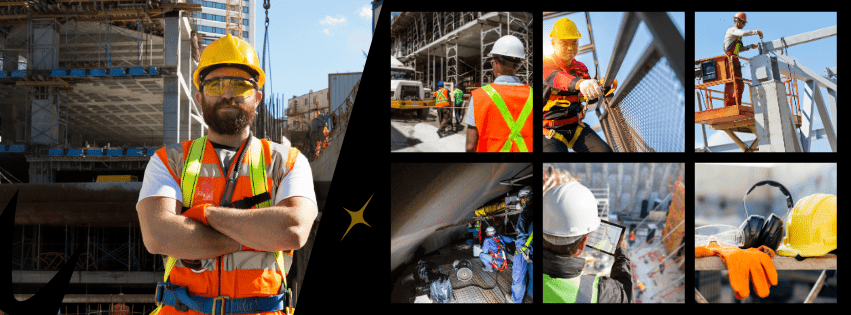


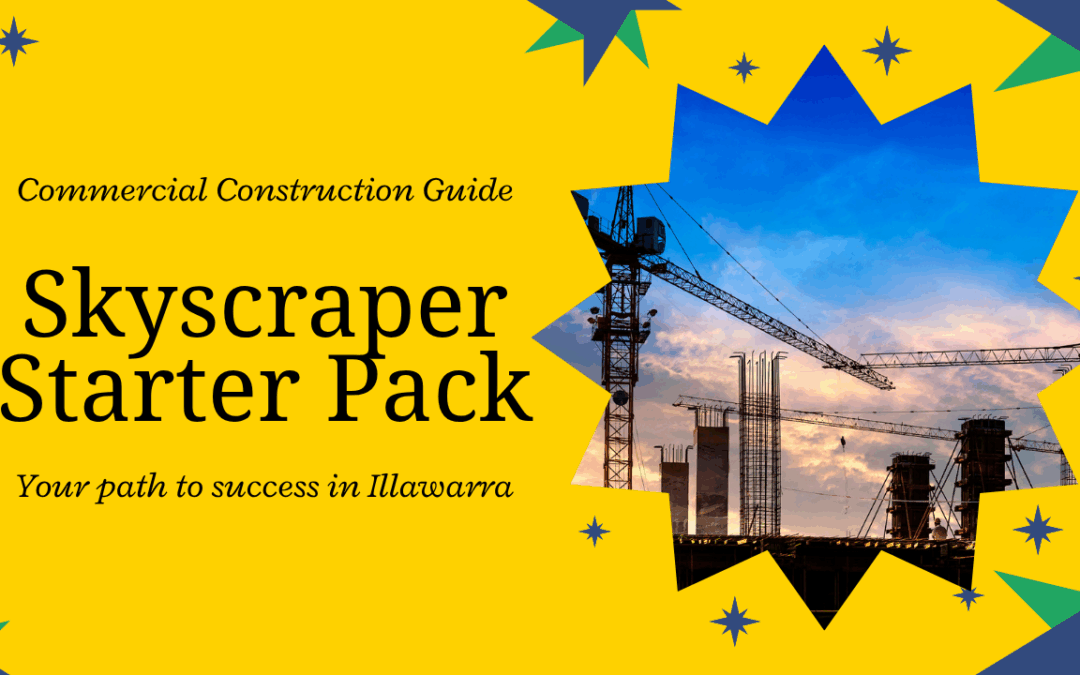
Look up. Across Wollongong, Shellharbour, and down to the Shoalhaven, you’ll see them: the towering skeletons of cranes, the steady rise of new floors, the buzz of activity that signals growth. These aren’t just buildings; they’re vertical cities of opportunity. Projects like the massive Shoalhaven Hospital Redevelopment
But how do you go from being the person on the street looking up, to the person on-site building up? It’s not about luck; it’s about having the right skills and, crucially, the right tickets. This isn’t just about ticking boxes. The Australian construction industry is facing a productivity challenge costing the economy billions annually.
This guide is your roadmap. We’re going to break down what really happens on a major commercial building site in the Illawarra and show you the exact training you need to get your foot in the door and build a real career.
Phase 1 | The Ground Game – Setting the Stage
Before a single steel beam is lifted, a massive amount of work happens at ground level. This is the foundation, both literally and for your career. Getting this stage right is everything.
Your Key to the Gate | The Construction White Card
Let’s be crystal clear: without this, you’re not getting past the front gate. The Construction White Card (CPCCWHS1001 Prepare to work safely in the construction industry) is the absolute, non-negotiable first step. It’s not just a formality; it’s a foundational course that covers essential safety principles, how to identify hazards, and what to do in an emergency. Think of it as your passport to every single construction site in Australia.
The Earthmovers | Shaping the Site
Once the surveyors have marked out the site, the big machines roll in. This isn’t just about digging a hole; it’s a precise operation.
- What you’ll see: Excavators performing bulk earthworks, loaders moving soil and materials, and smaller skid steers handling the detailed work around foundations and services.
- What you’ll need: This is where your plant operation skills become your ticket to consistent work. Holding a qualification for Excavator Operations, Skid Steer Operations, and Front End Loader Operations makes you incredibly versatile during this busy initial phase.
Going Vertical | The World of High-Risk Work
This is where the skyline starts to change. The second a load is lifted by a crane, or a worker steps onto a boom lift, the site enters the realm of High-Risk Work. These activities are so potentially dangerous that they are governed by strict laws, and you must hold a specific High-Risk Work Licence (HRWL) to perform them. This is where you can build a specialised, in-demand career.
The Crane’s Choreographer | Dogging & Rigging
Most people see the crane operator, but they often miss the most critical person on the ground: the dogger or rigger. They are the brains of the lifting operation.
- What’s the difference? A Dogger is the crane’s eyes and ears. They are responsible for assessing the load, choosing the correct slinging technique, and directing the crane operator with hand signals or radio commands. A Rigger does everything a dogger does, but they are also qualified to handle more complex tasks, like erecting and dismantling cranes and scaffolding, working with tilt-up panels, and performing dual crane lifts.
- The Pathway: You start with a Dogging (DG) licence. From there, you can progress to Basic Rigging (RB), Intermediate Rigging (RI), and Advanced Rigging (RA), with each ticket opening up more complex and higher-paying work.
- Why it’s critical: With around 60% of crane incidents in Australia attributed to human error, the skill of the person slinging the load is paramount.
Reaching for the Sky | EWPs and Height Safety
As the building grows, so does the need to work safely off the ground.
- Working at Heights: This ticket is essential for almost everyone on a multi-story site, from steel erectors to plumbers and electricians. It teaches you how to use fall arrest systems like harnesses and anchor points correctly.
- Elevating Work Platforms (EWP): For operating a boom-type EWP where the boom can extend 11 metres or more, you need a specific High-Risk Work Licence (WP). This is one of the most in-demand tickets on commercial sites. Don’t confuse this with the Yellow Card for operating scissor lifts or smaller platforms under 11 metres!
The Final Stretch | Enclosing and Fitting Out
With the structure up, the focus shifts to making it a functional building. This involves installing facades, windows, internal walls, and all the essential services.
- What you’ll see: Teams working on the building exterior from EWPs, and inside in service risers, ceiling spaces, and plant rooms.
- What you’ll need: Your Working at Heights ticket remains essential. This is also where Confined Space Training becomes critical. A service duct, a lift well, or a water tank might not look like a confined space, but they are, and they pose invisible risks like atmospheric hazards. Having this qualification makes you a valuable asset during the fit-out phase.
The Safety Net | Skills for Every Single Person on Site
Some skills aren’t tied to a specific phase; they’re about the human element of keeping a site safe.
When Seconds Count, First Aid
On a busy site, accidents—from minor cuts to serious injuries—can and do happen. Being the person who can confidently step in and administer first aid while waiting for paramedics is an invaluable skill. A Provide First Aid certificate makes you a designated first aid officer, a role every work crew needs.
The Hazard You Can’t See, Mental Health
This is the topic most blogs won’t touch, but it’s the most important. The statistics are sobering: Australian construction workers are six times more likely to die by suicide than from a workplace accident.
- What it is: Mental Health First Aid training doesn’t teach you to be a therapist. It teaches you to be a supportive colleague. It gives you the skills to notice when a mate is struggling, the confidence to ask “Are you okay?”, and the knowledge to guide them towards professional help.
- Why it matters: In an industry that is losing too many good people, being a trained Mental Health First Aider makes you a leader in creating a safer, more supportive site culture.
Building a career in commercial construction is a step-by-step process. It starts with a White Card and builds from there with the specific plant, high-risk, and safety qualifications that match your goals.
References:
- All Onsite Training and Assessment, Mental Health First Aid Course Information.
Ready to unlock your full potential? Explore our website further to discover the perfect training path for you. Or, if you have any questions or need personalised guidance, don’t hesitate to contact us. Our friendly team is here to support you every step of the way.
Remember, your dream career is within reach. With AOTA by your side, you can build the skills, confidence, and qualifications you need to succeed. So, take the first step today and start building your future!
Dedicated to your success
Nigel
Know the Risk | Interactive Hazard Finder
From high-risk zones to hidden hazards, this interactive tool helps you identify worksite dangers and shows you the safety training to tackle them confidently.